
About Pierre Clément de Laussat
Lived 1756 – 1835 (aged 78). Pierre Clément de Laussat was a French administrateur, politician and governor.
Pierre-Clément de Laussat (; 23 November 1756 – 10 April 1835) was a French politician and the last French colonial governor of Louisiana, handing over the territory to the United States after the Sale of Louisiana. He later served as colonial official in Martinique and French Guiana, as well as an administrator in France and Antwerp.
Biography Laussat was born at his family's estate, Château de Bernadets, and baptised at Saint-Martin's Church in Pau. After serving as receveur général des finances in Pau and Bayonne from 1784 to 1789, he was imprisoned during the Terror, but was released and recruited in the armée des Pyrénées. On 17 April 1797, he was elected to the Council of Ancients. After the coup of 18 Brumaire, he entered the Tribunat on 25 December 1798, having renounced his noble rank earlier that year.
Louisiana
He was appointed by First Consul Napoleon Bonaparte (soon-to-be emperor) to be colonial prefect (or governor) of Louisiana in August 1802 and arrived in the colony on 26 March 1803. In his procolomation introducing himself and his fellow Republican colonial administrators, Laussat described the transfer of Louisiana from France to Spain as "... one of the most shameful epochs of her [France's] glory, under an already weak and corrupt Government, after an ignominious war and following a withering peace." He praised Bonaparte's desire to regain Louisiana and to see the colony thrive. Laussat also provided an outline for how the colony would be governed with a captain general overseeing internal and external defense of the colony; a colonial prefect overseeing administration and finances; and a commissary of justice overseeing civil and criminal tribunals. Two weeks later, Bonaparte made his decision to sell Louisiana to the United States. Sailing from Île d'Aix, France, on the Surveillant in January 1803, Laussat and his family arrived in New Orleans on 26 March 1803. Under an agreement with Spain, Louisiana would not be formally handed over to France until French soldiers could arrive to manage the security of the territory. Despite this, Laussat assumed control of the colonial administration in the name of Bonaparte and the French Republic.
Laussat envisioned bringing forth a rebirth of a prosperous French . He saw in Creole courtesies and effusive welcomes a sense of French pride and identity ready to embrace Bonapartist rule; however, not all Louisianans were eager to see Republican France in control of the city. Fearful of anti-clerical sentiments in the French Republic, three-fifths of the Ursaline sisters in New Orleans, along with their mother-superior, decided to abandon the city and head to Havana when the Spanish handed over the city. Laussat and other French officials were contemptuous towards the Spanish officials in charge of the territory; he contrasted the "Spanish spirit" as senile, corrupt, racially weak and effeminately degenerate with the "austerity, efficiency, and virility" of Bonapartist republicanism. The city's Creole elite were concerned over how the French Republic would approach taxation and slavery, among other issues.
Within several months, while he waited for the promised troops to arrive, Laussat heard that Louisiana had been sold to the U.S.; however, he did not believe it. Letters sent to him in June had failed to arrive. On 28 July 1803, he wrote to the French government to inquire whether the rumor was true.
On 30 November 1803, Laussat served as commissioner of the French government in the retrocession of Louisiana from Spain to France. Although the handover to the United States was expected to be happen quickly, during the 20 days of his administration, Laussat made several bold moves, including abolishing the local cabildo. He also established a fire brigade and reorganized the militia. To replace the cabildo, Laussat assembled a twelve-member municipal council, made up primarily of wealthy Creoles and two Americans (excluding any Spanish officials), and appointed sugar planter Étienne de Boré as mayor. The council moved swiftly to reinstate the restrictions on enslaved people originally enacted as part of the Code Noir of 1724.
A few weeks later, on 20 December 1803, Laussat transferred the colony to the U.S. representatives, William C.C. Claiborne and James Wilkinson.
Martinique On 21 April 1804, Laussat left Louisiana to become colonial prefect of Martinique, serving until 1809 when he was captured during the British invasion of Martinique and imprisoned.
In Martinique, Laussat again found himself struggling to reconcile Bonapartist ideals with the interests of local elites. He clashed with Captain-General Villaret–Joyeuse, who had popular support on the island, over appointments and their respective spheres of authority. He antagonized planters and merchants by closing most of the island's ports to foreign trade and in the way he enforced taxes. Of particular importance to Laussat was ensuring the clergy on the island were loyal to the Bonapartist regime and would maintain civil records according to the civil code. This caused a conflict because the civil code called for only two banns to record a wedding instead of the three traditionally required in Catholicism.
France In 1810, Laussat returned to France and sought a new governmental posting. He was sent to the French Netherlands to oversee the port of occupied Antwerp (1810–1812) and then to serve as prefect of Jemmape (1812–1814) where public works like highways and canals occupied much of his attention. In 1814, he was made a baron and elected to the Chamber of Deputies. During the Hundred Days, he served as prefect of Pas-de-Calais until the defeat of Napoleon at Waterloo. In 1819, he was made a chevalier of the Order of Saint Louis. during which time he advanced efforts to attract American farmers and settlers to the colony. Laussat had been impressed during his short tenure in Louisiana by the way Americans had settled the trans-Appalachian region and he envisioned a similar settlement plan for a site in the Kourou watershed. Only two small groups arrived to found the short-lived settlement of Laussadelphie. As governor, he oversaw the completion of the Canal de Sartine in Cayenne, which had begun under Jean Samuel Guisan in 1777. Laussat inaugurated the completed canal, which now bears his name, on 12 December 1821.
In 1823, Laussat retired to his ancestral château in France where he died in 1835.
Personal life In September 1790, Laussat married Marie-Anne-Joséphine de Péborde de Pardiès (1768–1827), the daughter of Laussat's mentor, Jean-Nicolas de Péborde, seigneur de Cardesse. They had three daughters — Zoë (b. 1791), Sophie Fanny (b. 1793), and Camille (b. 1797) — and one son, Lysis Baure Pierre (b.1795). A fourth daughter, Marie-Clémentine, was born in New Orleans in 1804, but died before year-end.
The Laussat family held at least three people in slavery, including Marie's domestic servant, Solitude, who travelled with her from Louisiana to Martinique and eventually to France.
Don’t just read it —
keep it.
Full-length biographies made to live with: read them, listen on the way to work, watch them tonight.
- E-book
- Audio
- Video
Instant download · yours to keep · every purchase keeps this site free
Important facts
People in Pierre Clément de Laussat's life
Named in this biography and alive at the same time
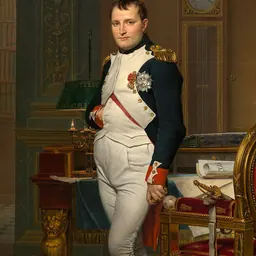
Related people
Same field, nearest in time

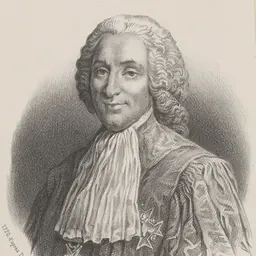

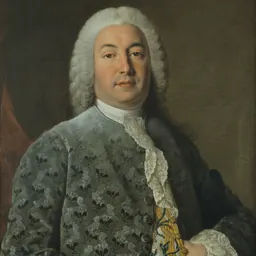

Contemporaries
People whose lives overlapped Pierre Clément de Laussat's





Frequently asked questions
Who was Pierre Clément de Laussat?
French politician (1756–1835)
When was Pierre Clément de Laussat born?
Pierre Clément de Laussat was born on 23 November 1756 in Pau.
When did Pierre Clément de Laussat die?
Pierre Clément de Laussat died on 10 April 1835 in Château de Bernadets.
What was Pierre Clément de Laussat's occupation?
Pierre Clément de Laussat was an administrateur, politician and governor.
What nationality was Pierre Clément de Laussat?
Pierre Clément de Laussat was French.
Sources & further reading
· Wikipedia: Pierre Clément de Laussat
· DBpedia: Pierre-Clément de Laussat
Cite this page
APA: Biography.guide. (2026). Pierre Clément de Laussat. https://biography.guide/pierre-clement-de-laussat/
MLA: "Pierre Clément de Laussat." Biography.guide, https://biography.guide/pierre-clement-de-laussat/.
Chicago: "Pierre Clément de Laussat." Biography.guide. https://biography.guide/pierre-clement-de-laussat/.
Data last updated: 2026-09-20 · Spot an error? Report a correction.
Page generated 2026-09-27 05:24 UTC