
Pierre Claude François Daunou
French statesman and historian of the French Revolution and Empire
About Pierre Claude François Daunou
Lived 1761 – 1840 (aged 78). Pierre Claude François Daunou was a French politician, archivist, historian, professor and writer.
Pierre Claude François Daunou (; 18 August 176120 June 1840) was a French statesman of the French Revolution and Empire. An author and historian, he served as the nation's archivist under both the Empire and the Restoration, contributed a volume to the Histoire littéraire de la France, and published more than twenty volumes of lectures he delivered when he held the chair of history and ethics at the Collège de France.
Early career He was born at Boulogne-sur-Mer. After studying at the school the Oratorians operates there, he joined the order in Paris in 1777. He was professor in various seminaries from 1780 to 1787, when he was ordained a priest. He had by then published essays and poems that established his reputation in literary circles.
With the onset of the French Revolution, he supported the Civil Constitution of the Clergy; a proffered appointment to a high Catholic Church office failed to induce him to alter his position.
Elected to the National Convention by the Pas-de-Calais département, he associated himself with the moderate Girondists and strongly opposed the death sentence imposed on King Louis XVI. Daunou took little part in the Girondist clash with their radical opponents, The Mountain, but was involved in the events of his party's overthrow in the summer of 1793 and was imprisoned for almost a year.
Directory In December 1794 he returned to the convention and was the principal author of the Constitution of the Year III that established the Directory in November 1795. It is probably because of his Girondinism that the Council of the Ancients was given the right of convoking the Council of Five Hundred outside Paris, an expedient which made possible Napoleon Bonaparte's coup d'état (the 18 Brumaire) in 1799.
Daunou also drew up the plans for the erection and organization of the Institut de France. He was instrumental in crushing the Royalist insurgency known as the 13 Vendémiaire. He was elected by twenty-seven départements as member of the Council of Five Hundred and became its first president. He was ineligible for election as a director, having himself set the age qualification for that office at forty when he was thirty-four. When the government passed into the hands of Talleyrand and his associates, Daunou returned briefly to literature, but in 1798 he was sent to Rome to organize the Roman Republic.
Napoleon and Restoration In 1799, Daunou returned the role of statesman, preparing the Constitution of the Year VIII, which established the Consulate, under which Napoleon held the position of First Consul. He remained largely ambivalent towards Napoleon, but supported him against Pope Pius VII and the Papal States, providing him historical arguments in a scholarly treatise Sur la puissance temporelle du Pape (On the Temporal Power of the Papacy) in 1809.
Nonetheless, he took little part in the new regime, of which he was resentful, and turned more and more to literature. At the Restoration in 1814, he was deprived of the post of archivist of the Empire, which he had held since 1807. In 1819 he became the chair of history and ethics at the Collège de France; in that role, his courses were among the most famous of the period. With the advent of the July Monarchy in 1830, he regained his old post, now under the title archivist of the Kingdom. In 1839, Daunou was made a peer.
Legacy
The Encyclopædia Britannica Eleventh Edition writes:
Don’t just read it —
keep it.
Full-length biographies made to live with: read them, listen on the way to work, watch them tonight.
- E-book
- Audio
- Video
Instant download · yours to keep · every purchase keeps this site free
Important facts
People in Pierre Claude François Daunou's life
Named in this biography and alive at the same time
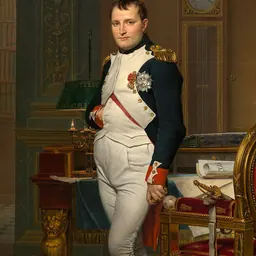
Related people
Same field, nearest in time


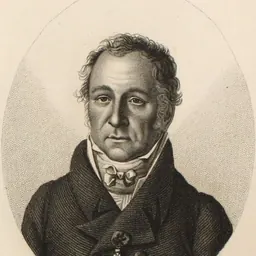
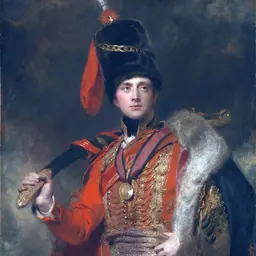

Contemporaries
People whose lives overlapped Pierre Claude François Daunou's





Frequently asked questions
Who was Pierre Claude François Daunou?
French statesman and historian of the French Revolution and Empire (1761-1840)
When was Pierre Claude François Daunou born?
Pierre Claude François Daunou was born on 18 August 1761 in Boulogne-sur-Mer.
When did Pierre Claude François Daunou die?
Pierre Claude François Daunou died on 20 June 1840 in Paris.
What was Pierre Claude François Daunou's occupation?
Pierre Claude François Daunou was a politician, archivist, historian, professor and writer.
What nationality was Pierre Claude François Daunou?
Pierre Claude François Daunou was French.
Sources & further reading
· Wikipedia: Pierre Claude François Daunou
Cite this page
APA: Biography.guide. (2026). Pierre Claude François Daunou. https://biography.guide/pierre-claude-francois-daunou/
MLA: "Pierre Claude François Daunou." Biography.guide, https://biography.guide/pierre-claude-francois-daunou/.
Chicago: "Pierre Claude François Daunou." Biography.guide. https://biography.guide/pierre-claude-francois-daunou/.
Data last updated: 2026-09-20 · Spot an error? Report a correction.
Page generated 2026-09-27 05:20 UTC