
Pierre César Charles de Sercey
French admiral, most notable for commanding French naval forces in the Indian Ocean from 1796 to 1800
About Pierre César Charles de Sercey
Lived 1753 – 1836 (aged 83). Pierre César Charles de Sercey was a French politician and military personnel.
Vice-Admiral Pierre César Charles Guillaume, marquis de Sercey ( , ; 26 April 1753 – 10 August 1836) was a French Navy officer and politician who served in American Revolutionary War, French Revolutionary and Napoleonic Wars and Haitian Revolution.
Early life Coming from old Burgundian nobility, he lost his father Jean-Jacques, Marquis de Sercey, captain of the , at the age of five. His family moved to Paris, and at thirteen he obtained permission from his mother Marie-Madeleine du Crest, shortly before her death, to join the French Navy, inspired by the exploits of a brother who had distinguished himself during the boarding of a British ship. Now an orphan, he embarked in 1766 as a volunteer on the frigate Légère, leaving Brest for a nine-month campaign in the Windward Islands. Back in France, he embarked in Lorient on the corvette Heure-du-Berger Separated from the expedition's lead ship, the frigate Fortune, by a storm, Gros Ventre was considered lost and Kerguelen returned to France, claiming to King Louis XV to have discovered a new southern continent and obtaining the means for a new expedition. Gros Ventre instead continued its initial mission, heading towards Australia, the contours of which were still poorly understood. After a difficult voyage, Shark Bay in Western Australia was reached and Saint-Aloüarn took possession of it in the name of the King of France on 30 March 1772. A few months later, Sercey joined the second Kerguelen expedition on the Isle de France and served on board the frigate Oiseau, He remained on this ship, becoming its second-in-command and then its temporary commander. Assigned to a naval division under the orders of Comte de Tréville, he served for seven months in the Atlantic Ocean, capturing three ships. He rejoined the Comte de Guichen for the battle of Martinique in April 1780, then, in charge of carrying missives to Saint-Domingue, he found himself upon a British naval division at night and was taken prisoner by HMS Phoenix on 26 June 1780. As a reward, he was made chevalier of the Royal and Military Order of Saint Louis in May 1782.
At the age of thirty, the Marquis de Sercey was far from retirement and was one of a limited number of officers who were allowed to remain in service. In 1784, he spent only a few months on land before embarking on the ship Séduisant, In July 1790, he took command of the frigate Surveillante Vue de l’incendie de la ville du Cap-Français, 21 juin 1793, painted engraving by Jean-Baptiste Chapuy, 1794, Bibliothèque nationale de France. Promoted to the rank of Counter Admiral on 1 January 1793,
After two days of bloody street fighting and short-lived success, the governor was forced to take refuge on Jupiter: the embattled commissioners had called on the insurgent slaves, and some ten thousand of them had invested the city, pushing the governor's forces back to shore. Cap-Francais then fell prey to ravaging fires and massacre, with colonists rushing by the thousands towards the port. Sercey succeeded in regaining control of his men, ordered and organized the evacuation, The admiral then led this makeshift fleet to the mouth of Chesapeake Bay, his wife organising the care of the survivors, receiving for her action among them the nickname of "tutelary angel".
Passing under the authority of Edmond-Charles Genêt, French ambassador to the United States, he was ordered to escort a convoy of American goods bound for the French mainland, but also to carry out an expedition to recapture the Saint-Pierre-et-Miquelon archipelago. Régénérée, Seine, Vertu, and the corvettes Bonne-Citoyenne and Mutine. Its destination was the Isle de France, with 800 men on board under the command of General François-Louis Magallon, an old friend, as well as two commissioners of the Directory, René Gaston Baco de La Chapelle and Étienne Laurent Pierre Burnel, who had been sent to take command of the colony and officially proclaim the Law of 4 February 1794 abolishing slavery. Wild rumours circulated: it was asserted that Magallon's troops were not there to reinforce the island, but to subdue it. On 21 June, a violent demonstration likely directed by the colonial assembly, with the probable support of Governor Malartic and Admiral Sercey, expelled the Commissioners. They were placed manu militari on a corvette, Moineau, bound for the Spanish Philippines.
This lack of support for the men of the Directory, and perhaps this complicity in this seditious turn of events, was reproached to Sercey by minister Truguet, as the rebellion of the Mascarenes was making headlines in Paris. On his return to France, commissioner Baco de La Chapelle published a pamphlet accusing the admiral in vehement terms of having taken part from beginning to end in this expulsion, including of having threatened to sink Moineau should they try to return to land. In her memoirs, Sercey's cousin Félicité de Genlis asserts that the demonstration and expulsion were a "bold manoeuvre" by the Marquis to prevent the commissioners from "revolutionising the colony," which, according to her, "saved it a lot of bloodshed". In any case, he faced no immediate repercussions for his involvement, as he was fiercely and successfully defended in front of the Council of Five Hundred by François-Antoine de Boissy d'Anglas and Joseph Jérôme Siméon,
Commerce raiding in the Indian Ocean
However, the Port-Nord-Ouest assembly and Governor Malartic did not behave more warmly once the commissioners were physically removed. With no real resources or capacity to meet the needs of the Sercey division, the colonists urged the admiral to return to sea as soon as possible. On 22 July 1796, after summary repairs and reinforced by the frigate Cybèle, Planning to attack the Penang trading post, on 8 September 1796 he saw two heavily armed British ships of the line, HMS Arrogant and HMS Victorious, at the entrance of the Strait of Malacca. The next day, he ordered his frigates to attack the superior British force, thinking that a confrontation was inevitable. It ended indecisively as after four hours of fierce fighting both sides withdrew. However, the strait and the South China Sea were now open to Sercey. After many captures, the division docked in Batavia, where it remained for a little more than a month, the counter admiral taking advantage of this rest to negotiate a treaty for the supply of food to the Isle de France.
It was while he was heading back to Port-Nord-Ouest to have this document ratified that the Marquis de Sercey made his greatest tactical error. On 28 January 1797, in the Bali Strait, the Cybèle, which had gone ahead to scout, signalled the presence of a numerically superior British force. Unable to repair his forces, which were already in bad shape, the admiral erred on the side of caution: when the British formed a line of battle, he chose to avoid combat and withdrew. The admiral therefore had to base himself temporarily in the Seychelles, not wanting to leave the Mascarenes undefended. Requests for support against British forces abounded, particularly from the Dutch East Indies and from Tipu Sultan, Sultan of Mysore, in addition to the orders of Malartic, who requisitioned the ships for additional missions decided in the absence of Sercey. Without having ever lost a ship in combat, the squadron was reduced to an almost nothing scattered from Mozambique to Java. He set up his command in Surabaya to be closer to the Spanish base in Manila, and a last campaign in the China seas succeeded in capturing or sinking about forty British ships. Desperately awaiting the return of his scattered forces, not knowing that some of them had already been destroyed or captured, he negotiated with the Spanish forces with the aim of continuing his mission, without concrete success: joint offensive attempts were not satisfactory, as in Macao in January 1799. He therefore accepted the evidence and left Java. Returning to Isle de France in May 1799, he succeeded in getting his last ships through a British blockade, before repelling their attacks on Port-Nord-Ouest for three weeks. But this was to be the last hurrah of the Sercey division: its last frigate, the last large French ship in the region, Preneuse, was destroyed in Tombeau Bay by HMS Tremendous and HMS Adamant on its return from a raiding campaign off Mozambique on December 11, 1799. and then returned to Isle of France, where he settled in Port-Nord-Ouest as a planter.
Sercey's name inscribed on the Arc de Triomphe, west pillar, column 40. He then sold his properties and returned to France, refusing to live under British rule. Following the first abdication of Napoleon in April 1814, following the Emperor’s defeat in the War of the Sixth Coalition, Sercey was part of the delegation tasked with meeting with King Louis XVIII, then living in exile at Hartwell House, in England. Recalled to service at the Bourbon Restoration, he was made president in May 1814 of a commission mandated by Baron Pierre-Victor Malouët to go to London to organise the release of at least 57,000 prisoners, many of them imprisoned in difficult conditions. Accompanied by the , he was given a sum of 420,000 francs to cover the expenses of transporting and caring for the prisoners As a reward, he was promoted to the rank of vice admiral on 28 May 1814 King Charles X later raised him to the rank of of the Legion of Honour in October 1828. finally made him Peer of France. He sat in the Chamber of Peers until his death, voting according to the wishes of the government.
He died on 10 August 1836 in Paris and was buried in Père-Lachaise Cemetery.
Titles and decorations
Marquess
Don’t just read it —
keep it.
Full-length biographies made to live with: read them, listen on the way to work, watch them tonight.
- E-book
- Audio
- Video
Instant download · yours to keep · every purchase keeps this site free
Important facts
People in Pierre César Charles de Sercey's life
Named in this biography and alive at the same time
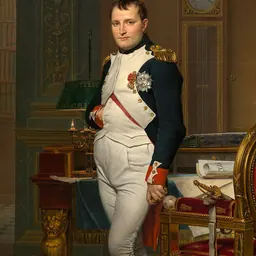
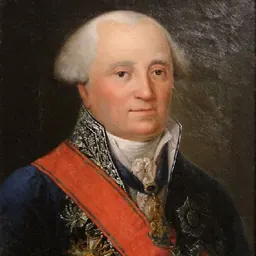
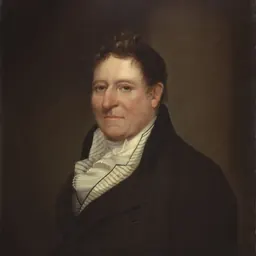

Related people
Same field, nearest in time
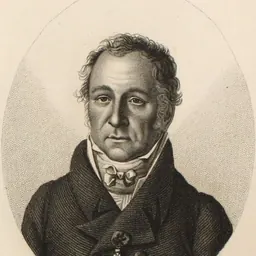



Contemporaries
People whose lives overlapped Pierre César Charles de Sercey's





Frequently asked questions
Who was Pierre César Charles de Sercey?
French admiral, most notable for commanding French naval forces in the Indian Ocean from 1796 to 1800 (1753–1836)
When was Pierre César Charles de Sercey born?
Pierre César Charles de Sercey was born on 26 April 1753.
When did Pierre César Charles de Sercey die?
Pierre César Charles de Sercey died on 10 August 1836 in Paris.
What was Pierre César Charles de Sercey's occupation?
Pierre César Charles de Sercey was a politician and military personnel.
What nationality was Pierre César Charles de Sercey?
Pierre César Charles de Sercey was French.
Sources & further reading
· Wikipedia: Pierre César Charles de Sercey
· DBpedia: Pierre César Charles de Sercey
Cite this page
APA: Biography.guide. (2026). Pierre César Charles de Sercey. https://biography.guide/pierre-cesar-charles-de-sercey/
MLA: "Pierre César Charles de Sercey." Biography.guide, https://biography.guide/pierre-cesar-charles-de-sercey/.
Chicago: "Pierre César Charles de Sercey." Biography.guide. https://biography.guide/pierre-cesar-charles-de-sercey/.
Data last updated: 2026-09-26 · Spot an error? Report a correction.
Page generated 2026-09-27 05:15 UTC