
About Pierre Bayle
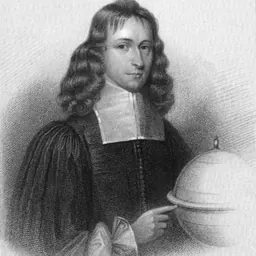
Lived 1647 – 1706 (aged 59). Pierre Bayle was a French philosopher, writer, professor, journalist, literary critic and theologian.
Pierre Bayle (; ; 18 November 1647 – 28 December 1706) was a French philosopher, author, and lexicographer. He is best known for his Historical and Critical Dictionary, whose publication began in 1697. Bayle was a notable advocate of religious toleration, and his skeptical philosophy had a significant influence on the subsequent growth and development of the European Age of Enlightenment.
Leibniz's Théodicée was formed in response to Bayle. Voltaire called Bayle "the greatest dialectician to have ever written." The English translation of The Dictionary was identified by American President Thomas Jefferson to be among the one hundred foundational texts to form the first collection of the Library of Congress.
Biography Bayle was born at Carla-le-Comte
In 1690 there appeared a work entitled Avis important aux refugiés, which Jurieu attributed to Bayle, whom he attacked with great animosity. After losing his chair, Bayle engaged in the preparation of his massive Dictionnaire Historique et Critique (Historical and Critical Dictionary), which effectively constituted one of the first encyclopaedias (before the term had come into wide circulation) of ideas and their originators. In the Dictionary, Bayle expressed his view that much that was considered to be "truth" was actually just opinion, and that gullibility and stubbornness were prevalent. The Dictionary would remain an important scholarly work for several generations after its publication.
The remaining years of Bayle's life were devoted to miscellaneous writings; in many cases, he was responding to criticisms made of his Dictionary.
Voltaire, in the prelude to his Poème sur le désastre de Lisbonne, calls Bayle "le plus grand dialecticien qui ait jamais écrit": the greatest dialectician to have ever written.
The Nouvelles de la république des lettres was the first thoroughgoing attempt to popularise literature, and it was eminently successful. His multi-volume Historical and Critical Dictionary constitutes Bayle's masterpiece. The English translation of The Dictionary, by Bayle's fellow Huguenot exile Pierre des Maizeaux, was identified by American President Thomas Jefferson to be among the one hundred foundational texts to form the first collection of the Library of Congress.
Views on toleration Bayle advanced arguments for religious toleration in his Dictionnaire historique et critique and Commentaire Philosophique. Bayle rejected the use of scripture to justify coercion and violence: "One must transcribe almost the whole New Testament to collect all the Proofs it affords us of that Gentleness and Long-suffering, which constitute the distinguishing and essential Character of the Gospel." He did not regard toleration as a danger to the state; on the contrary: "If the Multiplicity of Religions prejudices the State, it proceeds from their not bearing with one another but on the contrary endeavouring each to crush and destroy the other by methods of Persecution. In a word, all the Mischief arises not from Toleration, but from the want of it."
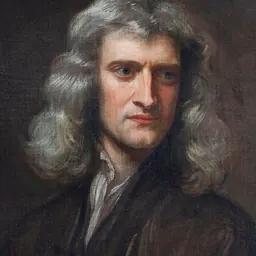
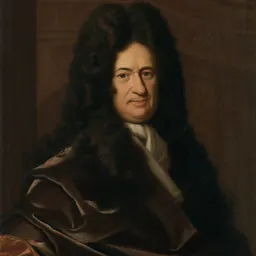
Skepticism Richard Popkin has advanced the view that Pierre Bayle was a skeptic who used the Historical and Critical Dictionary to criticise all prior known theories and philosophies. (Many scholars disagree. ) In Bayle's view, humans were inherently incapable of achieving true knowledge. Because of the limitations of human reason, men should adhere instead to their conscience alone. Bayle was critical of many influential rationalists, such as René Descartes, Baruch Spinoza, Nicolas Malebranche and Gottfried Wilhelm Leibniz, as well as empiricists such as Thomas Hobbes, John Locke, and Isaac Newton. Popkin quotes the following passage as an example of Bayle's skeptical viewpoint: It [reason] is a guide that leads one astray; and philosophy can be compared to some powders that are so corrosive that, after they have eaten away the infected flesh of a wound, they then devour the living flesh, rot the bones, and penetrate to the very marrow. Philosophy at first refutes errors. But if it is not stopped at this point, it goes on to attack truths. And when it is left on its own, it goes so far that it no longer knows where it is and can find no stopping place.
Problem of evil Bayle is particularly famous for addressing the problem of evil in philosophy and theology. He argued that rational theology is incapable of justifying the existence of evil in a world created by a benevolent God. Bayle criticized Christian theology by reviving Persian theology (such as Zoroastrianism and Manichaeism), which has contrasting forces of good and evil in creation. This led Leibniz to write his only published work, the Théodicée.
Legacy and honors In 1906 a statue in his honor was erected at Pamiers, la reparation d'un long oubli ("the reparation of a long neglect"). In 1959 a street was named after him in Rotterdam. In 2012 a bench (By Paul Cox) in tribute to Bayle, to reflect on the (hypothetical) philosophical exchange of thought between Bayle and Erasmus. (concept of thought: JW van den Blink)
Selected works Pensées Diverses sur l'Occasion de la Comète, (1682) translated as Various Thoughts on the Occasion of a Comet (2000) by Robert C. Bartlett, SUNY Press. A Philosophical Commentary on These Words of the Gospel, Luke 14:23, “Compel Them to Come In, That My House May Be Full”, Edited and with an Introduction by John Kilcullen and Chandran Kukathas (Indianapolis: Liberty Fund, 2005). Dictionnaire Historique et Critique (1695–1697; 1702, enlarged; best that of P. des Maizeaux, 4 vols., 1740) Œuvres diverses, 5 vols., The Hague, 1727–31; anastatic reprint: Hildesheim: Georg Olms, 1964–68. Selections in English: Pierre Bayle (Richard H. Popkin transl.), Historical and Critical Dictionary – Selections, Indianapolis: Hackett, 1991. .
Don’t just read it —
keep it.
Full-length biographies made to live with: read them, listen on the way to work, watch them tonight.
- E-book
- Audio
- Video
Instant download · yours to keep · every purchase keeps this site free
Important facts
People in Pierre Bayle's life
Named in this biography and alive at the same time


Related people
Same field, nearest in time




Contemporaries
People whose lives overlapped Pierre Bayle's




Frequently asked questions
Who was Pierre Bayle?
French philosopher and writer (1647–1706)
When was Pierre Bayle born?
Pierre Bayle was born on 18 November 1647 in Carla-Bayle.
When did Pierre Bayle die?
Pierre Bayle died on 28 December 1706 in Rotterdam.
What was Pierre Bayle's occupation?
Pierre Bayle was a philosopher, writer, professor, journalist, literary critic and theologian.
What nationality was Pierre Bayle?
Pierre Bayle was French.
Sources & further reading
Cite this page
APA: Biography.guide. (2026). Pierre Bayle. https://biography.guide/pierre-bayle/
MLA: "Pierre Bayle." Biography.guide, https://biography.guide/pierre-bayle/.
Chicago: "Pierre Bayle." Biography.guide. https://biography.guide/pierre-bayle/.
Data last updated: 2026-09-20 · Spot an error? Report a correction.
Page generated 2026-09-27 05:25 UTC