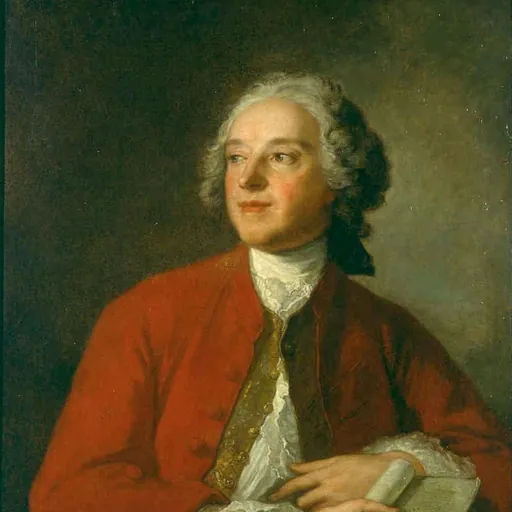
Pierre-Augustin de Beaumarchais
French playwright, diplomat and polymath
About Pierre-Augustin de Beaumarchais
Lived 1732 – 1799 (aged 67). Pierre-Augustin de Beaumarchais was a French musician, poet, businessperson, publisher, playwright and diplomat.
Pierre-Augustin Caron de Beaumarchais (; ; 24 January 1732 – 18 May 1799) was a French playwright and diplomat of the Age of Enlightenment. Best known for his three Figaro plays, at various times in his life he was also a watchmaker, inventor, musician, spy, publisher, arms dealer, and revolutionary (both French and American).
Born a Parisian watchmaker's son, Beaumarchais rose in French society and became influential in the court of Louis XV as an inventor and music teacher. He made a number of important business and social contacts, played various roles as a diplomat and spy, and had earned a considerable fortune before a series of costly court battles jeopardized his reputation.
An early French supporter of American independence, Beaumarchais lobbied the French government on behalf of the American rebels during the American War of Independence. Beaumarchais oversaw covert aid from the French and Spanish governments to supply arms and financial assistance to the rebels in the years before France's formal entry into the war in 1778. He later struggled to recover money he had personally invested in the scheme. Beaumarchais was also a participant in the early stages of the 1789 French Revolution.
Early life Beaumarchais was born Pierre-Augustin Caron in the Rue Saint-Denis, Paris, on 24 January 1732, to André-Charles Caron, a watchmaker from Meaux. The family had previously been Huguenot, but had converted to Roman Catholicism in the wake of the revocation of the Edict of Nantes and the increased persecution of Protestants that followed.
From the age of ten, Beaumarchais had some education at a "country school", where he learned some Latin. At twelve, he left school to apprentice under his father in the craft of watchmaking. He may have used his own experiences during these years as the inspiration for the character of Cherubin when he wrote the Marriage of Figaro.
The first man to take an interest in this new invention was Jean-André Lepaute, the royal clockmaker in France, whose work could be found in the Palais du Luxembourg, Tuileries Palace, the Palais-Royal, and the Jardin des plantes. Beaumarchais was outraged when he read in the September issue of Le Mercure de France that M. Lepaute had just invented a wonderful mechanism for manufacturing a more portable clock, and wrote a strongly-worded letter to that same newspaper defending the invention as his own and urging the French Academy of Sciences to see the proof for themselves. "In the interests of truth and my reputation," he says, "I cannot let such an infidelity go by in silence and must claim as mine the invention of this device." Lepaute defended himself with a statement by three Jesuits maintaining he had shown them such a mechanism in May 1753. While in Spain, he was mostly concerned with striking business deals for Duverney. They sought exclusive contracts for Spain’s newly acquired colony of Spanish Louisiana, and attempted to gain the right to import slaves to the Spanish colonies in the Americas. Beaumarchais went to Madrid with a letter of introduction from the Étienne François, duc de Choiseul, who was now his political patron. Hoping to secure Clavijo's support for his business deals by binding him by marriage, Beaumarchais initially shamed Clavijo into agreeing to marry Lisette, but when further details emerged about Clavijo's conduct, the marriage was called off.
Beaumarchais's business deals dragged on, and he spent much of his time soaking up the atmosphere of Spain, which would become a major influence on his later writings. Although he befriended important figures such as the foreign minister Jerónimo Grimaldi, 1st Duke of Grimaldi, his attempts to secure the contracts for Duverney eventually came to nothing and he went home in March 1765. Although Beaumarchais returned to France with little profit, he had managed to acquire new experience, musical ideas, and ideas for theatrical characters. Beaumarchais considered turning the affair into a play, but decided to leave it to others—including Goethe, who wrote Clavigo in 1774.
Playwright Beaumarchais hoped to be made consul to Spain, but his application was rejected. Instead he concentrated on developing his business affairs and began to show an interest in writing plays. He had already experimented in writing short farces for private audiences, but he now had ambitions to write for the theatre.
His name as a writer was established with his first dramatic play, Eugénie, which premiered at the Comédie-Française in 1767. This was followed in 1770 by another drama. Naturally, the thinly veiled satirization of the aristocracy did not go without opposition. Upon first reading a manuscript of Beaumarchais's play, King Louis XVI stated that "this man mocks everything that must be respected in a government" and refused to let it be performed.
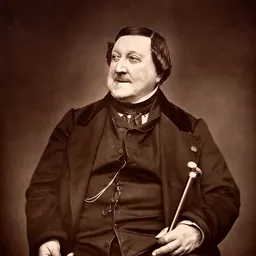
To a lesser degree, the Figaro plays are semi-autobiographical. Gioachino Rossini composed an opera based on the play, Il barbiere di Siviglia, which premiered in 1816.
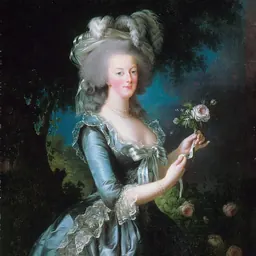
The sequel, Le Mariage, was initially passed by the censor in 1781, but was soon banned from performance by Louis XVI after a private reading. Queen Marie Antoinette lamented the ban, as did various influential members of her entourage. Nonetheless, the King was unhappy with the play's satire on the aristocracy and overruled the Queen's entreaties to allow its performance. Over the next three years, Beaumarchais gave many private readings of the play, as well as making revisions to try to pass the censor. The King finally relented and lifted the ban in 1784. The play premiered that year and was enormously popular, even with aristocratic audiences. Mozart's opera based on the play, Le Nozze di Figaro premiered just two years later in Vienna.
Beaumarchais's final play, La Mère coupable, premiered in 1792 in Paris. In homage to the great French playwright Molière, Beaumarchais also dubbed La Mère coupable "The Other Tartuffe".
All three Figaro plays enjoyed great success, and are still frequently performed today, as are Mozart's and Rossini's operas. No musical version of the third play has enjoyed any significant success.
Court battles The death of Duverney on 17 July 1770 triggered a decade of turmoil for Beaumarchais. A few months earlier, the two had signed a statement cancelling all debts that Beaumarchais owed Duverney (about 75,000 pounds), and granting Beaumarchais the modest sum of 15,000 pounds. Goezman countered Beaumarchais's accusations by launching a lawsuit of his own.
On 26 February 1774, Goezman's verdict in the La Blache case was overturned, and he was removed from his post. However, both Beaumarchais and Mme. Goezman were sentenced to "blâme", meaning they were nominally deprived of their civil rights.
The case was so sensational that the judges left the courtroom through a back door to avoid the large, angry mob waiting in front of the court house. In an August 18, 1776, letter to the Committee of Secret Correspondence of the Second Continental Congress, he wrote under the signature of Roderique Hortales & Co., Your deputies, gentlemen, will find in me a sure friend, an asylum in my house, money in my coffers, and every means of facilitating their operations, whether of a public or a secret nature. I will, if possible, remove all obstacles that may oppose your wishes from the politics of Europe. At this very time, and without waiting for any answer from you, I have procured for you about 200 pieces of brass cannon, four pounders, which will be sent to you by the nearest way; 20,000 lbs. of cannon powder, 20,000 of excellent fusils, some brass mortars, bombs, cannon balls, bayonets, platines, clothes, linens, &c. for the clothing of your toops; and lead for musket balls. He bought the complete foundry of the famous English type designer John Baskerville from his widow, and purchased three paper mills. Seventy volumes were published between 1783 and 1790. While the venture proved a financial failure, Beaumarchais was instrumental in preserving many of Voltaire's later works which otherwise might have been lost.
More court battles and the French Revolution
It was not long before Beaumarchais crossed paths again with the French legal system. In 1787, he became acquainted with Mme. Kornmann, who was implicated and imprisoned in an adultery suit filed by her husband to expropriate her dowry. The matter went to court, with Beaumarchais siding with Mme. Kornmann, and M. Kornmann assisted by a celebrity lawyer, Nicolas Bergasse. On 2 April 1790, M. Kornmann and Bergasse were found guilty of calumny (slander), but Beaumarchais's reputation was also tarnished.
Meanwhile, the French Revolution broke out. Beaumarchais was no longer quite the idol of the masses he had been a few years before, as he thought the excesses of the revolution were endangering liberty. He was financially successful again, mainly from supplying drinking water to Paris, and had acquired ranks in the French nobility. In 1791, he took up a lavish residence across from where the Bastille had stood. He spent under a week in prison during August 1792 for criticising the government, and was released only three days before a massacre took place there.
Nevertheless, he pledged his services to the new republic. He attempted to purchase 60,000 rifles for the French Revolutionary army from Holland, but was unable to complete the deal.
Exile and death While he was out of the country, Beaumarchais was falsely declared an émigré (a loyalist of the old regime) by his enemies. He spent two and a half years in exile, mostly in Germany, before his name was removed from the list of proscribed émigrés. He returned to Paris in 1796, where he lived out the remainder of his life in relative peace. He is buried in the Père Lachaise Cemetery in Paris.
Boulevard Beaumarchais in Paris is named after him.
Operas In 1786, Wolfgang Amadeus Mozart composed an opera, Le nozze di Figaro, based on The Marriage of Figaro, with a libretto by Lorenzo Da Ponte based on the play. Several composers, including Paisiello in 1782, wrote operas based on The Barber of Seville. Although not received well at first, Rossini's 1816 version of Barber is his most successful work and still often performed. In 1966, Darius Milhaud composed an opera, La mère coupable, based on The Guilty Mother.
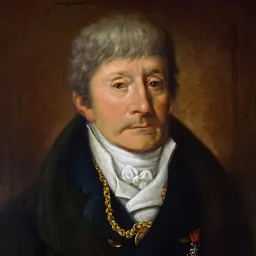
Beaumarchais was also the librettist for Antonio Salieri's opera Tarare, which premiered in Paris in 1787.
Private life
Beaumarchais married three times. He wed Madeleine-Catherine Franquet (née Aubertin) on 22 November 1756; she died under mysterious circumstances 10 months later. He married Geneviève-Madeleine Lévêque (née Wattebled) in 1768. She died under mysterious circumstances two years later (though most scholars believed she actually suffered from tuberculosis). She bore a son, August, who died in 1772. Beaumarchais lived with his lover, Marie-Thérèse de Willer-Mawlaz, for 12 years before they married in 1786. She bore a daughter, Eugénie.
While having no shortage of lovers throughout his life, Beaumarchais was known to care deeply for both his family and close friends. He was accused by his enemies of poisoning his first two wives in order to claim inheritances they had previously married into, though no evidence was ever produced.
List of works 1760s – Various one-act comedies (parades) for private staging. Les Député de la Halle et du Gros-Caillou Colin et Colette Les Bottes de sept lieues Jean Bête à la foire Œil pour œil Laurette 1765(?) – Le Sacristain, interlude (precursor to Le Barbier de Séville) 1767 – Eugénie, drama, premiered at the Comédie-Française. 1767 – L'Essai sur le genre dramatique sérieux. 1770 – , drama, premiered at the Comédie-Française 1773 – Le Barbier de Séville ou la Précaution inutile, comedy, premiered on 3 January 1775 at the Comédie-Française 1774 – Mémoires contre Goezman 1775 – La Lettre modérée sur la chute et la critique du "Barbier de Sérville" 1778 – La Folle journée ou Le Mariage de Figaro, comedy, premiered on 27 April 1784 at the Comédie-Française 1784 – Préface du mariage de Figaro 1787 – Tarare, opera with music by Antonio Salieri, premiered at the Opéra de Paris (full-text) 1792 – La Mère coupable ou L'Autre Tartuffe, drama, premiered on 26 June at the Théâtre du Marais 1799 – Voltaire et Jésus-Christ, in two articles.
List of related works Clavigo (1774), a tragedy by Johann Wolfgang von Goethe based on Beaumarchais's experiences in Spain Il barbiere di Siviglia, ovvero La precauzione inutile (1782), an opera based on the title play, libretto by Giuseppe Petrosellini, and music by Giovanni Paisiello, revised in 1787 Le nozze di Figaro (1786), an opera based on the title play, libretto by Lorenzo Da Ponte, and music by Wolfgang Amadeus Mozart Ta veseli dan ali Matiček se ženi (1790) by Anton Tomaž Linhart, a play adapted from Le Mariage de Figaro Il barbiere di Siviglia (1796), an opera based on the play, music by Nicolas Isouard La pazza giornata, ovvero Il matrimonio di Figaro (1799), an opera based on the title play, libretto by Gaetano Rossi, and music by Marcos Portugal Il barbiere di Siviglia (1816), an opera based on the title play, libretto by Cesare Sterbini, and music by Gioachino Rossini I due Figaro o sia Il soggetto di una commedia (1820), an opera based on the play Les deux Figaro ou Le sujet de comédie by Honoré-Antoine Richaud Martelly, libretto by Felice Romani, and music by Michele Carafa I due Figaro o sia Il soggetto di una commedia (1835), an opera based on the play Les deux Figaro ou Le sujet de comédie by Honoré-Antoine Richaud Martelly, libretto by Felice Romani, and music by Saverio Mercadante Chérubin (1905), an opera based on the title role, music by Jules Massenet, libretto by Francis de Croisset and Henri Caïn Die Füchse im Weinberg (Proud Destiny, Waffen für Amerika, Foxes in the Vineyard) (1947/48), by Lion Feuchtwanger – a novel mainly about Beaumarchais and Benjamin Franklin beginning in 1776's Paris Beaumarchais (1950), a comedy written by Sacha Guitry La mère coupable (1966), an opera based on the title play, libretto by Madeleine Milhaud, and music by Darius Milhaud The Ghosts of Versailles (1991), an opera based loosely on La Mère coupable, music by John Corigliano, libretto by William M. Hoffman, in which Beaumarchais and Marie Antoinette are principal characters Den brottsliga modern (1991), an opera based on La Mère coupable, music by Inger Wikström, libretto by Inger Wikström and . Beaumarchais l'insolent (1996), film based on Sacha Guitry's play, directed by Édouard Molinaro Beaumarchais, a six-episode radio series based on his life starring Henry Goodman, was broadcast on BBC Radio 4 in 1996.
Don’t just read it —
keep it.
Full-length biographies made to live with: read them, listen on the way to work, watch them tonight.
- E-book
- Audio
- Video
Instant download · yours to keep · every purchase keeps this site free
Important facts
People in Pierre-Augustin de Beaumarchais's life
Named in this biography and alive at the same time


Related people
Same field, nearest in time


Contemporaries
People whose lives overlapped Pierre-Augustin de Beaumarchais's






Frequently asked questions
Who was Pierre-Augustin de Beaumarchais?
French playwright, diplomat and polymath (1732–1799)
When was Pierre-Augustin de Beaumarchais born?
Pierre-Augustin de Beaumarchais was born on 24 January 1732 in Paris, rue Saint-Denis.
When did Pierre-Augustin de Beaumarchais die?
Pierre-Augustin de Beaumarchais died on 18 May 1799 in Paris, former 8th arrondissement of Paris.
What was Pierre-Augustin de Beaumarchais's occupation?
Pierre-Augustin de Beaumarchais was a musician, poet, businessperson, publisher, playwright and diplomat.
What nationality was Pierre-Augustin de Beaumarchais?
Pierre-Augustin de Beaumarchais was French.
Sources & further reading
· Wikipedia: Pierre-Augustin de Beaumarchais
· DBpedia: Pierre-Augustin de Beaumarchais
Cite this page
APA: Biography.guide. (2026). Pierre-Augustin de Beaumarchais. https://biography.guide/pierre-augustin-de-beaumarchais/
MLA: "Pierre-Augustin de Beaumarchais." Biography.guide, https://biography.guide/pierre-augustin-de-beaumarchais/.
Chicago: "Pierre-Augustin de Beaumarchais." Biography.guide. https://biography.guide/pierre-augustin-de-beaumarchais/.
Data last updated: 2026-09-23 · Spot an error? Report a correction.
Portrait: Wikimedia Commons · author & licence
Page generated 2026-09-27 05:07 UTC