
Piero della Francesca
Italian painter and mathematician
About Piero della Francesca
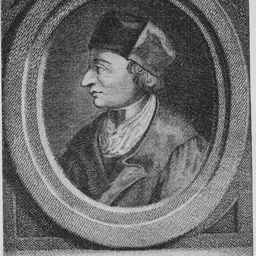
Lived 1415 – 1492 (aged 76–77). Piero della Francesca was an Italian painter, mathematician and art theorist.
Piero della Francesca ( , ; ; ; nowadays chiefly appreciated for his art. His painting is characterized by its serene humanism, its use of geometric forms and perspective. His most famous work is the cycle of frescoes The History of the True Cross in the Basilica of San Francesco in the Tuscan town of Arezzo.
Biography Early years Piero was born Piero di Benedetto in the town of Borgo Santo Sepolcro, He certainly took notice of the work of some of the Sienese artists active in San Sepolcro during his youth; e.g. Sassetta. In 1439 Piero received, together with Domenico Veneziano, payments for his work on frescoes for the church of Sant'Egidio in Florence, now lost. In Florence he must have met leading masters like Fra Angelico, Luca della Robbia, Donatello, and Brunelleschi. The classicism of Masaccio's frescoes and his majestic figures in the Santa Maria del Carmine were for him an important source of inspiration. Dating of Piero's undocumented work is difficult because his style does not seem to have developed over the years.
Mature work Piero returned to his hometown in 1442 and was elected to the City Council of Sansepolcro. Three years later, he received his first commission, to paint the Madonna della Misericordia altarpiece for the church of the Misericordia in Sansepolcro, which was completed in the early 1460s. In 1449 he executed several frescoes in the Castello Estense and the church of Sant'Andrea of Ferrara, now also lost. His influence was particularly strong in the later Ferrarese allegorical works of Cosimo Tura.
The Baptism of Christ, now in the National Gallery in London, was completed in about 1450 for the high altar of the church of the Priory of S. Giovanni Battista at Sansepolcro. Other notable works are the frescoes of The Resurrection in Sansepolcro, and the Madonna del parto in Monterchi, near Sansepolcro.
Sigismondo Pandolfo Malatesta kneeling before St. Sigismund (1451) Two years later he was in Rimini, working for the condottiero Sigismondo Pandolfo Malatesta. In 1451, during that sojourn, he executed the famous fresco of St. Sigismund and Sigismondo Pandolfo Malatesta in the Tempio Malatestiano, as well as a portrait of Sigismondo. In Rimini, Piero may have met the famous Renaissance mathematician and architect Leon Battista Alberti, who had redesigned the Tempio Malatestiano, although it is known that Alberti directed the execution of his designs for the church by correspondence with his building supervisor. Thereafter Piero was active in Ancona, Pesaro and Bologna.
In 1454, he signed a contract for the Polyptych of Saint Augustine in the church of Sant'Agostino in Sansepolcro. The central panel of this polyptych is lost, and the four panels of the wings, with representations of saints, are now scattered around the world. A few years later, summoned by Pope Nicholas V, he moved to Rome, where he executed frescoes in the Basilica di Santa Maria Maggiore, of which only fragments remain. Two years later he was again in the Papal capital, painting frescoes in the Vatican Palace, which have since been destroyed.
Frescoes in San Francesco at Arezzo In 1452, Piero della Francesca was called to Arezzo to replace Bicci di Lorenzo in painting the frescoes of the basilica of San Francesco. The work was finished in 1464. The History of the True Cross cycle of frescoes is generally considered among his masterworks and those of Renaissance painting in general. The story in these frescoes derives from legendary medieval sources as to how timber relics of the True Cross came to be found. These stories were collected in the Golden Legend of Jacopo da Varazze (Jacopo da Varagine) of the mid-13th century.
Piero's activity in Urbino At some point, Giovanni Santi invited Piero to Urbino, where Piero "executed several commissions for Duke Federico da Montefeltro." The Flagellation is generally considered Piero's oldest work in Urbino (c. 1455–1470). It is one of the most famous and controversial pictures of the early Renaissance. As discussed in its own entry, it is marked by an air of geometric sobriety, in addition to presenting a perplexing enigma as to the nature of the three men standing at the foreground.
Another famous work painted in Urbino is the Double Portrait of Federico and his wife Battista Sforza, in the Uffizi. The portraits in profile take their inspiration from large bronze medals and stucco roundels with the official portraits of Federico and his wife. Other paintings made in Urbino are the monumental Montefeltro Altarpiece (1474) in the Brera Gallery in Milan and the Madonna of Senigallia.
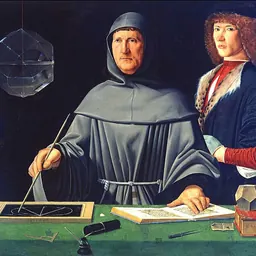
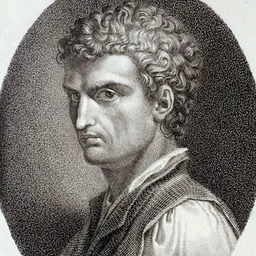
In Urbino Piero met the painters Melozzo da Forlì, Fra Carnevale, and the Flemish Justus van Gent, the mathematician Fra Luca Pacioli, the architect Francesco di Giorgio Martini, and probably also Leon Battista Alberti.
Later years In his later years, painters such as Perugino and Luca Signorelli frequently visited his workshop. He completed the treatise On Perspective in Painting in the mid-1470s to 1480s. By 1480, his vision began to deteriorate, but he continued writing treatises such as Short Book on the Five Regular Solids in 1485. It is documented that Piero rented a house in Rimini in 1482. Piero made his will in 1487 and he died five years later, on 12 October 1492, in his own house in Sansepolcro.
By contrast, Walter Kaiser, reviewing the exhibition in The New York Review of Books, wrote, "The most splendid picture in the Frick exhibition is the magnificent figure of Saint Augustine from the Museu Nacional de Arte Antiga in Lisbon, a companion to Saint John the Evangelist [owned by the Frick Collection] on the Sant'Agostino altarpiece".
Work in mathematics and geometry
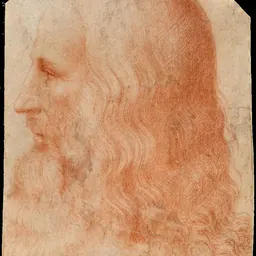
Piero's deep interest in the theoretical study of perspective and his contemplative approach to his paintings are apparent in all his work. In his youth, Piero was trained in mathematics, which most likely was for mercantilism. Three treatises written by Piero have survived to the present day: , De quinque corporibus regularibus (On the Five Regular Solids) and De Prospectiva pingendi (On Perspective in painting). The subjects covered in these writings include arithmetic, algebra, geometry and innovative work in both solid geometry and perspective. Much of Piero's work was later absorbed into the writing of others, notably Luca Pacioli. Piero's work on solid geometry was translated in Pacioli's Divina proportione, a work illustrated by Leonardo da Vinci. Biographers of his patron Federico da Montefeltro of Urbino record that he was encouraged to pursue the interest in perspective which was shared by the Duke.
In the late 1450s, Piero copied and illustrated the following works of Archimedes: On the Sphere and Cylinder, Measurement of a Circle, On Conoids and Spheroids, On Spirals, On the Equilibrium of Planes, The Quadrature of the Parabola, and The Sand Reckoner. The manuscript consists of 82 folio leaves, is held in the collection of the Biblioteca Riccardiana and is a copy of the translation of the Archimedean corpus made by Italian humanist Iacopo da San Cassiano.
Inspirations Bohuslav Martinů wrote a three movement work for orchestra entitled Les Fresques de Piero della Francesca. Dedicated to Rafael Kubelik, it was premiered by Kubelik and the Vienna Philharmonic at the 1956 Salzburg Festival.
Piero's geometrical perfection and the almost magic atmosphere of the light in his painting inspired modern painters like Giorgio de Chirico, Massimo Campigli, Felice Casorati, and Balthus.
Selected works
Polyptych of the Misericordia (1445–62) – Tempera and oil on panel, 273 x 330 cm, Museo Civico Sansepolcro The Baptism of Christ – Tempera on panel, 168 × 116 cm, National Gallery, London St. Jerome in Penitence – Tempera on panel, 51 × 38 cm, Staatliche Museen, Berlin St. Jerome and a Donor (Girolamo Amadi) (1451) – Tempera and oil on panel, 49 × 42 cm, Gallerie dell'Accademia, Venice Sigismondo Pandolfo Malatesta Praying in Front of St. Sigismund (1451) – Fresco (transferred to canvas), 257 x 345 cm, Tempio Malatestiano, Rimini Portrait of Sigismondo Pandolfo Malatesta – Tempera and oil on panel, 44.5 × 34.5 cm, Musée du Louvre, Paris The History of the True Cross – Fresco cycle, Basilica of San Francesco, Arezzo The Flagellation of Christ – Tempera on panel, 58.4 x 81.5 cm, Galleria Nazionale delle Marche, Urbino Polyptych of Saint Augustine (1460–70) – Tempera and oil on panels, dispersed in several museums Resurrection – Fresco, 225 × 200 cm, Museo Civico Sansepolcro Hercules – Fresco (detached), 151 × 126 cm, Isabella Stewart Gardner Museum, Boston St. Mary Magdalene – Fresco, 190 × 180 cm, Cathedral, Arezzo Madonna del Parto (1459–67) – Detached fresco, 260 × 203 cm, Chapel of the cemetery, Monterchi The Nativity – Oil on panel, 124.5 × 123 cm, National Gallery, London Polyptych of Saint Anthony – Oil on panel, 338 × 230 cm, Galleria Nazionale dell'Umbria, Perugia Brera Madonna, i.e. Montefeltro Altarpiece, (1472–74) – Oil on panel, 248 × 170 cm, Pinacoteca di Brera, Milan Diptych of the Count and Countess of Urbino, Federico da Montefeltro and Battista Sforza – Oil on panel, each 47,4 × 33,6 cm, Galleria degli Uffizi, Florence. Madonna di Senigallia – Oil on panel, 67 × 53.5 cm, Galleria Nazionale delle Marche, Urbino
Don’t just read it —
keep it.
Full-length biographies made to live with: read them, listen on the way to work, watch them tonight.
- E-book
- Audio
- Video
Instant download · yours to keep · every purchase keeps this site free
Important facts
more
Piero Della Francesca, Pietro di Benedetto dei Franceschi, Piero della Francesco, Dei Franceschi, Pietro di Benedetto di Pietro della Francesca, Pietro della Francesca, P. della Francesca, P'ero, Pistro della FrancescaPeople in Piero della Francesca's life
Named in this biography and alive at the same time




Related people
Same field, nearest in time
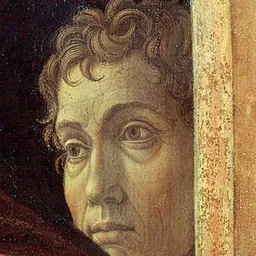

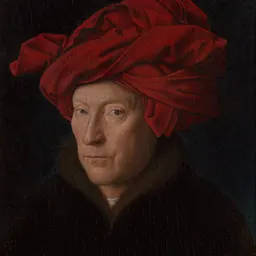
Contemporaries
People whose lives overlapped Piero della Francesca's
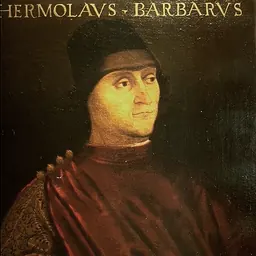


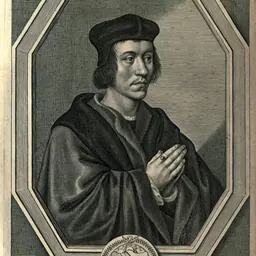
Frequently asked questions
Who was Piero della Francesca?
Italian painter and mathematician (c. 1416–1492)
When was Piero della Francesca born?
Piero della Francesca was born in 1415 in Sansepolcro.
When did Piero della Francesca die?
Piero della Francesca died on 12 October 1492 in Sansepolcro.
What was Piero della Francesca's occupation?
Piero della Francesca was a painter, mathematician and art theorist.
What nationality was Piero della Francesca?
Piero della Francesca was Italian.
Sources & further reading
· Wikipedia: Piero della Francesca
· DBpedia: Piero della Francesca
Cite this page
APA: Biography.guide. (2026). Piero della Francesca. https://biography.guide/piero-della-francesca/
MLA: "Piero della Francesca." Biography.guide, https://biography.guide/piero-della-francesca/.
Chicago: "Piero della Francesca." Biography.guide. https://biography.guide/piero-della-francesca/.
Data last updated: 2026-09-20 · Spot an error? Report a correction.
Page generated 2026-09-27 05:22 UTC