
About Phyllis Greenacre
Lived 1894 – 1989 (aged 95). Phyllis Greenacre was an American psychiatrist and psychoanalyst.
Phyllis Greenacre (3 May 1894 – 24 October 1989) was an American psychoanalyst and physician who was a supervising and training analyst at the New York Psychoanalytic Institute. She was born in Chicago, Illinois and died in Ossining, New York.
Education and life After taking a BS from Chicago in 1913 and an MD in 1916, Greenacre worked for some years under Adolf Meyer on experimental psychology. During this period, she married and divorced her one husband, after having two children with him in 1921-2. Meyer commissioned her in 1924 to investigate the work of psychiatrist Henry Cotton, who used experimental surgery on his patients to find new ways to cure mental illnesses. Her unflattering and critical report on Cotton's dangerous and pseudoscientific practices was eventually silenced by Meyer.
She began psychoanalytic training in 1937, and thereafter rose to high prominence within the ranks of the American psychoanalytic establishment, before finally retiring at the age of ninety.
Contributions In an early publication from 1939, Greenacre explored the role of a severe sense of (unconscious) guilt in fueling surgical addiction. Two years later she published her once controversial but now classic study of childhood anxiety as manifested preverbally.
In the fifties, a study of fetishism in relation to body image launched her at fifty-nine into a two-decade long exploration of aggression, creativity and early childhood development. She also wrote on the family background of the imposter.
Her continuing interest in psychoanalytic training led her to a powerful warning against the dangers of boundary transgressions in relation to the transference: “The carrying through into a relationship in life of the incestuous fantasy of the patient may be more grave in its subsequent distortion of the patient's life than any actual incestuous seduction in childhood”.
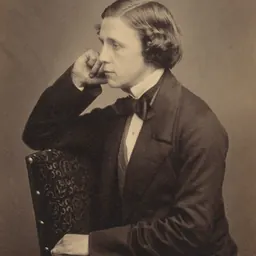
Cultural explorations Greenacre highlighted the voyeuristic elements in the writing of Lewis Carroll, as well as distortions of body image with respect to Lemuel Gulliver. She viewed Swift as essentially a neurotic inhibited by coprophilia who came close to achieving adult, genital satisfaction. Carroll, on the other hand, she argues, is closer to psychotic and psychically more deeply blocked.
Don’t just read it —
keep it.
Full-length biographies made to live with: read them, listen on the way to work, watch them tonight.
- E-book
- Audio
- Video
Instant download · yours to keep · every purchase keeps this site free
Important facts
People in Phyllis Greenacre's life
Named in this biography and alive at the same time


Related people
Same field, nearest in time


Contemporaries
People whose lives overlapped Phyllis Greenacre's


Frequently asked questions
Who was Phyllis Greenacre?
American psychiatrist & psychoanalyst (1894–1989)
When was Phyllis Greenacre born?
Phyllis Greenacre was born on 3 May 1894 in Chicago.
When did Phyllis Greenacre die?
Phyllis Greenacre died on 24 October 1989 in Ossining.
What was Phyllis Greenacre's occupation?
Phyllis Greenacre was a psychiatrist and psychoanalyst.
What nationality was Phyllis Greenacre?
Phyllis Greenacre was American.
Sources & further reading
· Wikipedia: Phyllis Greenacre
Cite this page
APA: Biography.guide. (2026). Phyllis Greenacre. https://biography.guide/phyllis-greenacre/
MLA: "Phyllis Greenacre." Biography.guide, https://biography.guide/phyllis-greenacre/.
Chicago: "Phyllis Greenacre." Biography.guide. https://biography.guide/phyllis-greenacre/.
Data last updated: 2026-09-20 · Spot an error? Report a correction.
Page generated 2026-09-27 05:20 UTC