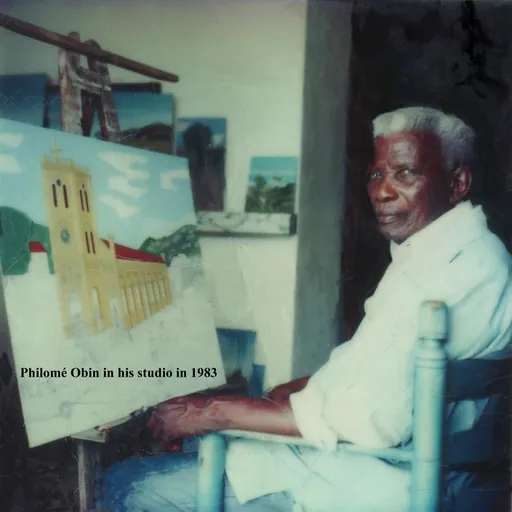
About Philomé Obin
Lived 1892 – 1986 (aged 94). Philomé Obin was a Haitian painter.
Early career Most of the paintings of Obin's first half-century—often on cardboard, sometimes on Masonite—are lost. who preferred works that aped French paintings.
Obin influenced many artists in the north of Haiti, who share his characteristic subtle coloring, including many artists he trained himself. Among painters of the "Cap-Haitian school", are Obin's brother Sénèque (1896–1972), and several of his children including Antoine Obin, Télémaque Obin, grandchildren such as Claude Obin, Michaëlle Obin, Henry-Claude Obin, Harisson Obin, Donald Obin, and nephews and nieces are also accomplished painters.
Vision de L'Artiste Philomé Obin Among the works of Obin's first four decades that have survived is Vision de l'Artiste Philomé Obin pendant la nuit du 15 au 16 Janvier 1948, which he never sold and kept in his living room until his death. It depicts a beautiful mulatta seated on a boulder in a mostly barren landscape. The painting has been interpreted as representing "Maîtresse Zulie", a voodoo goddess, but Obin said in 1983 that it was a scene from a vivid dream that he had. Like most of his paintings, it bears both his boxed signature and its title, in neat letters centered toward the bottom of the work.
Trois Générations Sometimes described as a "sophisticated naif", Obin work has an imperfect sense of perspective, but uses strong allegory. For example, one of his paintings, Trois générations shows three individuals with different types of vestments, who each represent their own period. The last person in the painting is casually attired, representing the American influence in Haiti. The inscription at the center bottom of the painting reads: Avant l’occupation, durant l’occupation, après l’occupation ("Before, During, and After the American Occupation"). Obin repeats this inscription on many of his works showing the various periods of American influence on Haiti and its population.
The Crucifixion of Charlemagne Peralte for Freedom In 1919, Obin had lived through the crucifixion of Charlemagne Péralte, a Haitian patriot who opposed the American Occupation. Betrayed by a friend named Conzé, Péralte died in an ambush set by the U.S. Marines. His body was brought to Cap-Haïtien and strapped to a door, where it was displayed for several days to discourage further resistance. Though Obin had not witnessed the crucifixion, he considered Péralte as a hero, and painted several renditions of Péralte's death and funeral as statements of nationalist pride. He painted at least two versions of the "crucifixion", and his granddaughter, Michaëlle, has painted an allegorical scene showing Obin mourning in front of Péralte's corpse.
Don’t just read it —
keep it.
Full-length biographies made to live with: read them, listen on the way to work, watch them tonight.
- E-book
- Audio
- Video
Instant download · yours to keep · every purchase keeps this site free
Important facts
Family & relationships
People in Philomé Obin's life
Named in this biography and alive at the same time
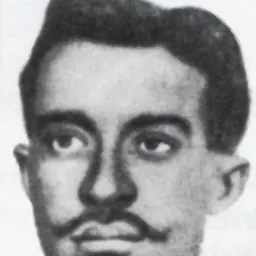
Related people
Same field, nearest in time
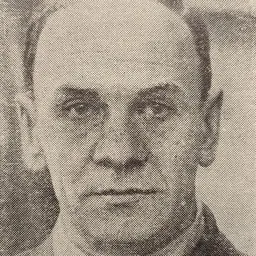


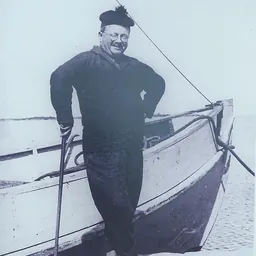
Contemporaries
People whose lives overlapped Philomé Obin's


Frequently asked questions
Who was Philomé Obin?
Haitian artist (1892-1986)
When was Philomé Obin born?
Philomé Obin was born on 20 July 1892 in Bas-Limbé.
When did Philomé Obin die?
Philomé Obin died on 6 August 1986 in Cap-Haïtien.
What was Philomé Obin's occupation?
Philomé Obin was a painter.
What nationality was Philomé Obin?
Philomé Obin was Haitian.
Sources & further reading
Cite this page
APA: Biography.guide. (2026). Philomé Obin. https://biography.guide/philome-obin/
MLA: "Philomé Obin." Biography.guide, https://biography.guide/philome-obin/.
Chicago: "Philomé Obin." Biography.guide. https://biography.guide/philome-obin/.
Data last updated: 2026-09-24 · Spot an error? Report a correction.
Portrait: Wikimedia Commons · author & licence
Page generated 2026-09-27 05:09 UTC