
About Phillips Foster Greene
Lived 1892 – 1967 (aged 74). Phillips Foster Greene was an American scientist.
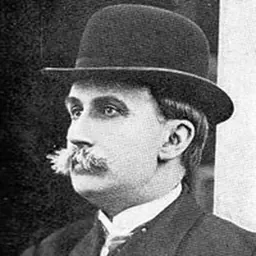
Phillips Foster Greene (May 30, 1892 – April 11, 1967) was an American doctor who, in collaboration with the Yale-China Association, pioneered medical missions to China from 1923 to 1943, and to Burma from 1951 to 1953. Greene was most known for his contribution to the Chinese health system through his leadership of the Hsiang-Ya Medical School, and as Director of the American Red Cross in China. In addition to evangelical motives, he focused especially on sustainability and collaboration with local groups, a concept not to be widely considered until decades later.
Early life and education Phillips Foster Greene was born to Sarah Foster and Rev. Frederick Davis Greene in 1892 in Van, Turkey. Rev. Greene became involved in fundraising for international relief through public addresses and publications, including as secretary of the National Armenian Relief Association. Phillips Greene's paternal grandparents were also well-known missionaries. Phillips Greene and his three younger brothers, Joseph, Edward, and David, were raised in Upper Montclair, New Jersey, under significant Christian and missionary influence.
Career
Transition from Turkey While living in Constantinople, Turkey on the commission of the American Board of Commissioners for Foreign Missions political unrest made medical work in Turkey impossible for Greene. In an early letter home, Greene described this assignment as an opportunity "to give good medical training with Christian character while the profession in China is still young," and added that "great things are at stake" in his work there. In February 1938, bombings of Changsha escalated. Greene sent most nursing and medical students away to Guiyang, and kept the most advanced students to keep the hospital in operation. Greene and his colleagues were able to keep the militants from burning down the hospital as well. Greene stayed in Changsha to treat burn victims. He was then responsible for the transport of medical supplies to the Chinese interior. Despite his train being bombed, Greene successfully brought medicine from Shanghai to Changsha and continued to treat outbreaks of disease there.
Again in January 1940, Greene took the risk of transporting 2 tons of medical supplies past the Japanese front to Changsha and Guiyang, where the Hsiang-Ya medical school had been relocated. While working in Guiyang, the Central Hospital where Greene was working was bombed. He returned to Changsha to re-establish Hsiang-Ya in June 1940. In view of the worsening political situation, the American Consul in Kunming requested Greene's return to America. Greene refused and remained in Changsha. In November 1940 Greene received on official Certificate of Merit for service in medical education from the National Bureau of Education in Chongqing.
In 1941 Greene was appointed Director of the American Red Cross in Chongqing. He was responsible for the intake of all forms of civilian aid by truck over the Burma Road, and by airlift over the Himalayas. This position entailed the acceptance of supplies into Chongqing, and their distribution to both Nationalist and Communist groups. He then returned to the United States in 1943.
Return to the U.S. In 1944, Greene served as associate dean and clinical professor of surgery at Long Island College of Medicine. He had planned to teach war surgery there for six months before returning to China, but ended up staying at the College until 1951.
Work in Burma In 1951, Phillips Greene accepted a position as staff member in the Rangoon, Burma General Hospital and Medical School, where he remained until 1958.
Late life In 1958, Phillips Greene returned to the United States to practice medicine there until his death. Greene died on April 11, 1967, in New Richmond, Ohio.
Legacy The letters of Phillips Greene are recorded by his wife Ruth in Hsiang-Ya Journal, an account of Greene's work in China.
Hsiang-Ya Hospital The Hsiang-Ya Hospital and Medical school is now the Hunan Medical School of the People's Republic of China. Greene's preservation of the Hsiang-Ya hospital not only allowed the hospital to continue despite eventual Japanese occupation and subsequent Communist takeover, but also allowed the Yale-China Association to continue, eventually returning to Changsha.
Don’t just read it —
keep it.
Full-length biographies made to live with: read them, listen on the way to work, watch them tonight.
- E-book
- Audio
- Video
Instant download · yours to keep · every purchase keeps this site free
Important facts
People in Phillips Foster Greene's life
Named in this biography and alive at the same time

Related people
Same field, nearest in time


Contemporaries
People whose lives overlapped Phillips Foster Greene's

Frequently asked questions
Who was Phillips Foster Greene?
American physician (1892–1967)
When was Phillips Foster Greene born?
Phillips Foster Greene was born on 30 May 1892 in Van.
When did Phillips Foster Greene die?
Phillips Foster Greene died on 11 April 1967 in New Richmond.
What was Phillips Foster Greene's occupation?
Phillips Foster Greene was a scientist.
What nationality was Phillips Foster Greene?
Phillips Foster Greene was American.
Sources & further reading
· Wikipedia: Phillips Foster Greene
· DBpedia: Phillips Foster Greene
Cite this page
APA: Biography.guide. (2026). Phillips Foster Greene. https://biography.guide/phillips-foster-greene/
MLA: "Phillips Foster Greene." Biography.guide, https://biography.guide/phillips-foster-greene/.
Chicago: "Phillips Foster Greene." Biography.guide. https://biography.guide/phillips-foster-greene/.
Data last updated: 2026-09-20 · Spot an error? Report a correction.
Page generated 2026-09-27 05:29 UTC