
About Philippe Millereau
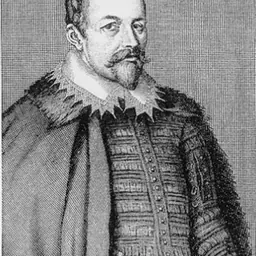
Lived 1570 – 1610 (aged 39–40). Philippe Millereau was a French painter.
Philippe Millereau (; c. 1570–1610) was a French Mannerist painter of the late 16th and early 17th centuries, active during the reign of Henri IV, and assimilated to the Second School of Fontainebleau, of which he remained a relatively minor figure; he was clearly influenced by Toussaint Dubreuil, but also by Italian artists such as Nicolò dell'Abbate, and Flemish painters. Art historians see him as a "petit maître" (small master) of this period.
Biography A little-known artist, except for the most comprehensive research by Charles Sterling and Sylvie Béguin, Millereau has remained associated with the second Fontainebleau school.
Born into a family of painters, probably of Champagne origin, he settled in Paris, and married a certain Louise Belanger (or Beranger), with whom he had two children: Jean (born 7 August 1600) and Marie (born 17 March 1605, died before 1611, as she does not appear on her father's death certificate). His son Jean II Millereau, as well as his brother Jean I Millereau, were also painters. The course of his career is unknown. In 1600, he lived in rue du Temple, parish of Saint-Nicolas, Paris, and was listed as "master painter in Saint-Germain-des-Prés" in 1602. On 13 August 1602, he signed a four-year lease for a house in front of the Saint-Germain market in Paris, while his two children were baptized in the church of Saint-Sulpice in 1606 and 1607. His children's godparents included Jean Millereau, Daniel Berthin and Louis Poirier.
He appears to have taught his art, with an apprenticeship contract signed on 10 February 1604 in favor of Bernard de Mialle. He died the following year in Paris. He was buried on 10 April 1610 in the church of Saint-Sulpice. The inventory of his possessions after his death, drawn up on 10 June 1611, listed several of the painter's paintings: Une dame et plusieurs déesses, Deux têtes peintes, Jugement de Michel Lange dépeint sur une carte de papier. The inventory also revealed the painter's modest living conditions.
Works and influences Le sacrifice d'Iphigénie, oil on wood, Fontainebleau, Musée National du Château. Only three paintings by him are known, all with mythological subjects and set in a landscape: Le sacrifice d'Iphigénie (Fontainebleau, Musée National du Château), Vénus, Vulcain et l'Amour (Venus, Vulcan and Love), sometimes called Thétis priant Vulcain de forger les armes de son fils (oil on wood, Reims, Musée des Beaux-Arts, from the former Hôtel de l'Abbaye d'Avenay, where the painting was used as a mantelpiece), and Cérès et Bacchus (Châlons-en-Champagne, Musée des Beaux-Arts et d'Archéologie). A fourth painting, recently found and acquired by the French Centre des Monuments Nationaux for the Château d'Azay-le-Rideau museum, could be attributed to him on stylistic grounds: La Vision de Constantin. The name of Jacob Bunel has also been put forward as a possible author of this composition.
Le sacrifice d'Iphigénie Philippe Millereau's most famous painting is Le Sacrifice d'Iphigénie (oil on wood, Fontainebleau, Musée National du Château), seen by Charles Sterling in 1936 in a private collection in Paris, acquired in 1937 by the Château de Fontainebleau, and presented at the exhibition on the Fontainebleau School at the Grand Palais in 1972–1973. (Paris, Musée du Louvre), by the Italian painter, while the naiad in the foreground of Le Sacrifice d'Iphigénie (thought to be an allegory of the port of Aulis where the scene is set) adopts a posture similar to the spring visible in the foreground of Le Rapture de Proserpine by dell'Abate. In Le Sacrifice d'Iphigénie, the theatrical lighting of the landscape and the impasto on the foliage once again recall Niccolo's work.
Finally, Sterling draws a third connection, this time linking Millereau to Flemish painting. This association is due in particular to the artist's somewhat theatrical, magical landscapes, illuminated by a dreamlike, mysterious light, sometimes found in northern painters (among whom Sterling cites Pieter Schoubroeck, Anthonie Mirou and Frederick van Valckenborgh). Sterling describes him as "a small, personal master, with a grace less prim than Dubreuil's, and a kind of health that makes him somewhat akin to the Italianized Flemish of his time", and compares him to Jérôme Francken, or Hendrick van Balen, for his treatment of the plump little children in Le Sacrifice d'Iphigénie. Frans Floris, Hendrik Goltzius and Abraham Bloemaert are also possible models. The support of his paintings (wood) also recalls the northern schools.
Sterling's study concludes with the observation that Millereau, while remaining attached to the second Fontainebleau school, differs slightly from it thanks to his multiple inspirations, and a singular style. Sterling states that "this familiar touch, combined with an easy grace and a calm, static composition, gives Millereau's painting Le Sacrifice d'Iphigénie a certain authority, setting it apart from the dancing agitation of the second school. It relieves us of the often gratuitous artifices of this school".
Although his work bears witness to the influence of Bellifontains artists on Parisian painting of the period, Philippe Millereau remains a "petit maître" of French painting, and his life, still little known and poorly documented, does not allow one to confidently define his work, and his role in French painting of the early 17th century.
List of works Painting Title Date Dimensions Notes Place of preservationthumbLe Sacrifice d'Iphigénie81 × 91 cmoil on wood. Signed "Philippe Millereau pinxit".Fontainebleau, musée national du châteauVénus, Vulcain, et l'Amour160978 × 148 cmoil on wood. Signed: Philipes Millereau, inventor et pinxit, 1609. Donated to the museum by J.Boullaire, 1875.Reims, musée des beaux-artsCérès et Bacchus80 × 133 cmoil on wood. Signed: Philippe Millereau pinxit. Gift to the museum by Baptiste LemaireChâlons-en-Champagne, musée des beaux-arts et d'ArchéologieLa Vision de Constantin121 × 155 cmoil on canvas (attributed to Philippe Millereau or Jacob Bunel)Azay-le-Rideau, musée du château
Le retour d'Ulysse, drawing, (Count R de V sale, 4–6 May 1931, Berlin, under the name Primaticcio, reported by Charles Sterling as a probable work by Millereau)
Don’t just read it —
keep it.
Full-length biographies made to live with: read them, listen on the way to work, watch them tonight.
- E-book
- Audio
- Video
Instant download · yours to keep · every purchase keeps this site free
Important facts
People in Philippe Millereau's life
Named in this biography and alive at the same time





Related people
Same field, nearest in time
Contemporaries
People whose lives overlapped Philippe Millereau's


Frequently asked questions
Who was Philippe Millereau?
French painter (1570-1610)
When was Philippe Millereau born?
Philippe Millereau was born in 1570.
When did Philippe Millereau die?
Philippe Millereau died in 1610 in Paris.
What was Philippe Millereau's occupation?
Philippe Millereau was a painter.
What nationality was Philippe Millereau?
Philippe Millereau was French.
Sources & further reading
· Wikipedia: Philippe Millereau
Cite this page
APA: Biography.guide. (2026). Philippe Millereau. https://biography.guide/philippe-millereau/
MLA: "Philippe Millereau." Biography.guide, https://biography.guide/philippe-millereau/.
Chicago: "Philippe Millereau." Biography.guide. https://biography.guide/philippe-millereau/.
Data last updated: 2026-09-20 · Spot an error? Report a correction.
Page generated 2026-09-27 05:09 UTC