
About Philippe d'Auvergne
Lived 1754 – 1816 (aged 61). Philippe d'Auvergne was a scientist, naval officer and soldier.
Vice-Admiral Philippe d'Auvergne (13 November 1754 – 18 September 1816) was a Royal Navy officer who served in the American War of Independence and French Revolutionary and Napoleonic Wars. D'Auvergne also worked as a spymaster for British intelligence, engaging in plots to destabilise the First French Republic's control over Brittany and Normandy which included printing counterfeit money to cause hyperinflation.
Early life
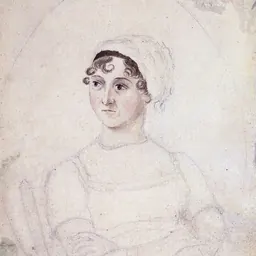
Philippe D'Auvergne was born in Jersey, where his family had lived for four centuries. His younger half brother, Corbet James D'Auvergne (born 1767), also joined the Royal Navy, and was associated with Jane Austen.
D'Auvergne was educated in Jersey, then England and France. He was fluent in French and English and had a mathematical mind, later to be used in various scientific studies and research. Much of his youth was spent sailing around the coast of Jersey.
Navy D'Auvergne joined the Royal Navy, and became a midshipman in 1770. He was trained aboard the Royal Yacht , under the command of Captain John Campbell. The Royal Yacht was used as a training vessel, for picked men. This was far easier than the usual training on a man-of-war. Accounts of Philippe's life put this down to Earl Howe, later Vice Admiral of England and First Lord of the Admiralty. Howe had befriended Charles d'Auvergne, whilst commanding the flotilla stationed at Jersey during 1756.
Philippe's next vessel was , where he is reported as meeting Empress Catherine of Russia; and on a return trip was influenced by a French scientific team at Copenhagen. Throughout this time Philippe studied mathematics and tried to solve the problem of time keeping and barometric pressure at sea.
Arctic expedition
During 1773, the Admiralty commissioned an expedition to the Arctic, to further science and knowledge. Two sloops were refitted for the expedition and on 4 June 1773 the and set sail for the North.
The muster roll for Racehorse lists Philippe d'Auvergne as a midshipman. Onboard Carcass was a 15-year-old midshipman, named Horatio Nelson.
The expedition failed to find the Northwest Passage, but they had sailed further north than any previous expedition, approximately , a position just north of Svalbard. This and the scientific experiments carried out meant the expedition was seen as a success.
During 1774 d'Auvergne continued his scientific education and also prepared sketches for the journal Voyage towards the North Pole by Captain Constantine Phipps, 2nd Baron Mulgrave.
American War of Independence By 1775 d'Auvergne was assigned to , and he is recorded as discharging to on 27 August 1775. Asia was assigned to the fleet at Boston Harbour, to support British forces against the American militia.
D'Auvergne, still a midshipman, was ordered to take charge of one of the boats carrying soldiers to attack Lexington. Paul Revere had already warned the Yankees of the attack, resulting in the British force of 800 being reduced by 73 dead and 185 injured by the pursuing American militia. D'Auvergne continued to command boats carrying troops around Boston and on 17 June 1775 after transporting troops, watched the ensuing Battle of Bunker Hill. On 25 October 1777 d'Auvergne captured the Delaware with a company of Grenadiers; and on 27 May 1778 landed a party of marines at Fogland Ferry, successfully destroying the guard house.
By late 1778 France and Spain had signed a treaty of alliance with the American colonies. When French frigates entered Rhode Island, d'Auvergne carried out his written orders and scuttled Alarm on 30 July 1778. The court martial of d'Auvergne for the loss of his vessel is reported as being aboard , 28 September 1778. The court martial acquitted d'Auvergne,
Trindade and Martim Vaz
D'Auvergne was promoted on 21 August 1781 to Master and Commander and took command of a ten gun cutter , allowing the former captain of Rattlesnake to return to London on Lark.
On 30 September, Rattlesnake, , and captured the French ship Philippine. The prize money was remitted from Jamaica, suggesting the capture took place in the Caribbean. French records have the capture occurring in the Antilles.
Rattlesnake and were sent to survey Trindade and Martim Vaz, to establish the islands suitability for a base for outward-bound Indiamen. The islands are volcanic with nothing but turtle doves and land crabs. On the evening of 21 October 1781 during a heavy storm, Rattlesnake lost her anchor rope and in trying to get to sea struck a rock and was run ashore; Jupiter picked up five sailors. Commodore Johnstone had previously wished to colonise the island and claim it for Britain, so d'Auvergne agreed to stay on the tiny island with 30 sailors, 20 captured French sailors, one woman, some animals and supplies. Then the castaways appear to have been forgotten.
D'Auvergne and his people remained on the island until 27 December 1782, when by chance, , escorting East Indiamen, passed by. D'Auvergne fired distress signals and she rescued the 30 sailors, 20 Frenchmen, and the woman. D'Auvergne and the surviving crew were taken to Madras, India. A second Court Martial took place regarding the loss of Rattlesnake and d'Auvergne was absolved of any liability for the loss and commended for the most extraordinary command he had been given by a superior. in 1783. The petition was successful and the state returned to the Nawab.
It was reported that D'Auvergne married whilst in India, but the India Office Records held by the British Library have no record of a marriage. Although there is a marriage of a Philip d'Auvergne to an Anne Lowrie in 1800, the individual in question was a captain in the army.
Peace On his return to England d'Auvergne was promoted to captain, but the peace with France meant demobilisation.
Between 1784 and 1787 d'Auvergne spent time travelling and escorted John Townsend son of Thomas Townshend, 1st Viscount Sydney on a Grand Tour. D'Auvergne obtained an honorary degree in 1785 and elected Fellow of the Royal Society on 11 June 1786. In 1787 he was appointed a Revenue officer in Jersey, on board , a post he continued in until 1789 when he asked to be relieved due to ill health. D'Auvergne visited the Duke in 1790 and found the Duke had married the 14-year-old daughter of his mistress. If this new wife produced a boy, d'Auvergne would not inherit. However, the Duke was not well and officially confirmed d'Auvergne as the Prince-Successor, which George III confirmed on 27 February 1792.
French Revolution In 1793, at the beginning of the French Revolution, d'Auvergne was based in London. The Governor of Jersey Alexander Lindsay had opened communications between England and the Royalists. Lindsay was then transferred to Jamaica in 1794.
Administrateur des Secours Accordés aux Émigrés (Administrator of Relief Grants to Emigres)
By 1794, after a petition from the Defence Committee of the Islands, and a letter from d'Auvergne to the Admiralty, he was appointed as commander of the floating battery and Senior of Officer of Gunboats in Jersey. Several gunboats formed his flotilla: , , , and . The ships were not purpose-built men of war, but rather small former Dutch hoys converted to gun-vessels. The crew were mainly from Jersey, as Englishmen did not want to serve on them, there being little opportunity for prize money. Merchants and locals on Jersey provided the money to defray the extra costs to support the flotilla. The vessels were not effective and the Navy withdrew them, selling most. Nonesuch was paid off in December 1794, but the Navy replaced her with the 16-gun floating battery , which the Navy re-rated as a 28-gun sixth-rate frigate to increase d'Auvergne's salary as her commander and commander of the flotilla. To replace the hoys, d'Auvergne received the services of the hired armed vessels Daphne, Royalist, and Aristocrat.
With this responsibility d'Auvergne was asked, in September 1794, to assume the role Alexander Lindsay had started. A manuscript memorial to the War Office, held by the Library in Jersey, shows his duties as: A chapel now stands on the site, known as Champ des Martyrs. General Puisaye was accused of desertion.
Neither d'Auvergne nor the Comte de Puisaye seem to have trusted each other, with Puisaye trying to avoid Jersey, and deliver directly to London. d'Auvergne continued to ask Henry Dundas if he should send arms to Puisaye. After Puisaye returned to Jersey he retired from the military and headed for Canada.
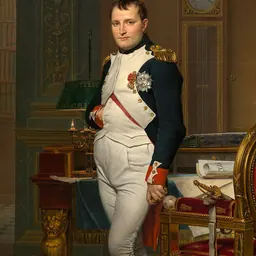
A regular visitor to Jersey was Georges Cadoudal, the Chouan leader implicated in an attempt on Christmas Eve 1800 to assassinate Napoleon Bonaparte, in rue Saint-Nicaise Paris. A barrel of gunpowder concealed in a water cart was detonated as Bonaparte's carriage went by, but it was ignited too late, and the First Consul was only showered with broken glass.
His promotions raised him to Vice-Admiral of the Red. In Bouillon the French had annexed the Duchy of Bouillon in 1795, and Duke Godefroy III, died in 1794, his son Jacques Leopold La Tour d'Auvergne inherited the title of Duke. Jacques Leopold died on 3 March 1802 without issue, and Philippe d'Auvergne used the full title and dignity of Duke after this date.
After the Peace of Amiens on 25 March 1802, d'Auvergne headed to Paris to fight a claim by another apparent heir, but on his arrival, the French police, knowing of his actions in Jersey, dragged him from his hotel without any charge, or any explanation and threw him in jail. Correspondence from Mr Merry, Ambassador in Paris, complains of the French authorities actions and states that d'Auvergne was held for five days, and when released was given only 24 hours to leave France, a near impossibility at that time. Questions were raised in Parliament, but no further action was taken as they did not wish to upset the latest peace.
Spymaster in Napoleonic era
D'Auvergne returned to Jersey. By 1802 the émigrés had been given a way to return home, as Napoleon Bonaparte had taken control of France, and granted the émigrés amnesty. Many signed the declaration offered and returned. D'Auvergne continued to collect intelligence from France, including the buildup of forces at Brest, where Bonaparte was massing a force to assist the Irish in their fight against the British. D'Auvergne's ring of spies was diminishing as either they were captured, or signed Napoleon's declaration. Any hope of a new Royalist revolution was never going to materialise.
1808 saw d'Auvergne promoted to rear admiral and put in charge of naval ships in the Channel Islands although as he was not afloat, could not benefit from prize monies.
Notes, references and bibliography
Don’t just read it —
keep it.
Full-length biographies made to live with: read them, listen on the way to work, watch them tonight.
- E-book
- Audio
- Video
Instant download · yours to keep · every purchase keeps this site free
Important facts
People in Philippe d'Auvergne's life
Named in this biography and alive at the same time


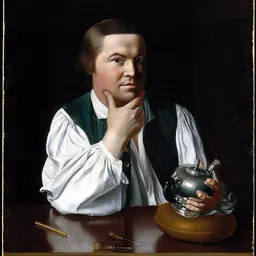

Related people
Same field, nearest in time



Contemporaries
People whose lives overlapped Philippe d'Auvergne's




Frequently asked questions
Who was Philippe d'Auvergne?
British admiral (1754-1816)
When was Philippe d'Auvergne born?
Philippe d'Auvergne was born on 13 November 1754 in Jersey.
When did Philippe d'Auvergne die?
Philippe d'Auvergne died on 18 September 1816 in London.
What was Philippe d'Auvergne's occupation?
Philippe d'Auvergne was a scientist, naval officer and soldier.
Sources & further reading
· Wikipedia: Philippe d'Auvergne
· DBpedia: Philippe d'Auvergne
Cite this page
APA: Biography.guide. (2026). Philippe d'Auvergne. https://biography.guide/philippe-d-auvergne/
MLA: "Philippe d'Auvergne." Biography.guide, https://biography.guide/philippe-d-auvergne/.
Chicago: "Philippe d'Auvergne." Biography.guide. https://biography.guide/philippe-d-auvergne/.
Data last updated: 2026-09-20 · Spot an error? Report a correction.
Page generated 2026-09-27 05:29 UTC