
About Philippe Chaperon
Lived 1823 – 1907 (aged 84). Philippe Chaperon was a French painter and scenographer.
Philippe Chaperon (2 February 1823 – 21 December 1906) was a French painter and scenic designer, particularly known for his work at the Paris Opera. He produced stage designs for the premieres of numerous 19th-century operas, including Verdi's Don Carlos and Aida, Massenet's Le Cid, Saint-Saëns's Henri VIII, part two of Berlioz's Les Troyens and the first performances in France of Verdi's Otello and Rigoletto and Wagner's Tannhäuser.
Life and career
Chaperon came from a modest background. He was born in Paris, where his father was an employee at the Caisse d'Épargne. He attended the Lycée impérial Bonaparte and then the École des Beaux-Arts where he studied painting and architecture. He won a Prix de Rome scholarship and spent three years at the Villa Medici. He also studied architecture in the atelier of Victor Baltard and painting in the atelier of Léon Riesener where he received guidance from Riesener's cousin Eugène Delacroix.
Many of his paintings were influenced by his architecture studies. He made his debut at the Paris Salon of 1844 with Ruines d'un Temple dans l'Inde (Ruins of a Temple in India). He later exhibited landscape paintings of cities and villages and the interiors of churches. However, it was as a scenic designer that he achieved his primary fame. He studied the craft from 1842 under Charles Cicéri and Domenico Ferri, both of whom designed for the main opera houses and theatres of Paris. He spent two years in Spain from 1847 to 1849. He had originally gone there to work on the decor for a theatre in Barcelona, but on Ciceri's suggestion he travelled around Spain painting and sketching scenes of villages and towns. Spanish subjects were coming into vogue in opera and his paintings would later serve as inspirations for Chaperon's stage sets.
In 1851 he joined Cicéri's old atelier which at that point was being run by Cicéri's son-in-law Auguste Alfred Rubé. Rubé and Chaperon formed their own atelier, "Rubé et Chaperon", in 1864 and over the next 30 years produced numerous set designs as well as interior decor for theatres throughout France and in Belgium. In 1875 they created the trompe-l'œil curtain for the newly built Palais Garnier as well as the painting on the dome over the main auditorium of La Monnaie. Chaperon also designed a trompe-l'œil curtain for the Éden-Théâtre which opened in 1883. In addition to his theatre work with Rubé, Chaperon produced decorative paintings and interior designs for churches, public buildings, and private mansions such as the Hôtel Goüin.
In 1895, Rubé left the atelier to form a new partnership with his grandson Marcel Moisson who had worked at Rubé et Chaperon. Chaperon carried on the atelier, joined by his son Émile, and together they produced designs for many opera and theatre productions in Paris that included La favorite, Les Huguenots, Frédégonde, Hamlet and Messidor. They also produced exhibits for the Exposition Universelle in 1900, and interior decor for numerous provincial theatres as well as the in Biarritz which opened in 1901.
Chaperon retired to Lagny-sur-Marne in the suburbs of Paris 1905. He died there in 1906 at the age of 83. After his death, the painter and politician commissioned a bust of Chaperon by Charles-Henri Pourquet which was placed in the Palais Garnier. Émile spoke at its dedication on 5 December 1910: This beautiful theater reminded him of some of his happiest and most admired inspirations – the temple of Aida, for example, or the unforgettable esplanade of Elsinore in Hamlet – he loved music passionately.
After his father died, Émile Chaperon continued working as a designer and later set up an art gallery on the Faubourg Saint-Honoré. He left Paris for Saint-Maur in 1932 and died in Confolens in 1946. Philippe Chaperon had two other sons: (1857–1938), a painter and illustrator who specialised in military subjects, and the writer Philippe Auguste Théophile Chaperon (1853–c. 1938).
Gallery Set designs
Paintings
Don’t just read it —
keep it.
Full-length biographies made to live with: read them, listen on the way to work, watch them tonight.
- E-book
- Audio
- Video
Instant download · yours to keep · every purchase keeps this site free
Important facts
People in Philippe Chaperon's life
Named in this biography and alive at the same time


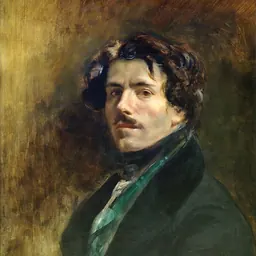
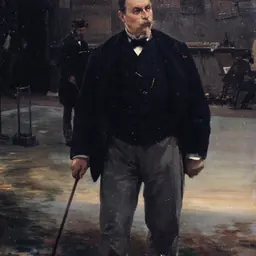
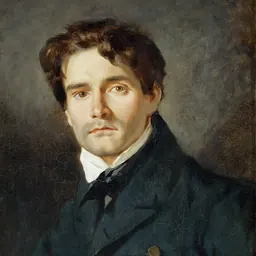
Related people
Same field, nearest in time
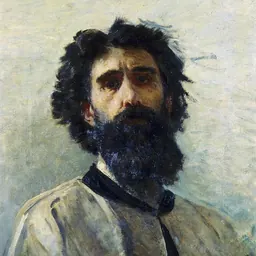

Contemporaries
People whose lives overlapped Philippe Chaperon's




Frequently asked questions
Who was Philippe Chaperon?
French painter, 1823-1907
When was Philippe Chaperon born?
Philippe Chaperon was born on 2 February 1823 in former 2nd arrondissement of Paris.
When did Philippe Chaperon die?
Philippe Chaperon died on 21 December 1907 in Lagny-sur-Marne.
What was Philippe Chaperon's occupation?
Philippe Chaperon was a painter and scenographer.
What nationality was Philippe Chaperon?
Philippe Chaperon was French.
Sources & further reading
· Wikipedia: Philippe Chaperon
Cite this page
APA: Biography.guide. (2026). Philippe Chaperon. https://biography.guide/philippe-chaperon/
MLA: "Philippe Chaperon." Biography.guide, https://biography.guide/philippe-chaperon/.
Chicago: "Philippe Chaperon." Biography.guide. https://biography.guide/philippe-chaperon/.
Data last updated: 2026-09-22 · Spot an error? Report a correction.
Page generated 2026-09-27 05:20 UTC