
Philipp Johann Heinrich Fauth
German selenographer
About Philipp Johann Heinrich Fauth
Lived 1867 – 1941 (aged 73). Philipp Johann Heinrich Fauth was an astronomer, cartographer and folkeskole teacher.
Philipp Johann Heinrich Fauth (19 March 1867 – 4 January 1941) was a German elementary school teacher and astronomer who excelled in lunar research conducted during forty years in his observatories in Landstuhl (Palatinate, Germany) and later Grünwald (Bavaria). Thanks to a donation he could afford one of the highest quality telescopes in Germany. By the unconditional defense of the unscientific glacial cosmogony or world ice theory conceived by Austrian engineer Hanns Hörbiger he succumbed to a mistake he did not admit all his life.
Life and work
Astronomical works Philipp Fauth's area of work was the classical astronomy in the visible light spectrum, being primarily of an observational and descriptive nature, and was directed in particular to the Moon and its cartography, the so-called selenography, and the planets Mars, Jupiter and Saturn. Fauth was the last representative of a school of German selenographers, whose most important representatives were Tobias Mayer (1723–1762), J. Hieronymus Schroeter (1745–1816), Wilh. Gotthelf Lohrmann (1796–1840), J. Heinrich Mädler(1794–1874) and J.F. Julius Schmidt (1825–1884).
After the death of Nepomuk Krieger, Munich-Gern, Germany, in 1902, Fauth emerged as the leading German selenographer (Moon cartographer) of his time. Fauth's became best known for his drawings of lunar landscapes and his lunar maps. A (good) drawing at the time was superior to a photographic picture, especially when displaying large differences in brightness and very fine structures which could not be resolved well due to air turbulence by photography; moreover, it allowed to remove image defects or cast shadows from the image, change perspectives and do other image edits not possible with photographs at the time.
Comparison of Moon crater Copernicus as drawn by Philipp Fauth in 1932 und photographed by Lunar Orbiter 4 in 1967. The small double crater at the bottom of the pictures is named after Fauth.
"By 1899 Fauth had charted 2,532 previously undiscovered craterlets and rilles, and in another three years of work he had more than doubled this number ... A ruthless perfectionist, many of his drawings are marvels of accuracy in both proportion and in position.
A much debated question at the time was that of changes on the Moon. Again and again alleged changes on the Moon surface based on volcanism or lunar atmosphere were reported which had always been rigorously rejected by Fauth as errors of observation.
Fauth's map of the Moon was the last and largest ever published by a single researcher by telescopic observation of the Moon, leaving aside Fauth's direct predecessor, the disputed map published 1951 by Welsh engineer Hugh Percy Wilkins who made use of contributions from other authors and found a harsh appraisal e.g. by E. Both: "Neither positional nor artistic quality was at all commensurate with the quantity of detail represented"
Likewise, the U.S. Air Force had prepared by then lunar astronautical charts in traditional telescope observation at Lowell Observatory, Flagstaff, Arizona in the same scale of 1:1 million in eight years work by a 22-member staff.
In 1913 the 772-page standard work to WEL Hörbiger's Glacial-Kosmogonie
With the support and defense of WEL, Fauth succumbed to a mistake he did not want to admit as long as he lived.
1939, at the age of seventy-one, Fauth received an honorary professor recognition for his almost fifty years of scientific work at the instigation of Chief of SS Heinrich Himmler, being also president of the NS research organization Deutsches Ahnenerbe (German ancestral heritage). In the same year 1939 Fauth was appointed member of the International Astronomical Union (IAU) to Commission 16 "Physical Observations of the Planets and Satellites". In Kaiserslautern, Landstuhl, Bad Dürkheim and Grünwald streets were named after Fauth.
Time of National Socialism
In 1937 Philipp Fauth sold his private observatory at Grünwald to the national socialist (NS) research association Deutsches Ahnenerbe (German ancestral heritage) and continued his research as an employee of the Ahnenerbe until his death in 1941. In the Ahnenerbe, Fauth continued his work on the large Moon atlas and the WEL. Alongside he proposed the setup of people ("Volks") observatories, telescopes and microscopes, but the plans were stalled soon after outbreak of World War II.
By joining the Ahnenerbe, Fauth who had worked alone for all his life (having a short-time assistant paid by the Ahnenerbe for the first time) wanted to secure the future of his valuable telescope too. This intention failed, the instrument was lost in the turmoil of World War II.
Publications (selection)
Beobachtungen der Planeten Jupiter und Mars in den Oppositionen des Jahres 1896/97, 1898 mit A. Mang: Wegweiser am Himmel (Signposts in the Sky), 1904 Was wir vom Mond wissen (What We Know of the Moon), 1906 mit A. Mang: Einfache Himmelskunde, 1908 The Moon in Modern Astronomy, in Engl. language, 1908 Hörbigers Glacial-Kosmogonie, 1913 25 Jahre Planetenforschung, 1916 Jupiterbeobachtungen während 35 Jahren, 1925 Der Mond und Hörbigers Welteislehre, 1925 Mondesschicksal. Wie er ward und untergeht. Eine glazialkosmogonische Studie, 1925 Unser Mond – wie man ihn lesen sollte (Our moon – how to read it), 1936 Mondatlas, 1964 (posthumous)
Don’t just read it —
keep it.
Full-length biographies made to live with: read them, listen on the way to work, watch them tonight.
- E-book
- Audio
- Video
Instant download · yours to keep · every purchase keeps this site free
Important facts
People in Philipp Johann Heinrich Fauth's life
Named in this biography and alive at the same time
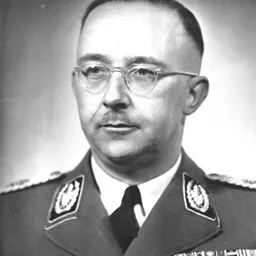
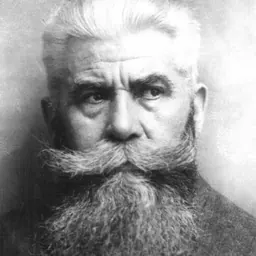


Related people
Same field, nearest in time
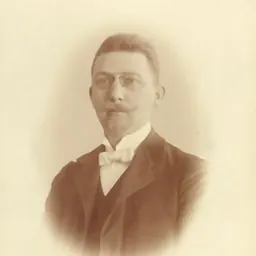

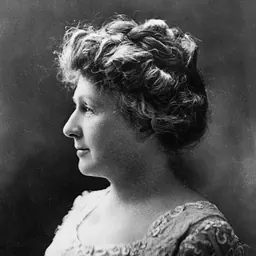


Contemporaries
People whose lives overlapped Philipp Johann Heinrich Fauth's



Frequently asked questions
Who was Philipp Johann Heinrich Fauth?
German selenographer (1867–1941)
When was Philipp Johann Heinrich Fauth born?
Philipp Johann Heinrich Fauth was born on 19 March 1867 in Bad Dürkheim.
When did Philipp Johann Heinrich Fauth die?
Philipp Johann Heinrich Fauth died on 4 January 1941 in Grünwald.
What was Philipp Johann Heinrich Fauth's occupation?
Philipp Johann Heinrich Fauth was an astronomer, cartographer and folkeskole teacher.
What nationality was Philipp Johann Heinrich Fauth?
Philipp Johann Heinrich Fauth's recorded nationality: German Reich.
Sources & further reading
· Wikipedia: Philipp Johann Heinrich Fauth
· DBpedia: Philipp Johann Heinrich Fauth
Cite this page
APA: Biography.guide. (2026). Philipp Johann Heinrich Fauth. https://biography.guide/philipp-johann-heinrich-fauth/
MLA: "Philipp Johann Heinrich Fauth." Biography.guide, https://biography.guide/philipp-johann-heinrich-fauth/.
Chicago: "Philipp Johann Heinrich Fauth." Biography.guide. https://biography.guide/philipp-johann-heinrich-fauth/.
Data last updated: 2026-09-26 · Spot an error? Report a correction.
Page generated 2026-09-27 05:14 UTC