
About Philip Wylie
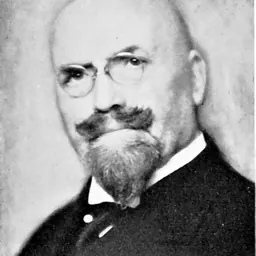
Lived 1902 – 1971 (aged 69). Philip Wylie was an American writer, novelist, screenwriter, essayist, playwright and science fiction writer.
Philip Gordon Wylie (May 12, 1902 – October 25, 1971) was an American writer of works ranging from science fiction, mysteries, and social diatribes, to satire concerning topics such as ecology and the threat of nuclear holocaust.
Early life and education Born in Beverly, Massachusetts, Wylie was the son of Presbyterian minister Edmund Melville Wylie and Edna Edwards, a novelist, who died when Philip was five years old. His family later moved to Montclair, New Jersey.
Wylie attended Princeton University from 1920 to 1923.
Career A writer of fiction and nonfiction, Wylie's output included hundreds of articles, novels, serials, short stories, syndicated newspaper columns, and works of social criticism. He also wrote screenplays while in Hollywood, was an editor for Farrar & Rinehart, served on the Dade County, Florida Defense Council, was a director of the Lerner Marine Laboratory, and at one time was an adviser to the chairman of the U.S. Congressional Joint Committee for Atomic Energy, which led to the creation of the Atomic Energy Commission. Most of Wylie's major writings contain critical, though often philosophical, views on man and society as a result of his studies and interests in biology, ethnology, physics, and psychology.
Sixteen films were made based on screenplays, novels, or stories written by Wylie. He sold the rights for two others that were never produced.
Wylie's wide range of interests defies easy classification, but his earliest work exercised great influence in 20th century science fiction pulp magazines and comic books: Gladiator (1930) may have partially inspired the comic-book character Superman. The Savage Gentleman (1932) "Pulp historians point out that the themes of The Savage Gentleman are replicated to an uncanny degree in the pulp character Clark "Doc" Savage (1933) created by Lester Dent ..." — Richard A. Lupoff When Worlds Collide (1933), co-written with Edwin Balmer, inspired Alex Raymond's comic strip Flash Gordon and was adapted as an eponymous 1951 film by producer George Pal.
Wylie applied engineering principles and the scientific method quite broadly in his work. His novel The Disappearance (1951) is about what happens when everyone suddenly finds that all members of the opposite sex are missing (all the men have to get along without women, and vice versa). The book delves into the double standards between men and women that existed prior the women's movement of the 1970s, exploring the nature of the relationship between men and women and the issues of women's rights and homosexuality.
During World War II, writing The Paradise Crater (1945) resulted in Wylie's house arrest by the federal government; in this work, he described a post-WWII 1965 Nazi conspiracy to develop and use uranium-237 bombs, months before the first successful atomic test at Alamogordo – the most highly classified secret of the war. Wylie's book of essays, Generation of Vipers (1942), was a best-seller during the 1940s and inspired the term "Momism". Some people have accused Generation of Vipers of being misogynistic. (His only child, Karen Pryor, is the author of a classic book for breastfeeding mothers, Nursing Your Baby; she has commented that her father was far from being a misogynist.) The Disappearance shows his thinking on the subject is very complex. His novel of manners, Finnley Wren, was also highly regarded in its time.
In 1945, he wrote a political column for the New York Post.
Wylie wrote 69 stories in the "Crunch and Des" series, most of which appeared in the Saturday Evening Post, about the adventures of Captain Crunch Adams, master of the charter boat Poseidon, which was the basis of a brief television series. In 1941, Wylie became vice-president of the International Game Fish Association, and for many years was responsible for writing IGFA rules and reviewing world record claims.
Wylie's 1954 novel Tomorrow! dealt graphically with the civilian impact of thermonuclear war to make a case for a strong Civil Defense network in the United States, as he told the story of two neighboring cities (one prepared, one unprepared) before and after an attack by missile-armed Soviet bombers. This was adapted on 17 October 1956, by ABC Radio, as a one-hour drama narrated by Orson Welles, produced in cooperation with the Federal Civil Defense Administration.
Wylie was also active in writing detective and mystery novelettes for a variety of magazines. Five of them were collected in 2010 as Ten Thousand Blunt Instruments and Other Mysteries, published by Crippen & Landru in its "Lost Classics" series and edited by Bill Pronzini.
An article Wylie wrote in 1951 in The Saturday Evening Post entitled "Anyone can raise orchids" led to the popularization of this hobby—not just the rich, but gardeners of every economic level began experimenting with orchids.
In May 1959, Wylie went to the then all-White Florida State University to give Wylie awards to two students who aspired to become librarians. The award presentation happened in front of a student crowd and Wylie "typically detoured" from his academic chore and stated: “I hope that in a third of a century not only will we be integrated and almost all racism will be a historic fact we read about in old books, but I hope we’ll be a lot further along toward all becoming tea-colored.”
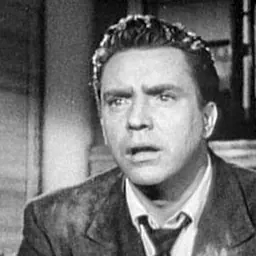
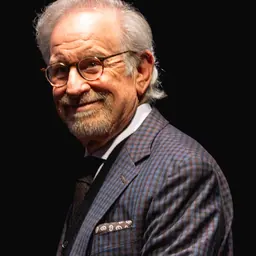
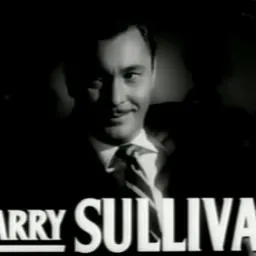
Wylie's final works dealt with the potentially catastrophic effects of pollution and climate change. Notably, Wylie wrote "L.A. 2017", a 1971 episode of the television series The Name of the Game. The series was normally a contemporary drama; however, in this unique science fiction episode, the lead character awakens in a science-fiction dystopia, centered on a psychiatric/fascist government overseeing the underground-sheltered remnants of humanity, the aftermath of an environmental (pollution) catastrophe. The 90 minute episode was directed by Steven Spielberg, and featured Gene Barry, Barry Sullivan, Edmond O'Brien, Severn Darden and Sharon Farrell. Wylie wrote a near-simultaneous novelization of the story as Los Angeles: A.D. 2017.
Wylie's final novel, The End of the Dream, was published posthumously in 1972 and foresees a dark future where America slides into ecological catastrophe.
Wylie, and now the Philip Wylie estate, is represented by Harold Ober Associates.
Personal life Wylie married Sally Ondek, and had one child, Karen Pryor. After divorcing his first wife, he married Frederica Ballard, who was born and raised in Rushford, New York; they are both buried in Rushford.
Wylie's daughter, Karen Pryor, was an author who became the inventor of animal "clicker" training.
Wylie's niece Janice Wylie, the daughter of his brother Max Wylie, co-creator of The Flying Nun, was murdered, along with her roommate Emily Hoffert, in New York in August 1963, in what became known as the "Career Girls Murders" case.
Death While on vacation, Wylie died from a heart attack on October 25, 1971, in Miami. Some of his papers, writings, and other possessions are in the Department of Rare Books and Special Collections at Princeton University Library.
Footnotes
Don’t just read it —
keep it.
Full-length biographies made to live with: read them, listen on the way to work, watch them tonight.
- E-book
- Audio
- Video
Instant download · yours to keep · every purchase keeps this site free
Important facts
Family & relationships
People in Philip Wylie's life
Named in this biography and alive at the same time


Related people
Same field, nearest in time





Contemporaries
People whose lives overlapped Philip Wylie's




Frequently asked questions
Who was Philip Wylie?
American writer (1902–1971)
When was Philip Wylie born?
Philip Wylie was born on 12 May 1902 in Beverly.
When did Philip Wylie die?
Philip Wylie died on 25 October 1971 in Miami.
What was Philip Wylie's occupation?
Philip Wylie was a writer, novelist, screenwriter, essayist, playwright and science fiction writer.
What nationality was Philip Wylie?
Philip Wylie was American.
Sources & further reading
Cite this page
APA: Biography.guide. (2026). Philip Wylie. https://biography.guide/philip-wylie/
MLA: "Philip Wylie." Biography.guide, https://biography.guide/philip-wylie/.
Chicago: "Philip Wylie." Biography.guide. https://biography.guide/philip-wylie/.
Data last updated: 2026-09-20 · Spot an error? Report a correction.
Page generated 2026-09-27 05:25 UTC