
About Philip Sherrard
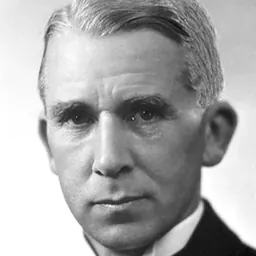
Lived 1922 – 1995 (aged 72). Philip Sherrard was a British poet, byzantinist, translator, writer, theologian and philosopher.
Philip Owen Arnould Sherrard (23 September 1922 – 30 May 1995) was a British author and translator. His work includes translations of Modern Greek poets, and books on Modern Greek literature and culture, metaphysics, theology, art and aesthetics. In England he was influential in making major Greek poets of the nineteenth and twentieth centuries known. Sherrard was a practising Eastern Orthodox Christian and was responsible, along with Kallistos Ware and G. E. H. Palmer, for the first full translation of the Philokalia into English.
Sherrard also wrote prolifically on theological and philosophical themes, describing what he believed to be a social and spiritual crisis occurring in the developed world, specifically modern attitudes towards the biophysical environment from a Christian and perennialist perspective.
Biography Philip Owen Arnould Sherrard was born on 23 September 1922 in Oxford. His family had many connections with the literary world of the period: his mother, Brynhild Olivier, had been a member of Rupert Brooke's circle before the First World War and his half-sister was married to Quentin Bell, the nephew of Virginia Woolf. He was educated at Dauntsey's School and at Peterhouse, Cambridge, where he obtained a degree in history.
Sherrard first came to Greece as a soldier after the liberation of Athens in 1946. The culture and traditional way of life of the country made a profound impression on him. At this time he first corresponded with the poet George Seferis, whose work he was subsequently to translate into English. He also met and married his first wife, Anna Mirodia. After living for a period in London, he returned to Greece to serve as assistant director of the British School of Archaeology at Athens in 1951-52 and again in 1957–62. His doctoral thesis on the Greek poets Solomos, Palamas, Cavafy, Angelos Sikelianos and Seferis (King's College, London) was published in 1956 as The Marble Threshing Floor. In the same year he was baptised in the Orthodox Church. He had two daughters.
Writings Sherrard's first book was The Marble Threshing Floor (1956), an "introduction to modern Greek poetry for English-speaking readers, which, together with his translations, brought the poetry of Cavafy and Seferis, together with its cultural background, to the attention of the literary world." As a translator of Modern Greek poetry, he had a long and productive collaboration with Edmund Keeley. They produced many books together, among them Four Greek Poets (1966), the Collected Poems of George Seferis (1967) and of C.P. Cavafy (1975) and Selected Poems by Angelos Sikelianos (1979) and Odysseus Elytis (1981). The importance of these translations is indicated by the fact that both Seferis and Elytis went on to receive the Nobel Prize for Literature after their work had become known beyond the Greek-speaking world.
In his writing, Sherrard often attempted to avert what he saw as an oncoming environmental catastrophe. He saw the world's ecological crisis as evidence of a larger spiritual crisis and sought always to "emphasize the living relevance of the Orthodox spiritual tradition in a fragmented secular world." He produced a number of works developing this theme, including The Sacred in Life and Art, Human Image: World Image: The Death and Resurrection of Sacred Cosmology and The Rape of Man and Nature.
Among his works (together with his collaborators Kallistos Ware and G. E. H. Palmer) is the complete translation of the Philokalia, a compendium of mystical writings by the spiritual fathers of the Orthodox Church. Christianity: Lineaments of a Sacred Tradition was posthumously published in 1998. This book is a collection of articles dealing with subjects such as tradition, death and dying, the problem of evil and the revival of contemplative hesychast spirituality.
Don’t just read it —
keep it.
Full-length biographies made to live with: read them, listen on the way to work, watch them tonight.
- E-book
- Audio
- Video
Instant download · yours to keep · every purchase keeps this site free
Important facts
People in Philip Sherrard's life
Named in this biography and alive at the same time




Related people
Same field, nearest in time

Contemporaries
People whose lives overlapped Philip Sherrard's

Frequently asked questions
Who was Philip Sherrard?
British writer (1922-1995)
When was Philip Sherrard born?
Philip Sherrard was born on 23 September 1922 in Oxford.
When did Philip Sherrard die?
Philip Sherrard died on 30 May 1995 in London.
What was Philip Sherrard's occupation?
Philip Sherrard was a poet, byzantinist, translator, writer, theologian and philosopher.
What nationality was Philip Sherrard?
Philip Sherrard was British.
Sources & further reading
Cite this page
APA: Biography.guide. (2026). Philip Sherrard. https://biography.guide/philip-sherrard/
MLA: "Philip Sherrard." Biography.guide, https://biography.guide/philip-sherrard/.
Chicago: "Philip Sherrard." Biography.guide. https://biography.guide/philip-sherrard/.
Data last updated: 2026-09-26 · Spot an error? Report a correction.
Page generated 2026-09-27 05:16 UTC