
Philip Livingston
American merchant, slave trader and politician
About Philip Livingston
Lived 1686 – 1749 (aged 63). Philip Livingston was an American merchant, politician and slave trader.
Philip Livingston (July 9, 1686 – February 11, 1749) was an American merchant, slave trader and politician in colonial New York. The son of Robert Livingston the Elder and elder brother of Robert of Clermont, Philip was the second lord of Livingston Manor.
Early life
Philip Livingston was the fourth child and second son of Robert Livingston and Alida (née Schuyler) van Rensselaer Livingston. He was born on July 9, 1686, in his father's Albany, New York town house, at "Elm Tree Corner", the intersection of State and Pearl Streets and one of early Albany's principal crossroads. The name commemorates a legendary elm tree that reputedly was planted in 1735 by a young Philip Livingston in front of his father's house on the northwestern corner. Something of an Albany landmark, the old elm was removed in June 1877.
At the time of Philip's birth, his father was downriver in New York engaged in persuading Governor Dongan to grant a city charter to Albany. Philip was named for his maternal grandfather Philip Pieterse Schuyler.
Alida Livingston taught her children to read and write both English and Dutch. Philip spent a year with the Huguenot community of New Rochelle in order to learn French, in anticipation of a career as an Albany trader dealing with French Canada. Philip grew up learning the intricacies of business, and trade from his father, the most successful entrepreneur in the Hudson Valley. From 1707, he acted as his father's unofficial deputy in the offices of clerk of the county and city of Albany.
Career Merchant His parents relocated to Livingston Manor sometime prior to Philip's marriage Catherine van Brugh in 1708. Philip and his wife took up residence in the Albany townhouse. From there he took over management of his father's Albany enterprises. Philip Livingston began his mercantile career at the age of 23 after an apprenticeship with one of his Schuyler uncles in Albany. Later, he became a mercantile factor in his own right, trading furs with New York merchants such as Stephen DeLancey and Henry Cuyler. With vast land tracts and abundant water resources at their disposal, the Livingstons were well placed to recognize the importance of grain as a commodity New York could export. Robert Livingston built two gristmills on the Manor and Philip Livingston acted as his father's agent buying grain in the Hudson valley and selling flour in New York or shipping it the British West Indies. His younger brother, Robert, served as his agent in New York City.
Early in his career, Philip Livingston surveyed land titles. In late 1719, he was licensed to practice law. The position of Secretary to the Commission of Indian Affairs Robert put to good advantage in acquiring thousands of acres of unimproved land in the Mohawk Valley. One of the most notorious open-air markets was along the East River at the end of Wall Street. Slave ships continued to arrive in port despite the panic caused that summer by a so-called slave insurrection in the city. In 1749, the sloop Rhode Island, owned by the company Philip Livingston & Sons, traded rum, tobacco and cheese for guns, cloth and ivory, which it then traded on the African coast for 124 slaves. In 1750 Livingston & Sons had three vessels working the African coast. They also owned shares in the Stork and the Sarah and Elizabeth.
One Livingston Manor tenant farmer, John Dykeman, was murdered in 1715 by his slave, Ben. Coming in the aftermath of the New York Slave Revolt of 1712, it was first thought to be part of another such uprising. But after a preliminary hearing conducted by Robert Livingston Sr. and some county magistrates, it was determined that the murder was the sole act of a heartbroken, vengeful father: Dykeman had sold Ben's daughter off the manor to one of Livingston's kin in New York City. Livingston trained his sons for the mercantile profession, sending them into apprenticeship with merchant friends and correspondents in New York, London and Jamaica. The children were:
Robert Livingston (1708–1790), the 3rd Lord of the Manor who married Maria Thong (1711–1765), a granddaughter of Gov. Rip Van Dam. After her death, he married Gertrude (née Van Rensselaer) Schuyler (b. 1714), daughter of Kiliaen Van Rensselaer. Pieter Livingston (b. 1710), who died young. Sarah Livingston (1725–1805), who married William Alexander, Lord Stirling (1726–1783), in 1748. Catherine Livingston (1733–1807), who married Alderman John Lawrence (1721–1764) of New York in 1759. The Livingston Gateway at Yale stands in his honor.
Don’t just read it —
keep it.
Full-length biographies made to live with: read them, listen on the way to work, watch them tonight.
- E-book
- Audio
- Video
Instant download · yours to keep · every purchase keeps this site free
Important facts
Family & relationships
People in Philip Livingston's life
Named in this biography and alive at the same time

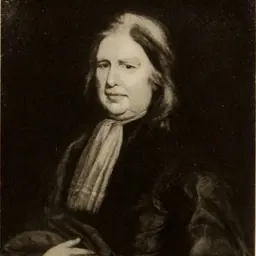


Related people
Same field, nearest in time

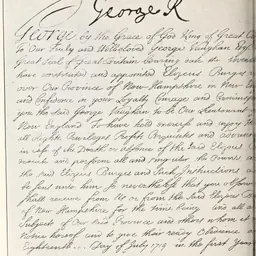


Contemporaries
People whose lives overlapped Philip Livingston's
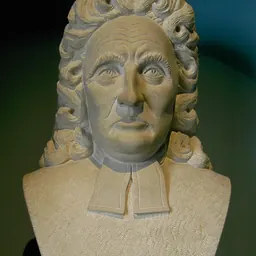

Frequently asked questions
Who was Philip Livingston?
American merchant, slave trader and politician (1686–1749)
When was Philip Livingston born?
Philip Livingston was born on 9 July 1686 in Albany.
When did Philip Livingston die?
Philip Livingston died on 31 December 1749 in United States.
What was Philip Livingston's occupation?
Philip Livingston was a merchant, politician and slave trader.
What nationality was Philip Livingston?
Philip Livingston was American.
Sources & further reading
· Wikipedia: Philip Livingston
· DBpedia: Philip Livingston (1686–1749)
Cite this page
APA: Biography.guide. (2026). Philip Livingston. https://biography.guide/philip-livingston/
MLA: "Philip Livingston." Biography.guide, https://biography.guide/philip-livingston/.
Chicago: "Philip Livingston." Biography.guide. https://biography.guide/philip-livingston/.
Data last updated: 2026-09-20 · Spot an error? Report a correction.
Page generated 2026-09-27 05:21 UTC