
About Philip H. Cooper
Lived 1844 – 1912 (aged 68). Philip H. Cooper was an American military officer.
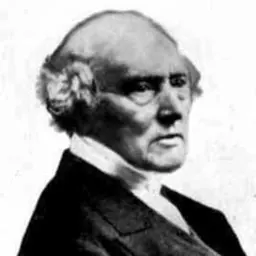
Rear Admiral Philip Henry Cooper (5 August 1844 – 29 December 1912) was an officer in the United States Navy. He fought in the American Civil War and served as Superintendent of the United States Naval Academy and as commander-in-chief of the United States Asiatic Fleet.
Naval career
Cooper was born in Camden, New York, on 5 August 1844, the son of Hiram H. and Delia A. Cooper. He was appointed as an acting midshipman from New York's 20th congressional district on 28 September 1860 and entered the United States Naval Academy in Annapolis, Maryland, as a member of the class of 1864; the academy moved to Newport, Rhode Island, after the American Civil War broke out in April 1861. On 16 July 1862, the rank of acting midshipman was abolished, and Cooper's rank changed to midshipman. On 21 November 1862, Cooper, Henry Glass, and Charles McGregor were appointed acting assistant professors of mathematics at the Naval Academy while all three were still Academy students. Cooper was commissioned as an acting ensign on 28 May 1863 and was assigned to the sloop-of-war , serving as an academy training ship, the same day.
Due to the wartime requirement for officers in the rapidly expanding fleet, Cooper – ranked fifth in his graduating class – was detached early from the Naval Academy on 1 October 1863 and assigned to the steam sloop-of-war in the West Gulf Blockading Squadron in the Gulf of Mexico for the rest of the Civil War.
Aboard Richmond, he saw action in the Union blockade of the Confederate States of America and in the Battle of Mobile Bay on 5 August 1864.
On 31 May 1871, Cooper detached from the expedition and reported for duty at the New York Navy Yard in Brooklyn, New York, where he performed duty as equipment officer. He transferred to the screw sloop-of-war on 20 September 1871. Cooper next returned to duty on the staff of the Naval Academy, assigned there on 10 July 1872. On 19 July 1875, he was ordered to the Naval Torpedo Station in Newport, Rhode Island, for torpedo instruction, then was transferred on 17 August 1875 to the Naval Experimental Battery at Annapolis, Maryland. An assignment as assistant hydrographic inspector in the United States Coast Survey office followed, beginning on 28 June 1878.
On 7 July 1898, Cooper reported to the protected cruiser to oversee her fitting out after a lengthy overhaul, and he became her commanding officer when she was recommissioned on 1 December 1898. After detaching from Chicago on 5 October 1899, he took a leave of absence, then received orders on 5 May 1900 to report aboard the battleship as her commanding officer, effective 9 June 1900. He detached from Iowa on 5 March 1901 and awaited orders until his assignment on 7 October 1901 to serve on a court martial at Tutuila in the Tutuila Islands (later American Samoa).
Promoted to rear admiral on 9 February 1902, Cooper became the president of a general court martial at Port Royal, South Carolina, on 10 April 1902. In 1902 he was responsible for the defense of the United States East Coast from Barnegat, New Jersey, north to the border with Canada and in July 1902 took part in combined U.S. Navy-United States Army maneuvers with his headquarters at the Naval War College in Newport, Rhode Island, and using the gunboat as his flagship.
Cooper reported for duty on 6 February 1903 as Senior Squadron Commander in the Asiatic Fleet. On 1 March 1903, he assumed command of the fleet's Southern Squadron and on 2 July 1903 of its Cruiser Squadron. On 21 March 1904, he assumed command of the entire Asiatic Fleet. However, his health went into decline, and on 1 July 1904 (sources vary), Cooper detached from the Asiatic Fleet. On 5 August 1904, he retired from the Navy.
Death
Cooper apparently contracted chronic malaria while in Nicaragua in 1870 and 1871 on the surveying expedition. Repeated bouts of malaria took a toll on his health, which became poor enough in 1904 to force him to relinquish command of the Asiatic Fleet and retire. He returned to the United States but never completely recovered, and died at Morristown, New Jersey, on 29 December 1912 of interstitial myocarditis and general arteriosclerosis.
Cooper is buried at Evergreen Cemetery in Morristown.
Don’t just read it —
keep it.
Full-length biographies made to live with: read them, listen on the way to work, watch them tonight.
- E-book
- Audio
- Video
Instant download · yours to keep · every purchase keeps this site free
Important facts
People in Philip H. Cooper's life
Named in this biography and alive at the same time

Related people
Same field, nearest in time

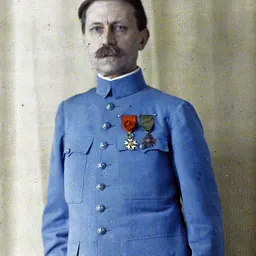




Contemporaries
People whose lives overlapped Philip H. Cooper's
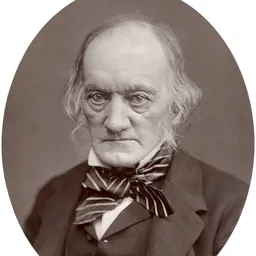
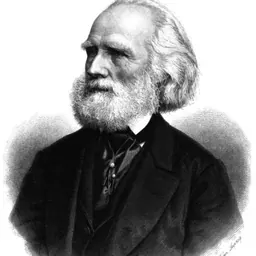
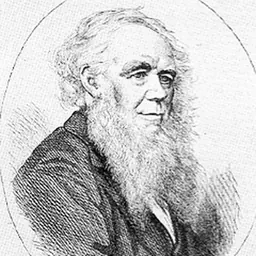


Frequently asked questions
Who was Philip H. Cooper?
United States Navy admiral (1844–1912)
When was Philip H. Cooper born?
Philip H. Cooper was born on 5 August 1844 in Camden.
When did Philip H. Cooper die?
Philip H. Cooper died on 29 December 1912 in Morristown.
What was Philip H. Cooper's occupation?
Philip H. Cooper was a military officer.
What nationality was Philip H. Cooper?
Philip H. Cooper was American.
Sources & further reading
Cite this page
APA: Biography.guide. (2026). Philip H. Cooper. https://biography.guide/philip-h-cooper/
MLA: "Philip H. Cooper." Biography.guide, https://biography.guide/philip-h-cooper/.
Chicago: "Philip H. Cooper." Biography.guide. https://biography.guide/philip-h-cooper/.
Data last updated: 2026-09-20 · Spot an error? Report a correction.
Page generated 2026-09-27 05:27 UTC