
About Philip Frowde
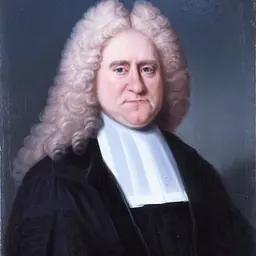
Lived 1678 – 1738 (aged 59–60). Philip Frowde was a British poet and playwright.
Philip Frowde (died 1738) was an English poet and dramatist.
Life Frowde was the son of Philip Frowde, deputy postmaster-general from 1678 to 1688. His grandfather, Colonel Philip Frowde, for his faithful adherence to Charles I and Charles II was knighted on 10 March 1664–5, and appointed governor of the post office.
From Eton College, where young Philip was contemporary with Robert Walpole, Frowde passed to Magdalen College, Oxford, as a gentleman-commoner, and became one of Joseph Addison's pupils. He did not take a degree.
Frowde died unmarried at his lodgings in Cecil Street, Strand, in December 1738, and was buried in the cemetery in Lamb's Conduit Fields.
Works To vol. ii. of Musarum Anglicanarum Analecta (Oxford, 1699, edited by Addison), Frowde contributed Cursus Glacialis, Anglicè, Scating. In May 1720 Edmund Curll published these verses as Addison's, together with an English version also supposed to be Addison's, and a preface by one T. N., who stated that although Addison was well known to be the author, he had always allowed Frowde to pass them off as his own. An anonymous imitation in English appeared in 1774; there is also a translation in Miscellane by J.G. (James Glassford), Edinburgh, 1818.
Frowde wrote a blank verse tragedy entitled The Fall of Saguntum, London, 1727, influenced by Cato, a Tragedy. It was acted at Lincoln's Inn Fields Theatre on 16 January 1727, James Quin representing Eurydamas and delivering the prologue by Lewis Theobald. The tragedy obtained only about three representations, and is noted for a dedication to [Walpole, who is described as "bringing the learning and arts of Greece and Rome into the cabinet; either that to instruct in the depths of reasoning; or these in the rules of governing". Before its performance A. B., (possibly Frowde himself) undertook to explain for the benefit of "a lady of quality" the historical and classical allusions in the play in The History of Saguntum (1727), which also argues the dramatist's superiority over Silius Italicus, from whose Punica the plot was partly derived. Another lugubrious tragedy in blank verse, Philotas, London, 1731 (also 1735), brought out at Lincoln's Inn Fields on 3 February 1730–1, with Quin again in the cast, met with an even colder reception, though it ran for six nights. Henry Fielding introduced an ironical encomium on Philotas in Joseph Andrews.
Don’t just read it —
keep it.
Full-length biographies made to live with: read them, listen on the way to work, watch them tonight.
- E-book
- Audio
- Video
Instant download · yours to keep · every purchase keeps this site free
Important facts
People in Philip Frowde's life
Named in this biography and alive at the same time


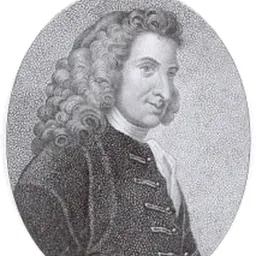
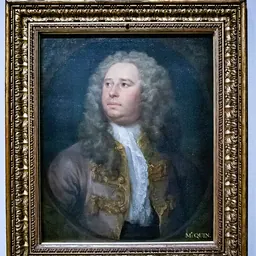


Related people
Same field, nearest in time


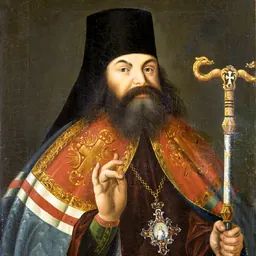
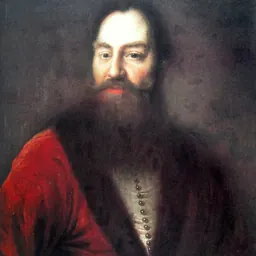

Contemporaries
People whose lives overlapped Philip Frowde's




Frequently asked questions
Who was Philip Frowde?
British writer
When was Philip Frowde born?
Philip Frowde was born in 1678.
When did Philip Frowde die?
Philip Frowde died in 1738.
What was Philip Frowde's occupation?
Philip Frowde was a poet and playwright.
What nationality was Philip Frowde?
Philip Frowde was British.
Sources & further reading
Cite this page
APA: Biography.guide. (2026). Philip Frowde. https://biography.guide/philip-frowde/
MLA: "Philip Frowde." Biography.guide, https://biography.guide/philip-frowde/.
Chicago: "Philip Frowde." Biography.guide. https://biography.guide/philip-frowde/.
Data last updated: 2026-09-20 · Spot an error? Report a correction.
Page generated 2026-09-27 05:27 UTC