
About Philip Elman
Lived 1918 – 1999 (aged 81). Philip Elman was an American lawyer.
Philip Elman (March 14, 1918 – November 30, 1999) was an American lawyer at the United States Department of Justice and former member of the Federal Trade Commission (FTC). Elman is best known for writing the government's brief in Brown v. Board of Education. Elman is also notable for being one of just three political independents to have ever served on the FTC.
Early life and education Elman was born in Paterson, New Jersey, to Polish-Jewish immigrants who worked in the silk industry. During the Great Depression, he moved with his family to New York City, where he attended DeWitt Clinton High School and the City College of New York. He went on to Harvard Law School, where he was an editor of the Harvard Law Review in 1938 and 1939.
Legal career
Judicial clerkships Elman began his legal career as a law clerk to Judge Calvert Magruder of the U.S. Court of Appeals for the First Circuit, 1939–1940. After a brief stint at the Federal Communications Commission (1940–1941), he served as a law clerk to U.S. Supreme Court Justice Felix Frankfurter from 1941 to 1943. Among the opinions Elman was involved in drafting during his clerkship was Frankfurter's dissent in the second Flag Salute case, West Virginia State Board of Education v. Barnette. Elman and Frankfurter remained close friends; Elman would later recount that Frankfurter still regarded him as his clerk for years after Elman had joined the Justice Department.
Since Elman's tenure, only two other political independents have served on the body: Mary Azcuenaga, who served from 1984 to 1998, and Pamela Jones Harbour, who served from 2003 to 2009.
Elman admitted in his oral history that he and Justice Frankfurter conferred privately about the intended remedy in the case, which technically constituted a breach of judicial ethics. He was publicly criticized for this in 1987 by Time and The New York Times. Elman defended both himself and Justice Frankfurter by stating that these discussions took place before the United States became a party to the case, and even then, the United States was not an adversary party but rather an amicus curiae.
Elman died at Sibley Memorial Hospital in 1999.
Don’t just read it —
keep it.
Full-length biographies made to live with: read them, listen on the way to work, watch them tonight.
- E-book
- Audio
- Video
Instant download · yours to keep · every purchase keeps this site free
Important facts
People in Philip Elman's life
Named in this biography and alive at the same time




Related people
Same field, nearest in time
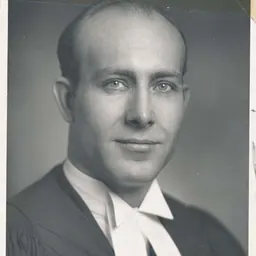


Contemporaries
People whose lives overlapped Philip Elman's



Frequently asked questions
Who was Philip Elman?
American lawyer (1918-1999)
When was Philip Elman born?
Philip Elman was born on 14 March 1918 in Paterson.
When did Philip Elman die?
Philip Elman died on 30 November 1999 in Washington, D.C..
What was Philip Elman's occupation?
Philip Elman was a lawyer.
What nationality was Philip Elman?
Philip Elman was American.
Sources & further reading
Cite this page
APA: Biography.guide. (2026). Philip Elman. https://biography.guide/philip-elman/
MLA: "Philip Elman." Biography.guide, https://biography.guide/philip-elman/.
Chicago: "Philip Elman." Biography.guide. https://biography.guide/philip-elman/.
Data last updated: 2026-09-20 · Spot an error? Report a correction.
Page generated 2026-09-27 05:04 UTC