
Philip Clissett
Arts and Crafts artisan
About Philip Clissett
Lived 1817 – 1913 (aged 96). Philip Clissett was a chair maker.
Philip Clissett (born 8 January 1817, Birtsmorton, Worcestershire, England; died 17 January 1913, Bosbury, Herefordshire) was a Victorian country chairmaker who influenced and inspired the English Arts and Crafts Movement through various architects and designers. His chance meeting with James MacLaren has been described as "undoubtedly a seminal point in the subsequent development of the Arts and Crafts Movement", and led to the furnishing of the meeting room of the Art Workers Guild with a large number of his chairs which can still be seen today. These chairs have been "highly influential", having been "seen by almost everyone involved in art and design from the late 1880s". They particularly influenced Ernest Gimson who, in 1890, spent six weeks with Clissett learning to make ladderback chairs. Clissett's chairs were popular with the Arts and Crafts cognoscenti, and were used by Charles Rennie Mackintosh in early commissions, and by the architectural team of Richard Barry Parker and Raymond Unwin. They were also used as part of the original furnishing of the Passmore Edwards Settlement at Mary Ward House, 5 Tavistock Place, London by the architects A. Dunbar Smith and C. Cecil Brewer.
Clissett made chairs in the West Midlands tradition, turning the parts from fresh, unseasoned ash (Fraxinus excelsior) with a pole lathe. Other parts were sawn and shaped with a drawknife while held in a shave horse. Seats were generally made from an elm board, or from woven rush. While rush-seated ladderback chairs are his most well-known output, he also made spindleback chairs which are often stamped with his initials. Clissett is often referred to as a bodger but this is incorrect as he made entire chairs rather than just turned parts.
Clissett's chairs are now widely collected, and can be found in various museums and collections, including: Victoria and Albert Museum, London Geffrye Museum, London William Morris Gallery, Walthamstow, London 7 Hammersmith Terrace, London Hunterian Museum and Art Gallery, Glasgow New Walk Museum, Leicester Cheltenham Art Gallery & Museum, Cheltenham, Gloucestershire Worcestershire County Museum, Hartlebury, Worcestershire Hereford Museum and Art Gallery, Hereford Butcher Row House Museum, Ledbury, Herefordshire Rodmarton Manor, nr Cirencester, Gloucestershire Marchmont House, nr Greenlaw, Berwickshire Los Angeles County Museum of Art, USA Crab Tree Farm, Lake Bluff, Illinois, USA
Don’t just read it —
keep it.
Full-length biographies made to live with: read them, listen on the way to work, watch them tonight.
- E-book
- Audio
- Video
Instant download · yours to keep · every purchase keeps this site free
Important facts
People in Philip Clissett's life
Named in this biography and alive at the same time
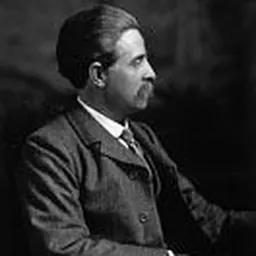


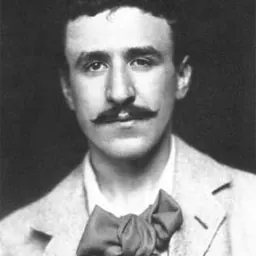

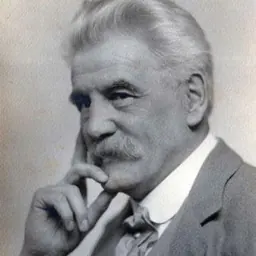


Related people
Same field, nearest in time



Contemporaries
People whose lives overlapped Philip Clissett's



Frequently asked questions
Who was Philip Clissett?
arts and Crafts artisan
When was Philip Clissett born?
Philip Clissett was born on 8 January 1817.
When did Philip Clissett die?
Philip Clissett died on 17 January 1913.
What was Philip Clissett's occupation?
Philip Clissett was a chair maker.
Sources & further reading
Cite this page
APA: Biography.guide. (2026). Philip Clissett. https://biography.guide/philip-clissett/
MLA: "Philip Clissett." Biography.guide, https://biography.guide/philip-clissett/.
Chicago: "Philip Clissett." Biography.guide. https://biography.guide/philip-clissett/.
Data last updated: 2026-09-20 · Spot an error? Report a correction.
Page generated 2026-09-27 05:32 UTC