
About Mary Ward
Lived 1827 – 1869 (aged 42). Mary Ward was an Irish astronomer, author, entomologist, artist, naturalist and microscopist.
Personal life She was born Mary King in Ballylin near present-day Ferbane, County Offaly, on 27 April 1827, the youngest child of the Reverend Henry King and his wife Harriette. She and her sisters were educated at home, by a governess, as were most girls at the time. However, her education was slightly different from the norm because she was of a renowned scientific family. She was interested in nature from an early age, and by the time she was three years old she was collecting insects.
On 6 December 1854, she married Henry Ward of Castle Ward, County Down, who in September 1881, over twelve years after her death, succeeded to the title of Viscount Bangor. They had three sons and five daughters, including Maxwell Ward, 6th Viscount Bangor.
Ward also drew insects, and the astronomer James South observed her doing so one day. She was using a magnifying glass to see the tiny details, and her drawing so impressed him that he immediately persuaded her father to buy her a microscope. A compound microscope made by Andrew Ross (model 112) was purchased for £48 12s 8d. This was the beginning of a lifelong passion. She began to read everything she could find about microscopy, and taught herself until she had an expert knowledge. She made her own slides from slivers of ivory, as glass was difficult to obtain, and prepared her own specimens. The physicist Sir David Brewster asked her to make his microscope specimens, and used her drawings in many of his books and articles. . This is one of the few, if not, only, 19th century map of the Moon drawn by a female artist-astronomer.
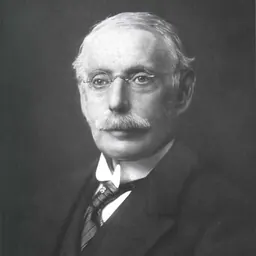
Her books are: A Windfall for the Microscope (1856), A World of Wonders, Revealed by the Microscope (1857), Entomology in Sport, and Entomology in Earnest (1857, with Lady Jane Mahon), Microscope Teachings (1864), Telescope Teachings (1859). She illustrated her books and articles herself, as well as many books and papers by other scientists. and on 31 August 1869 she and her husband, Henry, were travelling in it with the Parsons boys (the Hons Richard Clere Parsons and the future steam turbine pioneer Charles Algernon Parsons) and their tutor, Richard Biggs. She was thrown from the car on a bend in the road at Parsonstown (present-day Birr, County Offaly). She fell under its wheels and died almost instantly. A doctor who lived near the scene arrived within moments, and found her cut, bruised, and bleeding from the ears. The fatal injury was a broken neck.
Ward's microscope, accessories, slides and books are on display in her husband's former home, Castle Ward in County Down, a residence now owned by the National Trust. Lord Rosse's home at Birr Castle, County Offaly, is also open to the public.
Don’t just read it —
keep it.
Full-length biographies made to live with: read them, listen on the way to work, watch them tonight.
- E-book
- Audio
- Video
Instant download · yours to keep · every purchase keeps this site free
Important facts
People in Mary Ward's life
Named in this biography and alive at the same time



Related people
Same field, nearest in time

Contemporaries
People whose lives overlapped Mary Ward's





Frequently asked questions
Who was Mary Ward?
Anglo-Irish scientist and writer (1827-1869)
When was Mary Ward born?
Mary Ward was born on 27 April 1827 in County Offaly.
When did Mary Ward die?
Mary Ward died on 31 August 1869 in Birr.
What was Mary Ward's occupation?
Mary Ward was an astronomer, author, entomologist, artist, naturalist and microscopist.
What nationality was Mary Ward?
Mary Ward was Irish.
Sources & further reading
· DBpedia: Mary Ward (scientist)
Cite this page
APA: Biography.guide. (2026). Mary Ward. https://biography.guide/mary-ward/
MLA: "Mary Ward." Biography.guide, https://biography.guide/mary-ward/.
Chicago: "Mary Ward." Biography.guide. https://biography.guide/mary-ward/.
Data last updated: 2026-09-20 · Spot an error? Report a correction.
Page generated 2026-09-27 05:32 UTC