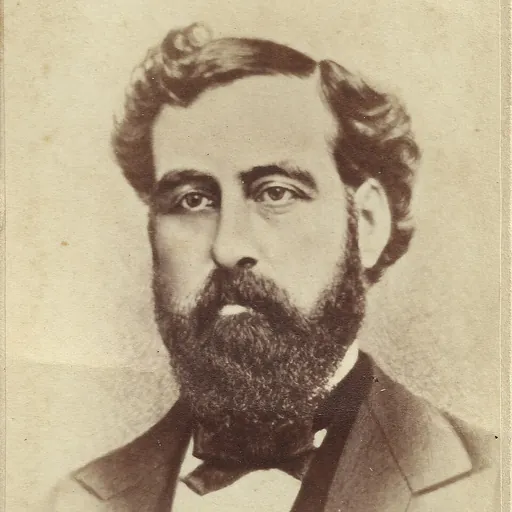
About Philip Bliss
Lived 1838 – 1876 (aged 38). Philip Bliss was an American composer, hymnwriter, singer and singer-songwriter.
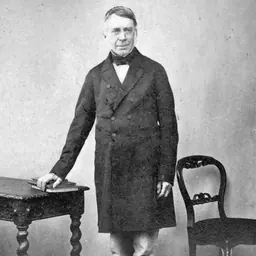
Philip Paul Bliss (July 9, 1838 – December 29, 1876) was an American composer of gospel songs, baritone-bass singer, and song leader who collaborated with Daniel W. Whittle in evangelistic ministry; he was also a good friend of Dwight L. Moody. Some of his better-known songs are "Hold the Fort", "Almost Persuaded" (1871); "Let the Lower Lights Be Burning" (1871); "Hallelujah, What a Saviour!" (1875); "Wonderful Words of Life" (1875), and "I Will Sing of My Redeemer" (1876); he also wrote the melody for Horatio Spafford's "It Is Well with My Soul" (1876).
With a surname derived from a Middle English word meaning "joy" or "gladness", Bliss lived up to his name. Those who knew him well, like George F. Root, a close friend and one-time employer, would say of him, "His smile went into his religion and his religion into his smile" , while Arthur T. Pierson, successor to Charles H. Spurgeon at the Metropolitan Tabernacle of London, testified that "he was well named 'Bliss'. What a happy man he was! What a ray of sunshine, what a spring of joy!"
Family heritage Found among his papers after his death, on a page marked "P. P. Bliss, 1861", was his family's genealogy, with some very interesting religious and historical connections. Thomas Bliss, Sr., his great-great-great-great-great grandfather, was a hard-working, wealthy landowner from the village of Belstone in the West Devon District of England; because of his Puritan convictions, all of his real estate holdings were confiscated and he was thrown in jail during the persecution of Dissenters (or Noncomformists) under the auspices of William Laud, Archbishop of Canterbury. His health and wealth ruined, he died there two years later in 1635.
The same year that Thomas, Sr., died, his widow and two of their sons, George and Thomas, Jr., set sail from Wales for the New World in search of religious freedom. Thomas, Jr., settled down in Connecticut, where he was the first person to introduce potatoes to the region; George chose Rhode Island. George's son, John, then moved to Connecticut, where he met and married Damaris Arnold, the daughter of the then-governor of Rhode Island, Benedict Arnold I, the great-grandfather of the notorious traitor. Next in line was Josiah Bliss, who fathered a son, William, who in turn was the father of Philip's grandfather, John (b. 1760); a shoemaker by trade, he married a woman from Massachusetts named Reliance Babcock, then moved his family to Greenfield in Saratoga County, New York, where he bought a 100-acre farm. As to John's religious character, he walked from his home in Greenfield to Newport, Rhode Island, a distance of 200 miles, just to be baptized (no doubt, in a cold, icy creek!); later, he became a Seventh Day Baptist minister.
Philip's grandmother gave birth to sixteen children, twelve of whom were boys, but only two of them survived into adulthood, one of whom was one of a set of twins, Isaac, who was born on April 29, 1797. He married Lydia Doolittle on June 17, 1831, and together they had five children: Phebe, Reliance (named after her paternal grandmother), Philip, Elizabeth, and James. Reliance died when she was three years old, while James only lived to be seven months old and was buried next to his sister.
The only book that Isaac Bliss ever read was the Bible. Philip said of his father, “He was a diligent reader of the Bible, and had the most implicit faith in its teachings, and a deep reverence for its commands.” He also admired his father’s prayer life as “devout, tender, and child-like, repeating over and over again, year after year, about the same words, until we all knew them by heart; his prayers were very real, very holy to me in my childhood.” Nevertheless, Isaac Bliss was also true to his name, both first and last, as Philip described his father as living “in continual communion with his Savior; always happy, always trusting, always singing.” As to the latter, Philip’s mother, Lydia, used to lovingly poke fun of her husband, because all the hymns that he sang began with the word “come”; in fact, two of his favorites were “Come, Ye Sinners, Poor and Needy” and “Come, We That Love the Lord”. In honor of his godly upbringing, Philip wrote a song called "My Grandfather's Bible" (which can be sung to FRIEND, the melody for "I've Found a Friend", written by George C. Stebbins), the first verse of which went like this:The Sabbath day - sweet day of rest - was drawing to a close;
The summer day went murm'ring by, to lull me to repose:
I took my father's Bible down - his father's gift to him -
A treasure rare, beyond compare, though soiled the page and dim.
His Early Life
Philip P. Bliss was born in Huston Township, near Penfield in the northwestern corner of Clearfield County, almost at the heart of the state of Pennsylvania. There is a historical marker on Pennsylvania Route 255, 2.2 miles northeast of Pennfield in the village of Hollywood, indicating where his birthplace may have once been. It reads, “Philip P. Bliss: The great singing evangelist and gospel song writer was born July 9, 1838, in a log house which stood a little distance from here. He lived and worked on the farm and in nearby lumber camps until the age of 16.” As Philip tells the story, his original first name was spelled with two “P”s at the end; he then took the final “P” and made it his middle initial. Since he referred to himself as “Sr.” and his oldest son, who was known as “Paul”, as “Jr.”, it stands to reason that his middle initial stood for “Paul”.
Philip's family moved frequently in his younger years: after five years in Clearfield County, they moved to Kinsman, Ohio, just across that state line (Kinsman is where his good friend James McGranahan eventually retired and was buried), then returned to Pennsylvania, where they lived in Espyville (Crawford County) for a year, before eventually settling down in Tioga County in the north-central part of the state. Because his family moved so often and lived where there were very few people, Philip had little in the way of formal schooling, getting much of what he learned from his father's singing, praying, and reading of the Scriptures, along with his mother's daily lessons.
From an early age, Philip had a keen interest in music; at first, he would sit and listen to his father sing, eventually joining in along with him as he got older. Picking up a tune came easy for him; he could whistle it or play it on a crude musical instrument that he himself made. But it was when he was ten years old, while on an errand in their village, that he first heard a piano being played; he described it as "sweeter than anything (he) had ever before listened to". Irresistibly drawn to the music that was coming from the open door of a home, he walked into the entrance of the parlor in his bare feet and stood listening, entranced, unnoticed at first by the young lady who was playing. When she stopped, he exclaimed with great fervor, "O lady, play some more!" Startled, she looked around and, unsympathetic to his appreciation of her playing, ordered, "Get out of here with your big feet!" Leaving crushed in spirit, he said afterwards that "the memory of (those) harmonies . . . seemed to (me) like heaven."
At the age of eleven, Philip left home to go to work on a farm; so, began a time in his life (until he was 16) that he worked at various jobs during the warmer months, while going to school in the colder months to get an education. Besides helping out on a farm, he worked at a lumber camp on the Pine Creek (home of the Pennsylvania "Grand Canyon"), served as an assistant cook, cut logs, and spent some time in a sawmill.
During that time, when Philip was twelve years old, the preaching of a local Baptist pastor led to a revival that broke out among the students at the school which he attended near the village of Elk Run; it was then and there that he first made a public profession of faith in Christ. Not long afterwards, he was baptized by immersion in a creek near his home; later, at the age of 17, he joined the Baptist Church of Cherry Flats in Tioga County. While he couldn't point to a particular time and place when he was converted, he also testified that he couldn't remember a moment when he didn't love Jesus, wasn't sorry for his sin, or didn't pray. In a letter at that time to one of his sisters, he wrote, "My mind is established, with a full purpose of heart, to serve God, to live acceptably, and be prepared to meet my Judge in peace." His Education As Philip entered his later teen years, he continued his familiar pattern of attending school in the winter and working on a farm in the summer. But he soon realized that he didn’t just want to go to school to learn for himself, but to help others learn by teaching them. His first job as a teacher was at a school in Hartsville, New York, but the challenges of teaching helped him to see his need for further education. While he had already been awarded a Provisional Teacher’s Certificate by the Superintendent of Bradford County on June 10, 1857, that fall he enrolled in the Susquehanna Collegiate Institute (SCI) of Towanda, Pennsylvania. There, for a semester, he took courses in algebra, grammar, physiology, and Latin, along with some vocal instruction. He was not ashamed to admit that, to pay his way through school, he became “a kind of chore-boy”, sawing wood, fetching water, and sweeping rooms; as he insisted, he was determined to “earn every penny I possibly can honorably.” He would have finished up his education at SCI if it were not for a visit from the school president of the Rome (PA) Township, who came to the Institute looking for someone to replace their teacher who was unable to finish out the term because of poor health.
In 1857, Bliss met J. G. Towner, who taught singing. Towner recognized Bliss's talent and gave him his first formal voice training. He also met William B. Bradbury, who persuaded him to become a music teacher. His first musical composition was sold for a flute. In 1858, he took up an appointment in Rome Academy, Pennsylvania.
In 1858, in Rome, Bliss met Lucy J. Young, whom he married on June 1, 1859. She came from a musical family and encouraged the development of his talent. She was a Presbyterian, and Bliss joined her Church.
At age 22, Bliss became an itinerant music teacher. On horseback, he went from community to community accompanied by a melodeon. In July 1860, the Normal Academy of Music was held in Geneseo, New York for the music community. Musicians of renown were administrating the six-week event. Bliss was excited about it, but when he realized that he could in no way afford the expense of the school, he was heartbroken. He knew it would be a great experience for him, but he had no money. When (Bliss' wife's) Grandma Allen noticed his sad demeanor she was full of sympathy. She asked him what it costs, he replied that it would "cost as much as thirty dollars". After telling him that thirty dollars "was a good deal of money", she told him of her old stocking into which she had been "dropping pieces of silver for a good many years.” She had Bliss count the amount of money in the stocking and realized it had more than the amount needed. "And Bliss spent six weeks of the heartiest study of his life at the Normal". Bliss was now recognized as an expert within his local area. He continued the itinerant teaching.
At this time he turned to composition. None of his songs were ever copyrighted.
Evangelist In 1864, the Blisses moved to Chicago. Bliss was then 26. He became known as a singer and teacher. He wrote a number of Gospel songs. Bliss was paid $100 for a concert tour which lasted only a fortnight. He was amazed so much money could be earned so quickly. The following week, he was drafted for service in the Union Army. Because the Civil War was almost over, his notice was canceled after a few weeks. The unit he served with was the 149th Pennsylvania Infantry.
Following this, Bliss went on another concert tour, but this failed. He was, however, offered a position at Root and Cady Musical Publishers, at a salary of $150 per month. Bliss worked with this company from 1865 until 1873. He conducted musical conventions, singing schools and concerts for his employers. He continued to compose hymns, which were often printed in his employer's books.
In 1869, Bliss formed an association with Dwight L. Moody. Moody and others urged him to give up his job and become a missionary singer. In 1874, Bliss decided he was called to full-time Christian evangelism. Bliss made significant amounts of money from royalties and gave them to charity and to support his evangelical endeavors.
Bliss wrote the gospel song "Hold the Fort" after hearing Major Daniel Webster Whittle narrate an experience in the American Civil War.
Death
On 29 December 1876, the Pacific Express train on which Bliss and his wife were traveling approached Ashtabula, Ohio. When the train was nearly across the bridge it collapsed and the carriages fell into the ravine below. It was stated in many newspaper accounts of the time that Bliss escaped from the wreck, but the carriages caught fire and Bliss returned to try to extricate his wife. This account was only given by J.E. Burchell. As mentioned in the P.P. Bliss Memoirs, written in 1877 by D.W. Whittle this account by J.E. Burchell was only his conjecture. In fact, Mr. Whittle showed a picture of Bliss to all surviving passengers and no one recognized Mr. Bliss but only one lady who gave no account of seeing him during the accident. No trace of either Mr. Bliss or his wife, Lucy, was discovered. Ninety-two of the 159 passengers are believed to have died in what became known as the Ashtabula River Railroad Disaster.
The Blisses were survived by their two sons, George and Philip Paul, then aged four and one, respectively.
A monument to Bliss was erected in Rome, Pennsylvania.
Found in his trunk, which somehow survived the crash and fire, was a manuscript bearing the lyrics of the only well-known Bliss Gospel song for which he did not write a tune: "I Will Sing of My Redeemer." Soon thereafter, set to a tune specially written for it by James McGranahan, it became one of the first songs recorded by Thomas Edison.
Bliss's house in Rome, Pennsylvania, is now operated as the Philip P. Bliss Gospel Songwriters Museum.
Works According to the Philip P. Bliss Gospel Songwriters Museum, the books of songs by Bliss are as follows: The Charm (1871); The Song Tree, a collection of parlor and concert music (1872); The Sunshine for Sunday Schools (1873); The Joy for conventions and for church choir music (1873); and Gospel Songs for Gospel meetings and Sunday schools (1874). All of these books were copyrighted by John Church and Co.
In addition to these publications, in 1875, Bliss compiled, and in connection with Ira D. Sankey, edited Gospel Hymns and Sacred Songs. He brought many Methodist hymns in his suitcase with across the Atlantic. One of his most repeated by Bliss was "Man of Sorrows! What a name". In 1876, his last work was the preparation of the book known as Gospel Hymns No. 2, Sankey being associated with him as editor. These last two books are published by John Church and Co. and Biglow and Main jointly - the work of Mr. Bliss in them, under the copyright of John Church and Co. The gospel songs were popular fetching $30,000 shortly before his death.
Many of his pieces appear in the books of George F. Root and Horatio R. Palmer, and many were published in sheet music form. A large number of his popular pieces were published in The Prize, a book of Sunday school songs edited by Root in 1870.
Three of his hymns appear in the 1985 hymnbook of the Church of Jesus Christ of Latter-day Saints: Brightly Beams Our Father's Mercy (#335) (also known as Let the Lower Lights Be Burning); More Holiness Give Me (#131); and Should You Feel Inclined to Censure (#235) (words by an anonymous writer put to the tune of "Brightly Beams Our Father's Mercy"). James McGranahan's tune for "I Will Sing of My Redeemer"—known simply as "My Redeemer" is also used, paired with the text of O My Father (#292).
Don’t just read it —
keep it.
Full-length biographies made to live with: read them, listen on the way to work, watch them tonight.
- E-book
- Audio
- Video
Instant download · yours to keep · every purchase keeps this site free
Important facts
People in Philip Bliss's life
Named in this biography and alive at the same time




Related people
Same field, nearest in time

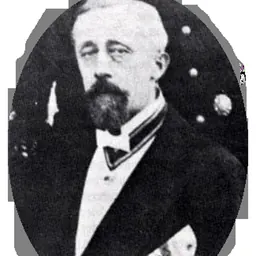

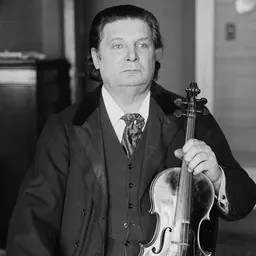
Contemporaries
People whose lives overlapped Philip Bliss's
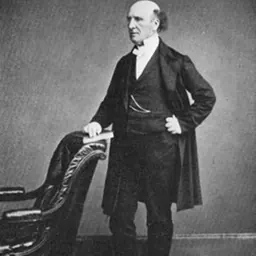
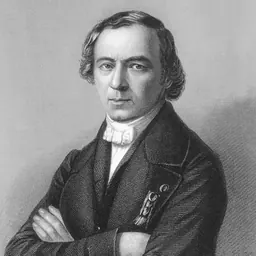

Frequently asked questions
Who was Philip Bliss?
19th century Christian hymnodist (1838–1876)
When was Philip Bliss born?
Philip Bliss was born on 9 July 1838 in Clearfield County.
When did Philip Bliss die?
Philip Bliss died on 29 December 1876 in Ashtabula.
What was Philip Bliss's occupation?
Philip Bliss was a composer, hymnwriter, singer and singer-songwriter.
What nationality was Philip Bliss?
Philip Bliss was American.
Sources & further reading
Cite this page
APA: Biography.guide. (2026). Philip Bliss. https://biography.guide/philip-bliss-composer/
MLA: "Philip Bliss." Biography.guide, https://biography.guide/philip-bliss-composer/.
Chicago: "Philip Bliss." Biography.guide. https://biography.guide/philip-bliss-composer/.
Data last updated: 2026-09-23 · Spot an error? Report a correction.
Portrait: Wikimedia Commons · author & licence
Page generated 2026-09-27 05:07 UTC