
Philip Beesley
Canadian architect (born 1956)
About Philip Beesley
Born 1956. Philip Beesley is a Canadian architect, installation artist, university teacher and teacher.
Philip Beesley (born 1956) is a multidisciplinary artist, designer, and university professor. A practitioner of sculpture and digital media art, his work is cited for his contributions to the field of responsive and interactive systems.
Early life and education Beesley received a B.F.A from Queen's University and a B.Arch from the University of Toronto. He also holds a diploma in Architectural and Mechanical Drafting/Machining from Humber College. He has been a practicing visual artist since 1978.
Periods of study were undertaken in Rome at the Vatican and the American Academy and in New York with the Wooster Group. Prior to beginning his practice he apprenticed in instrument making and in lighting design. His focus on textile structures began in exchanges with members of the Toronto craft community and the Textile Museum of Canada during the 1990s. Exchanges with Philadelphia artist Warren Seelig from 1995 to 1998 introduced geotextiles as a class of engineering structures, reinforced by dialogues with Kenneth Snelson and Chuck Hoberman in 1998. At the University of Waterloo School of Architecture, Thoman Seebohm supported a focus on computational modeling during the late 1990s. Interactive systems were introduced by Diane Willow at the Haystack Mountain School of Crafts in 2002. Jim Ruxton, Steven Wood, and Robert Gorbet supported his learning of electronics and digital control systems during collaborations 2003-7.
Career He was a member of art and performance collaboratives Open Series and Studio Six/Kataraque in Kingston, 1976-1980. Beesley was a member of the artists' collective that founded the ANNPAC organization Kingston Artists Association Inc. (KAAI) in 1977 . He was a member of the George Meteskey Ensemble in New York, 1979-80.
Beesley was appointed as an assistant professor at the University of Waterloo School of Architecture in 1999. Beesley was a co-founder of the University of Waterloo Integrated Centre for Visualization, Design and Manufacturing in 2001. He received the Waterloo appointment of Associate Professor in 2004, and of Professor in 2012. He has also served as a professor in the European Graduate School. In 2023 the University of Waterloo conferred the distinction of University Professor .
He serves as the director of the Living Architecture Systems Group (LASG) and director for Riverside Architectural Press. His Toronto-based practice, Philip Beesley Studio Inc., works in numerous collaborations. These include exchanges with the couture designer Iris van Herpen from 2011-2026. He has developed immersive sound compositions in collaboration with spatial sound artists Salvador Breed and Poul Holleman and their associated 4DSOUND organization . The electrical engineer/artist Rob Gorbet has the longest continuous collaboration with Beesley, with initial exchanges developing interactive distributed electronic artworks starting in 2004 and continuing to the present . Systems engineer Matt Gorbet has worked with Beesley 2018-2026 developing new generations of interactive software. . Beesley's 2025-26 exchanges with Alan Macy , an inventor of multiple electronic physiology-sensing and recording systems, include development of systems oriented to network physiology .
Research and other contributions
Beesley's research has focused on responsive and adaptive architectural systems that combine computation, sensing, material systems, and environmental interaction. Beginning in the 1990s, he developed lightweight geotextile and lattice structures incorporating distributed sensing and control technologies, contributing to research on responsive environments and interactive architecture. Architectural critic Geoff Manaugh described these early geotextile investigations as an "earth surface machine", characterizing them as responsive infrastructures operating between architecture, landscape, and environmental systems.
Through the Living Architecture Systems Group at the University of Waterloo, Beesley and collaborators investigated architectural systems informed by biological models of adaptation, metabolism, and self-organization. His work has been associated with the development of "living architecture", examining how built environments might function as active, continuously evolving systems rather than static constructions.
Beginning with the 2010 Venice Architecture Biennale installation Hylozoic Ground, developed in collaboration with Rachel Armstrong, Rob Gorbet and others, this research expanded to include chemically active systems and protocell-based experiments. Armstrong described the project as a "synthetic but evolutionary ecology" that combined responsive architectural assemblies with dynamic chemical processes, exploring the possibility of metabolic interactions within architectural environments.
Subsequent research within the group extended these investigations into digitally mediated environments, including Matthew Gorbet's Spatialized Digital Milieu framework for responsive architectural systems.
Architectural historians Sarah Bonnemaison and Christine Macy have situated aspects of this work within the broader tradition of Organicism in architecture. In publications examining morphology, growth, and nature-inspired design, they identified connections between responsive architectural environments and earlier traditions that sought to understand architecture through processes of growth, adaptation, and self-organization.
Architectural theory
Beesley's theoretical work is associated with responsive architecture and the concept of “near-living” architectural systems. Rather than treating a building as a fixed enclosure, he proposes environments composed of lightweight structures, sensors, kinetic mechanisms, computational controls and, in some cases, experimental chemical systems. These environments are intended to interact with occupants and their surroundings through exchanges of movement, light, sound and matter.
The term “hylozoic” in Beesley's work refers to hylozoism, the philosophical position that matter possesses life or life-like agency. In Hylozoic Ground: Liminal Responsive Architecture (2010), Beesley used the term to describe an immersive matrix supporting sensing, kinetic response and dynamic material exchange. The project proposed an experimental model in which architectural components could display limited qualities associated with living systems, including responsiveness, adaptation and metabolic exchange. Beesley and architect Rachel Armstrong further developed this proposition in “Soil and Protoplasm: The Hylozoic Ground Project,” describing the installation as a model for a synthetic, evolutionary ecology combining responsive mechanisms with experimental protocell chemistry.
In Near-Living Architecture (2014), Beesley broadened this approach into an interdisciplinary research programme. The book considers whether architecture might sense and respond to occupants and develop primitive forms of learning or self-renewal. It organizes the research around digitally fabricated meshworks, complex-systems modelling, human–machine interaction, machine learning and synthetic biology. This programme subsequently contributed to the formation of the Living Architecture Systems Group, an international collaboration spanning architecture, engineering, computer science, art and synthetic biology.
Beesley has described his design method as “diffusive prototyping” and “dissipative prototyping.” Under this approach, a project develops through multiple partially autonomous experiments rather than through the execution of a single predetermined design. Physical prototypes, component systems, software, chemical experiments and occupant responses are repeatedly tested and recombined. Beesley presented the approach in “Diffusive Prototyping,” published in Near-Living Architecture, and in “Dissipative Prototyping Methods: A Manifesto.”
A related strand of Beesley's theory concerns architectural form. In “Quasiperiodic Near-Living Systems: Paradigms for Form-Language,” he describes open, reticulated and incompletely repeating geometries as an alternative to rigidly hierarchical construction. These geometries permit local variation while maintaining continuity across a larger assembly, allowing components to be replaced, extended or reorganized. This interest developed from his earlier editorial work on morphogenesis, natural organization and the interaction of physical forces with architectural form.
Beesley's writing also applies the concepts of empathy and reciprocity to responsive environments. In “Feeling Matter: Empathy and Affinity in the Hylozoic Series,” he considers how subtle reciprocal responses might create a perceived affinity between occupants and an architectural environment. Later projects such as Sentient Chamber extended this research through distributed sensing, sound, light, movement and algorithms modelled on curiosity. The resulting systems were presented as investigations into how architecture might acquire limited agency and participate in reciprocal exchanges with occupants.
Projects Beesley's work has been exhibited at international cultural venues, including the Venice Biennale of Architecture 2010 and 2021 with "Hylozoic Ground" and "Grove", the National Museum of Modern and Contemporary Art with "Epiphyte Chamber", the Royal Ontario Museum with "Aegis" and "Noosphere", the Isabella Stewart Gardner Museum with "Sentient Veil", and the San José International Airport with "Threshold".
Aria, 2026, is an immersive interactive public sculpture located at the TU Delft Science Centre. The project includes a cycling program of sound, light and motion performances, testbed research, STEAM activities offered through the Science Centre's Techniek Studio, and open-source patterns and publications .
Awards and recognition Beesley was inducted as a member of the Royal Canadian Academy of Arts in 2011 and is a Fellow of the Royal Architectural Institute of Canada.
He is the recipient of the Prix de Rome for Architecture, the ACADIA Award for Emerging Digital Practice, and the Canadian Architect Award of Excellence, among others.
Videos and publications The 2024 Louisiana Channel Video "An Architecture of Voids and Sanctuaries" features Beesley in conversation with Marc-Christoph Wagner, 2024. In the video, Beesley offers a manifesto that states: ”When I think of some of the fundamental inspirations for architecture, I think of textiles as offering an extraordinarily valuable kind of model. Space is filamentary and continuously coupled with numerous lines, flights, influences, and interconnections, so that it seems that rather than individual, bounded spheres populating empty space, a textile might be a fundamental way of understanding what our world can be. And if we project and listen very carefully, then that empty space becomes immeasurably full...With these architectures, the boundaries of our own homes and cities and even our own bodies might resemble crystalline snowflakes and petaled flowers. We can be unapologetically fragile.”
Beesley has authored four TEDx presentations. These include:
"A future of living architecture": TEDxToronto, 2017
"Responsive Architecture": TEDx HumberCollege, 2012
"Future Living Architecture": TEDx Kitchener-Waterloo, 2011
"Building Living Architecture": TEDx Waterloo, 2010
Publications authored by Beesley include a series of four monographs documenting periods in his artistic development. The monographs include:
Beesley, Philip (2014) Near Living Architecture: Work in Progress from the Hylozoic Ground Collaboration 2011-2013 Riverside Architectural Press
Don’t just read it —
keep it.
Full-length biographies made to live with: read them, listen on the way to work, watch them tonight.
- E-book
- Audio
- Video
Instant download · yours to keep · every purchase keeps this site free
Important facts
People in Philip Beesley's life
Named in this biography and alive at the same time
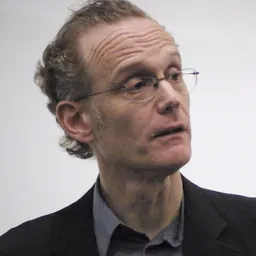



Related people
Same field, nearest in time





Contemporaries
People whose lives overlapped Philip Beesley's

Frequently asked questions
Who is Philip Beesley?
Canadian architect (born 1956)
When was Philip Beesley born?
Philip Beesley was born in 1956 in Westcliff-on-Sea.
What is Philip Beesley's occupation?
Philip Beesley is an architect, installation artist, university teacher and teacher.
What nationality is Philip Beesley?
Philip Beesley is Canadian.
Sources & further reading
Cite this page
APA: Biography.guide. (2026). Philip Beesley. https://biography.guide/philip-beesley/
MLA: "Philip Beesley." Biography.guide, https://biography.guide/philip-beesley/.
Chicago: "Philip Beesley." Biography.guide. https://biography.guide/philip-beesley/.
Data last updated: 2026-09-20 · Spot an error? Report a correction.
Page generated 2026-09-27 05:25 UTC