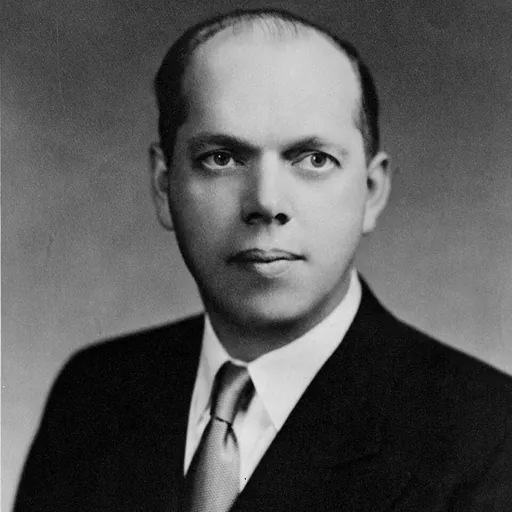
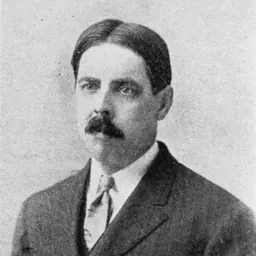
Philip Abelson
US physicist, editor of the journal Science, and director of the Carnegie Institution of Washington's Geophysical Laboratory
About Philip Abelson
Lived 1913 – 2004 (aged 91). Philip Abelson was an American physicist, chemist, nuclear physicist, writer, molecular biologist and geochemist, known for Isotope separation and Neptunium.
Philip Hauge Abelson (April 27, 1913 – August 1, 2004) was an American physicist, scientific editor and science writer. Trained as a nuclear physicist, he co-discovered the element neptunium, worked on isotope separation in the Manhattan Project, and wrote the first study of nuclear marine propulsion for submarines. He later worked on a broad range of scientific topics and related public policy, including organic geochemistry, paleobiology and energy policy.
Abelson served as editor-in-chief of the journal Science from 1962 to 1984, president of the Carnegie Institution of Washington from 1971 to 1978, and president of the American Geophysical Union from 1972 to 1974. His frequent editorials in Science, both during and after his term as editor, became known for their strident and thought-provoking views. A collection of 100 of his editorials was published as a book, entitled Enough of Pessimism. He may have been the original source of the phrase 'extraordinary claims require extraordinary evidence'.
Life Abelson was born on April 27, 1913, in Tacoma, Washington, to Norwegian immigrant parents. He attended Washington State University, where he received degrees in chemistry and physics, and the University of California, Berkeley (UC Berkeley), where he earned his PhD in nuclear physics. As a young physicist, he worked for Ernest Lawrence at the UC Berkeley. He was among the first American scientists to verify nuclear fission in an article submitted to Physical Review in February 1939. From 1939 until 1941, he worked as an assistant physicist at the Carnegie Institution in Washington, D.C. It was while he was here that he worked on a substance that emitted beta rays and was produced by irradiation of uranium with neutrons. After he collaborated with the Nobel Prize laureate Luis Alvarez they isolated the material, and became the co-discoverer of neptunium on 8 June 1940 with Edwin McMillan. His report anticipated the nuclear submarine's role as a missile platform. This concept was later supported by Admiral Hyman G. Rickover and others. Under Rickover, the concept became reality in the form of , the world's first nuclear submarine.
In 1946, he returned to work at the Carnegie Institution, which published his report "Atomic Energy Submarine," in March of that year. From 1953 until 1971 he served as the director of the Carnegie Institution of Washington's Geophysical Laboratory, and as president from 1971 to 1978, and as a trustee from 1978 on.
In a 1965 article he described his work in paleobiology and reported evidence of amino acids recovered from fossils hundreds of millions of years in age and fatty acids in rocks dating over a billion years old.
Abelson may have been the original source of the phrase 'extraordinary claims require extraordinary evidence', which he used in 1978 and was subsequently popularised by Carl Sagan.
Perhaps his most famous work from this time period is an editorial entitled "Enough of Pessimism" ("enough of pessimism, it only leads to paralysis and decay"). This became the title of a 100 essay collection.
During the 1970s he became interested in the problem of world energy supplies. Books on the topic include Energy for Tomorrow (1975), from a series of lectures at the University of Washington, and Energy II: Use Conservation and Supply. He pointed out the possibilities of mining the Athabascan tar sands, as well as oil shale in the Colorado Rockies. In addition, he urged conservation and a change of attitude towards public transit.
After 1984, he remained associated with the magazine. Some have claimed him to be an early skeptic of the case for global warming on the basis of a lead editorial in the magazine dated March 31, 1990, in which he wrote, "f the global warming situation is analyzed applying the customary standards of scientific inquiry one must conclude that there has been more hype than solid fact." However, this contrasts what is said in a US National Research Council, Energy and Environment report on which his name appears along with Thomas F. Malone over a decade earlier in 1977:
Abelson died on August 1, 2004, from respiratory complications following a brief illness. He was married to Neva Abelson, a distinguished research physician who co-discovered Rh factor testing (with L. K. Diamond). Their daughter, Ellen Abelson Cherniavsky, worked as an aviation researcher for the MITRE corporation in Virginia.
Awards and legacy Abelson received many distinguished awards, including the National Medal of Science in 1987, the National Science Foundation's Distinguished Achievement Award, the American Medical Association's Scientific Achievement Award, the Navy Distinguished Civilian Service Award and the Waldo E. Smith Award in 1988. In 1992 he was awarded the Public Welfare Medal, the National Academy of Sciences's highest honor. He was elected a fellow of the American Physical Society in 1949 and the American Academy of Arts and Sciences in 1958. He was elected to the American Philosophical Society in 1961.
The mineral abelsonite is named after Abelson in recognition of his contribution to organic geochemistry.
The Philip and Neva Abelson Hall at Washington State University was named in his honor.
The AAAS Philip Hauge Abelson Prize is named after Philip Abelson.
Don’t just read it —
keep it.
Full-length biographies made to live with: read them, listen on the way to work, watch them tonight.
- E-book
- Audio
- Video
Instant download · yours to keep · every purchase keeps this site free
Important facts
People in Philip Abelson's life
Named in this biography and alive at the same time


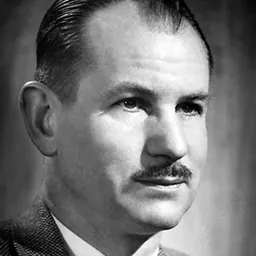
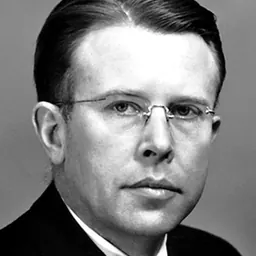
Related people
Same field, nearest in time




Contemporaries
People whose lives overlapped Philip Abelson's



Frequently asked questions
Who was Philip Abelson?
US physicist, editor of the journal Science, and director of the Carnegie Institution of Washington's Geophysical Laboratory (1913–2004)
When was Philip Abelson born?
Philip Abelson was born on 27 April 1913 in Tacoma.
When did Philip Abelson die?
Philip Abelson died on 1 August 2004 in Bethesda.
What was Philip Abelson's occupation?
Philip Abelson was a physicist, chemist, nuclear physicist, writer, molecular biologist and geochemist.
What was Philip Abelson known for?
Philip Abelson was known for Isotope separation and Neptunium.
What nationality was Philip Abelson?
Philip Abelson was American.
Sources & further reading
Cite this page
APA: Biography.guide. (2026). Philip Abelson. https://biography.guide/philip-abelson/
MLA: "Philip Abelson." Biography.guide, https://biography.guide/philip-abelson/.
Chicago: "Philip Abelson." Biography.guide. https://biography.guide/philip-abelson/.
Data last updated: 2026-09-23 · Spot an error? Report a correction.
Portrait: Wikimedia Commons · author & licence
Page generated 2026-09-27 05:08 UTC