
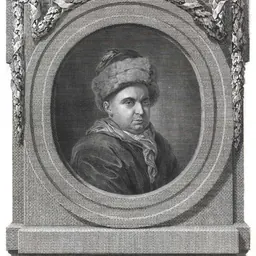
About Philemon Pownoll
Lived 1734 – 1780 (aged 45–46). Philemon Pownoll was a British military personnel.
Captain Philemon Pownoll ( – 15 June 1780) was a Royal Navy officer who served in the War of the Austrian Succession, Seven Years' War and American War of Independence.
Born in Plymouth, Pownoll was the son of a leading shipwright. He joined the British navy in the last year of the War of the Austrian Succession. After several years service he rose through the ranks to his own command in time for the outbreak of the Seven Years' War. Commanding a sloop-of-war, he took part in the capture of one of the most valuable prizes taken in the entire conflict, and became immensely wealthy overnight from his success. He married and settled on his estate, but despite his riches, chose to return to active service on the outbreak of the American War of Independence. During his time as a frigate captain he acted as a mentor to future star captains Edward Pellew and John Borlase Warren.
His service in North America was marked with successes in supporting and conveying troops, and engaging in larger fleet actions such as the relief of Gibraltar. He took part in a hard-fought action against a French privateer in 1779, and received a musket ball to the chest, which remained with him for the rest of his life. He again engaged a heavily armed privateer the following year, and this time was killed by a cannonball in the heat of the action, which was brought to a successful conclusion by his first lieutenant. His death was marked with tributes from the leading naval figures of his age, including Admiral John Jervis and Edward Pellew.
Family and early life Pownoll was born in Plymouth circa 1734, the nephew of master shipwright Israel Pownoll (d.1779), who had built a large number of warships for the Royal Navy over his career. Israel Pownoll served as master shipwright of the dockyard at Plymouth between 1762 and 1765, and of Chatham from 1775 until his death.
Command Pownoll commanded Favourite for the next two years, and in mid-1761 was sailing as part of a squadron off Cádiz under Captain Charles Proby, consisting of the 74-gun ships and and the 44-gun . Two French ships, the 64-gun Achille and the frigate Bouffonne escaped the port on 16 July, but were chased down and brought to action the following day by the British squadron. After a fierce fight, both ships were captured. The Hermione was taken into Gibraltar and eventually condemned as a prize, with her contents, hull, and fittings valued at £519,705 10s. 0d., approximately £ at today's prices. Pownoll and Sawyer each received captain's shares of the prize money of £64,872, approximately £ at today's prices, amounting to one of the largest individual sums obtained in the period. While mustering his crew, a young midshipman was recommended to him by Hugh Boscawen, 2nd Viscount Falmouth, the brother of Pownoll's old patron, Admiral Edward Boscawen. Possibly out of consideration to his debt to the admiral, Pownoll agreed to take him on. Later in the voyage Pellew jumped overboard to save a man's life, and was reprimanded for his actions by Pownoll, though he later shed tears when talking about it with his fellow officers and called Pellew 'a noble fellow.' By now a popular figure with his men, Pownoll was able to write to Lord Sandwich that he was '...happily situated in a fine ship & exceedingly well manned with all volunteers except 15 landsmen I received from Admiral Amherst to complete my compliment not having time to do it myself.'
Apollo served for a time as Lord Howe's flagship from August 1778, and had returned to be refitted and coppered at Plymouth in December that year. Returning to active service in January, on 31 January 1779 she engaged the 26-gun French frigate Oiseau off the Brittany coast in a hard-fought action that left both Pownoll and the French commander wounded. On 2 March 1780 the privateer Victoire was captured by Apollo, and in mid June Apollo was cruising in company with the 32-gun , under Captain the Hon. George Murray. The two ships closed, tacking about to gain the weather gauge, and eventually opening fire. Apollos opponent was the 26-gun French privateer Stanislaus, and after a period of tacking, the two engaged in broadsides while running for Ostend.
Don’t just read it —
keep it.
Full-length biographies made to live with: read them, listen on the way to work, watch them tonight.
- E-book
- Audio
- Video
Instant download · yours to keep · every purchase keeps this site free
Important facts
People in Philemon Pownoll's life
Named in this biography and alive at the same time


Related people
Same field, nearest in time




Contemporaries
People whose lives overlapped Philemon Pownoll's





Frequently asked questions
Who was Philemon Pownoll?
officer of the Royal Navy (1734-1780)
When was Philemon Pownoll born?
Philemon Pownoll was born in 1734 in Plymouth.
When did Philemon Pownoll die?
Philemon Pownoll died on 15 June 1780 in Ostend.
What was Philemon Pownoll's occupation?
Philemon Pownoll was a military personnel.
What nationality was Philemon Pownoll?
Philemon Pownoll was British.
Sources & further reading
Cite this page
APA: Biography.guide. (2026). Philemon Pownoll. https://biography.guide/philemon-pownoll/
MLA: "Philemon Pownoll." Biography.guide, https://biography.guide/philemon-pownoll/.
Chicago: "Philemon Pownoll." Biography.guide. https://biography.guide/philemon-pownoll/.
Data last updated: 2026-09-25 · Spot an error? Report a correction.
Page generated 2026-09-27 05:11 UTC