
About Phil Matson
Lived 1884 – 1928 (aged 43). Phil Matson was an Australian australian rules football player.
Phillip Henry Matson (22 October 1884 – 13 June 1928) was a record-breaking swimmer, as well as a highly successful player and coach of Australian rules football in the early 20th century in Western Australia.
Family Phillip Henry Matson was born in Port Adelaide on 22 October 1884 to George Thomas Matson (1842–1915) and Emma Matson (1854–1928), née Duffield.
Matson was educated at a state school in Adelaide before moving to Western Australia as a youth.
Lifestyle Outside of football, Matson's work was varied and somewhat inconsistent. He had jobs as a miner, a tramway motorman, a farmer, a navvy on the Trans-Australian Railway, a lumper, a store clerk, and a 'Spot-Lager' retailer.
Early in his career, Matson was a teetotaler but eventually became a "social" drinker and was well-known for his gambling habit. His approach to life caused problems within his family, who, as a result, occasionally lived in tents and moved houses several times.
Matson offered to enlist during World War I. When rejected, he opted to live as a licensed Swan River fisherman and engaged more heavily in gambling. He operated two-up schools at Subiaco and Pelican Point, SP books in some city hotels, and an illegal gaming house in Perth. For a number of years, he held a trotting bookmaker's licence.
Swimming career Matson worked as a navvies' water-boy in Western Australia, and began swimming competitively in 1902.
He had been encouraged to take up football by his swimming trainer, William Howson (who set a world record in 1904 in 110 yards underwater swimming), in order to "harden himself" for his swimming.
During his swimming career, Matson held the Western Australian freestyle titles from 100 yards (91 m) to a mile (1.6 km) using the now-obsolete trudgen stroke. He won the 220-yard breaststroke at the Australasian championships for three consecutive years (1905–1907).
On 19 February 1908, Matson participated in the West Australian Amateur Swimming Association's Australian Championship in Claremont, Western Australia, where he set a world record time for the 220-yard breaststroke (3 minutes and 14 seconds), winning by a length (having touched equal first at the last turn).
Seven days later, on 26 February 1908, Matson was swimming at a swimming carnival in Kalgoorlie when he broke his own world record by another 3.4 seconds, swimming 220 yards in 3 minutes and 10.6 seconds. However, because a surveyor's certificate could not be produced to precisely verified the pool's dimensions (i.e. the exact length of the swim), the governing body, the New South Wales Amateur Swimming Association, refused to ratify the new record.
Meanwhile, Matson's football career prevented him from being considered for the Olympic Games in swimming. He therefore turned professional for a £20 stake in 1909.
Football career "[Matson] himself was a wonderful footballer. His name has been bracketed with that of the late Albert Thurgood as the best player of all time. Grim, relentless, shrewd, strong as a lion, courageous and trier from start to finish, Matson was a great figure on the field." — The Sporting Globe, 20 July 1928.
"All up, Matson played and/or coached nine clubs and was involved in 13 premiership (five as a player, four as player/coach and four as coach) and four runner-up teams in 25 completed seasons." — Peter Carter.
Matson played at half-back and half-forward and took turns in the ruck. He played for both South Australia (1909–10) and Western Australia (1908, 1911, 1914) and captained the South Australian team at the 1914 interstate carnival.
Professional football career Matson supported himself by playing football, despite it being considered an amateur sport at the time. He moved clubs frequently, playing outside the main leagues if the price was right. Across 20 seasons, Matson played for: South Bunbury Football Club (Western Australia): 1904–1905. Boulder City Football Club (Western Australia): 1906–1908. Sturt (South Australia): 1909–1910. North Fremantle Football Club (Western Australia): 1911. Subiaco Football Club (Western Australia): 1912–1917. East Perth Football Club (Western Australia): 1918–1923.
Coaching career East Perth Aged 33, Matson was appointed as the coach of East Perth Football Club in 1918. Matson worked on the players' confidence and earned their respect with a methodical approach to his coaching. He was praised for his ability to outwit opponents and exploit weaknesses. Matson's personality helped recruit some top players. In nine seasons between 1919 and 1927, East Perth won seven premierships. In total, he played in twelve premiership teams and, in the last ten years of his career, coached teams into nine finals.
WAFL He was an essential part of the state team, as he both selected the successful 1921 Western Australian interstate carnival team and coached the 1924 and 1927 teams that narrowly lost to Victoria. In 1924, he openly criticised Victorian officials for encouraging violence against his team.
Castlemaine (BFL) In 1925, Matson accepted an offer to coach the Castlemaine Football Club in the club's first year in the Bendigo Football League. He was cleared to be both a player (he played in 2 or 3 games) and a coach to Castlemaine in April 1925.
With Matson's coaching, Castlemaine made the 1925 Grand Final, but lost to South Bendigo by 14 Points: 7.12 (54) to 6.4 (40).
Richmond (VFL) Impressed with his effort in lifting the Castlemaine into the Grand Final, Richmond officials approached Matson with an offer to succeed Dan Minogue as the Tigers' coach for 1926. Matson accepted and relocated to Melbourne.
However, the Victorian Football League (VFL) refused Matson a permit to take up the job, which annoyed both the club and the prospective coach. It was suggested that either the VFL officials had not forgotten Matson's criticism of them two years earlier, or that they disapproved of his "unconventional" lifestyle.
Western Australia Matson returned to Perth in time for the football season, and was re-appointed as the coach of East Perth. He took them to successive premierships. Matson's dispute with VFL officials inspired Western Australia to two "spiteful, vicious, brutal" victories over Victoria in 1926.
Death On 11 June 1928, Matson and his former team-mate Horrie Bant careered off the Hampden Road in Nedlands. The truck, driven by Bant, crashed through a bush and collided with a post carrying overhead tram wires, resulting in both men being thrown from the vehicle. Although injured, Bant survived the crash. Matson, however, struck the post with his head and subsequently died on 13 June 1928 from a fractured skull.
He was survived by his former wife, their two sons (Glenn and Cliff), and his de facto wife, Catherine Thompson, née Owens, and was buried at Karrakatta Cemetery on 15 June 1928.
Legacy Matson's paver on St Georges Terrace, PerthHe played an important role in the process of making Australian football professional by openly negotiating fees that made him the highest paid Western Australian player and coach of the time. He has been awarded several posthumous awards, including:
He was selected as centre half-forward in Subiaco's "Team of the Century". He was selected as coach of East Perth's (1906–1944) "Team of the Century". In 1979, he was honoured with the bronze tablet for 1926, set into the footpath along St Georges Terrace, Perth, as part of the WAY '79 150th anniversary celebrations of the colonisation of Western Australia by Europeans. In 1986, Matson was inducted into the Western Australian Institute of Sport's "Western Australian Hall of Champions". In 2004, he was an inaugural inductee into the West Australian Football Hall of Fame. He was elevated to legend status in 2011. Inducted into the coaching division of the Australian Football Hall of Fame in 2004, Matson's position in Western Australian football was compared to Collingwood's Jock McHale in Victoria.
Don’t just read it —
keep it.
Full-length biographies made to live with: read them, listen on the way to work, watch them tonight.
- E-book
- Audio
- Video
Instant download · yours to keep · every purchase keeps this site free
Important facts
People in Phil Matson's life
Named in this biography and alive at the same time

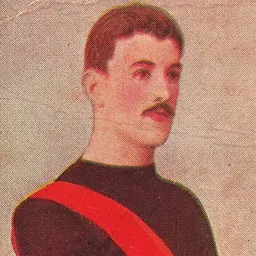

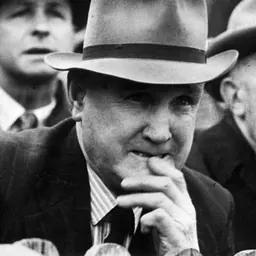



Related people
Same field, nearest in time


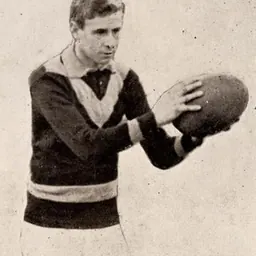
Contemporaries
People whose lives overlapped Phil Matson's
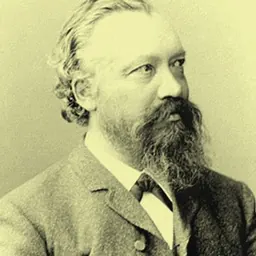
Frequently asked questions
Who was Phil Matson?
Australian rules footballer (1884–1928)
When was Phil Matson born?
Phil Matson was born on 22 October 1884 in Port Adelaide.
When did Phil Matson die?
Phil Matson died on 13 June 1928 in Perth.
What was Phil Matson's occupation?
Phil Matson was an australian rules football player.
What nationality was Phil Matson?
Phil Matson was Australian.
Sources & further reading
Cite this page
APA: Biography.guide. (2026). Phil Matson. https://biography.guide/phil-matson/
MLA: "Phil Matson." Biography.guide, https://biography.guide/phil-matson/.
Chicago: "Phil Matson." Biography.guide. https://biography.guide/phil-matson/.
Data last updated: 2026-09-20 · Spot an error? Report a correction.
Page generated 2026-09-27 05:19 UTC