
About Peter Winch
Lived 1926 – 1997 (aged 71). Peter Winch was a British philosopher and university teacher.
Peter Guy Winch (14 January 1926 – 27 April 1997) was a British philosopher known for his contributions to the philosophy of social science, Wittgenstein scholarship, ethics, and the philosophy of religion. His early book The Idea of a Social Science and its Relation to Philosophy was an attack on positivism in the social sciences, drawing on the work of R. G. Collingwood and Ludwig Wittgenstein's later philosophy.
Biography Winch was born on 14 January 1926, in Walthamstow, London. He attended Leyton County High School for boys, before going up to St Edmund Hall, Oxford to read Philosophy, Politics and Economics. Following the outbreak of World War II, he served in the Royal Navy 1944–47, before graduating from the University of Oxford in 1949.
He was a lecturer in philosophy at the then University College of Swansea from 1951 until 1964. He was influenced by his colleagues Rush Rhees and R. F. Holland, both experts in the philosophy of Ludwig Wittgenstein. Alongside these two and D. Z. Phillips, Winch was one of "the Swansea Wittgensteinians", also known as the "Swansea School of Philosophy", which applied a Wittgensteinian framework to philosophy. In 1964, he moved to Birkbeck College, University of London, before becoming Professor of Philosophy at King's College London in 1967. During this period, he served as president of Aristotelian Society, from 1980 to 1981. In 1985 Winch moved to the United States to become Professor at the University of Illinois at Urbana-Champaign.
He died on the 27 April 1997, in Champaign, Illinois.
He was survived by his wife Erika Neumann and his two sons, Christopher and David.
Thought Major influences upon Winch include Ludwig Wittgenstein, Rush Rhees, R. G. Collingwood and Simone Weil. He gave rise to a form of philosophy that has been given the name 'sociologism'. He also bears responsibility for a small school of sociology that was prepared to accept his radical criticism of the subject.
Winch saw himself as an uncompromising Wittgensteinian. He was not personally acquainted with Wittgenstein; Wittgenstein's influence upon him was mostly mediated through that of Rush Rhees, who was his colleague at the University College of Swansea, now known as Swansea University, and whom Wittgenstein appointed as one of his literary executors. Winch's translation of Wittgenstein's Vermischte Bemerkungen (as edited by Georg Henrik von Wright) was published in 1980 as Culture and Value (with a new translation by Winch of a revised edition by Alois Pichler appearing in 1998). After the death of Rhees in 1989, Winch took over his position as literary executor.
Wittgenstein famously said that philosophy leaves the world as it is. Winch takes his ideas into regions that have strong moral and political implications.
Works
Books Authored The Idea of a Social Science and its Relation to Philosophy, London 1958. 2nd edition, with new preface, London 1990. Ethics And Action, London 1972. Trying to Make Sense, Oxford 1987. Simone Weil, the Just Balance, Cambridge 1989. Spinoza on ethics and understanding, London 2020. .
Translated/edited Culture and Value, Ludwig Wittgenstein (1980, revised edition 1998). Both editions translated by Peter Winch. Studies in the Philosophy of Wittgenstein (1969). Edited, with an introductory essay, by Peter Winch.
Select articles and book chapters "Understanding a primitive society" 1964, American Philosophical Quarterly I, pp.307–324, reprinted in "Ceasing to Exist" Proceedings of the British Academy 68, 1982 (1983) "Certainty and Authority". Wittgenstein centenary essays. Royal Institute of Philosophy Supplement. 28: 223–237.(1991) "Persuasion". The Wittgenstein Legacy, Midwest Studies in Philosophy. 17: 123–137. (1992) “Discussion of Malcolm’s Essay”. In Malcolm, N. Wittgenstein: a Religious Point of View, ed. Peter Winch. Ithaca, NY: Cornell University Press, 1994, pp. 95–135.
See also: works by Peter Winch at PhilPapers
Don’t just read it —
keep it.
Full-length biographies made to live with: read them, listen on the way to work, watch them tonight.
- E-book
- Audio
- Video
Instant download · yours to keep · every purchase keeps this site free
Important facts
People in Peter Winch's life
Named in this biography and alive at the same time

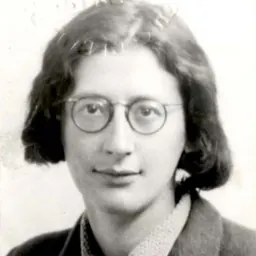
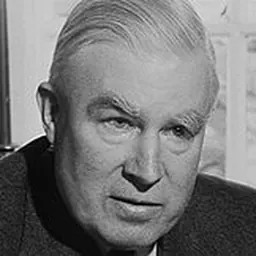

Related people
Same field, nearest in time
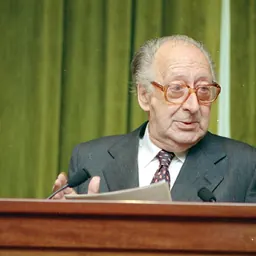
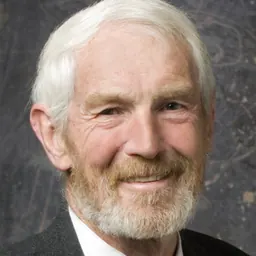
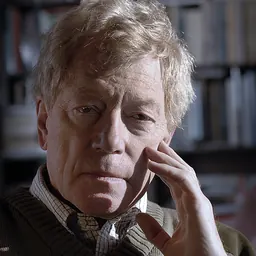


Contemporaries
People whose lives overlapped Peter Winch's

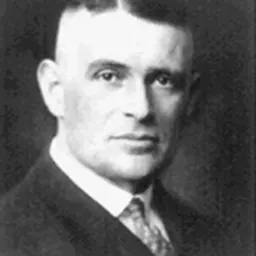
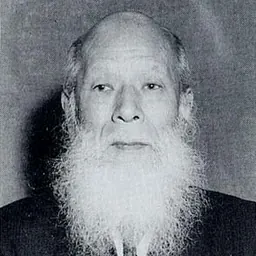
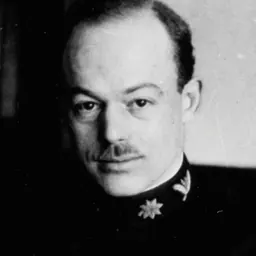
Frequently asked questions
Who was Peter Winch?
British philosopher (1926–1997)
When was Peter Winch born?
Peter Winch was born on 14 January 1926 in London.
When did Peter Winch die?
Peter Winch died on 27 April 1997 in Illinois.
What was Peter Winch's occupation?
Peter Winch was a philosopher and university teacher.
What nationality was Peter Winch?
Peter Winch was British.
Sources & further reading
Cite this page
APA: Biography.guide. (2026). Peter Winch. https://biography.guide/peter-winch/
MLA: "Peter Winch." Biography.guide, https://biography.guide/peter-winch/.
Chicago: "Peter Winch." Biography.guide. https://biography.guide/peter-winch/.
Data last updated: 2026-09-20 · Spot an error? Report a correction.
Page generated 2026-09-27 05:10 UTC