
Peter Walter
German-American biochemist and molecular biologist (born 1954)
About Peter Walter
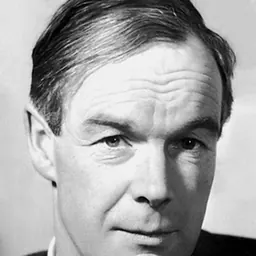
Born 1954. Peter Walter is an American and German molecular biologist, biochemist, university teacher and biophysicist, known for Signal recognition particle and Unfolded protein response.
Peter Walter (born December 5, 1954) is a German-American molecular biologist and biochemist. He is currently the Director of the Bay Area Institute of Science at Altos Labs and an emeritus professor at the Department of Biochemistry and Biophysics of the University of California, San Francisco (UCSF). He was a Howard Hughes Medical Institute (HHMI) Investigator until 2022.
Early life and education Walter was born and raised in West Berlin in 1954. His parents owned a pharmacy, and he was drawn to chemistry at a young age. He entered the Free University of Berlin in 1973 to study chemistry, but the rigid way of teaching science did not engage him. Instead, Walter became interested in biochemistry, which studies the chemistry of cells.
In the last year of his Vordiplom (equivalent to a BSc) in 1976, he went on exchange to Vanderbilt University and conducted research under Thomas M. Harris at the Department of Chemistry on the biosynthetic pathway of slaframine, a fungal alkaloid that is toxic to cows. Eventually, Walter completed his M.S. at Vanderbilt in 1977.
Walter became a Howard Hughes Medical Institute investigator in 1997, and served as the president of the American Society for Cell Biology in 2016.
In 2021, there were reports that he would be joining Altos Labs, a new biotechnology company which reportedly focuses on anti-aging research. The next year, he retired from UCSF and the Howard Hughes Medical Institute in 2022, and joined Altos Labs as the Director of the Bay Area Institute of Science when the company officially launched.
Walter currently sits on the Scientific Advisory Board of the Zentrum für Molekulare Biologie der Universität Heidelberg of Heidelberg University.
Walter is a coauthor of the widely used textbook Molecular Biology of the Cell.
Research
During his PhD at Günter Blobel's group, Walter purified a protein complex required for moving proteins out of the endoplasmic reticulum (ER) and showed the complex selectively recognizes newly synthesized secretory proteins. He later confirmed the complex is in fact a nucleoprotein and identified the RNA component essential for the complex's function. He also named the complex signal recognition particle (SRP).
By the time Walter joined the University of California, San Francisco (UCSF), researchers have established a connection between misfolded proteins in the ER and increased expression of a protein called BiP, which is a chaperone protein that helps other proteins fold correctly. This pathway is termed the unfolded protein response (UPR). However, how cells sense misfolded proteins and relays this information to the cell nucleus to increase the production of UPR-target proteins remains unclear.
In 1993, working on baker's yeast, Walter found a gene, IRE1, which encodes a kinase. The IRE1 protein is located across the ER membrane, so a part of it can detect unfolded proteins inside the ER and the other part can phosphorylate proteins outside of the ER. The same year, Kazutoshi Mori, at the time a postdoctoral fellow at the University of Texas Southwestern Medical Center, independently made the same discovery.
Walter and Mori next independently sought the phosphorylation target of the IRE1 protein. Theoretically, upon phosphorylation, this target will enter the cell nucleus and increase the production of UPR-target proteins. Both of them arrived at the same gene, HAC1, in 1996. This discovery, however, was unexpected as the HAC1 protein is produced only after IRE1 detects unfolded proteins, meaning the protein is not present to be phosphorylated by IRE1.
This difference was mitigated by the finding of Mori and Walter that after IRE1 senses unfolded proteins, it splices the HAC1 precursor mRNA, which is transcribed from the HAC1 gene, resulting in a mature mRNA that is translated into the HAC1 protein. Walter also discovered the phosphorylation target of IRE1, which turned out to be another IRE1 molecule, a process known as trans-autophosphorylation, and also the enzyme stitching the spliced precursor HAC1 mRNA together.
In 2013, Walter's group identified a molecule that inhibits the integrated stress response (ISR). The ISR is the cell's response to stresses such as viral infection, ultraviolet light and the accumulation of unfolded and misfolded proteins. ISR activates the EIF2α protein, reducing most protein synthesis and increasing the production of some regulatory molecules. His group found the inhibitor reversed EIF2α activation, and named it ISRIB for "integrated stress response inhibitor". Remarkably, they found mice injected with ISRIB had improved memory. ISRIB was licensed to Alphabet subsidiary Calico in 2015.
Awards and honors 1983 - Searle Scholar 1988 - Eli Lilly Award in Biological Chemistry 1989 - Sloan Research Fellowship 2002 - Member of the American Academy of Arts and Sciences 2004 - Member of the National Academy of Sciences 2004 - Associate Member of the European Molecular Biology Organization 2005 - Wiley Prize in Biomedical Science 2006 - Member of the German National Academy of Sciences Leopoldina 2009 - Gairdner Foundation International Award 2009 - E.B. Wilson Medal 2011 - Otto Warburg Medal 2012 - Paul Ehrlich and Ludwig Darmstaedter Prize 2012 - Ernst Jung Prize 2013 - Mendel Lectures 2014 - Shaw Prize in Life Science and Medicine 2014 - Albert Lasker Award for Basic Medical Research 2015 - Vilcek Prize in Biomedical Science 2017 - Fellow of the National Academy of Inventors 2018 - Member of the National Academy of Medicine 2018 - Breakthrough Prize in Life Sciences 2023 - BBVA Foundation Frontiers of Knowledge Award
Personal life Walter is married to Patricia Caldera-Muñoz, whom he met in New York City during his PhD years at Rockefeller University and when Caldera-Muñoz was a chemistry PhD student at New York University.
Walter was diagnosed with neck cancer in 2009.
Don’t just read it —
keep it.
Full-length biographies made to live with: read them, listen on the way to work, watch them tonight.
- E-book
- Audio
- Video
Instant download · yours to keep · every purchase keeps this site free
Important facts
People in Peter Walter's life
Named in this biography and alive at the same time
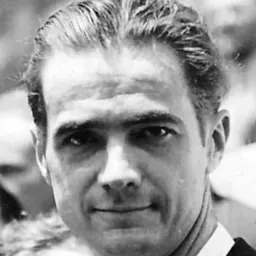
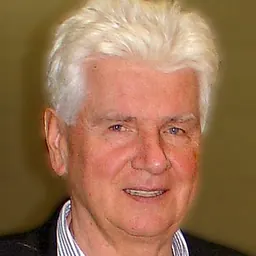



Related people
Same field, nearest in time
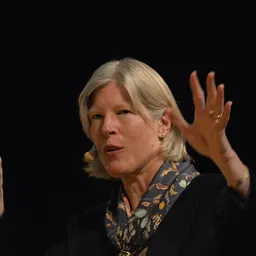


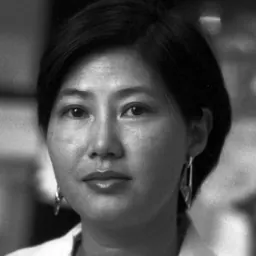
Contemporaries
People whose lives overlapped Peter Walter's



Frequently asked questions
Who is Peter Walter?
German-American biochemist and molecular biologist (born 1954)
When was Peter Walter born?
Peter Walter was born on 5 December 1954 in Berlin.
What is Peter Walter's occupation?
Peter Walter is a molecular biologist, biochemist, university teacher and biophysicist.
What is Peter Walter known for?
Peter Walter is known for Signal recognition particle and Unfolded protein response.
What nationality is Peter Walter?
Peter Walter is American and German.
Sources & further reading
Cite this page
APA: Biography.guide. (2026). Peter Walter. https://biography.guide/peter-walter/
MLA: "Peter Walter." Biography.guide, https://biography.guide/peter-walter/.
Chicago: "Peter Walter." Biography.guide. https://biography.guide/peter-walter/.
Data last updated: 2026-09-20 · Spot an error? Report a correction.
Page generated 2026-09-27 05:21 UTC