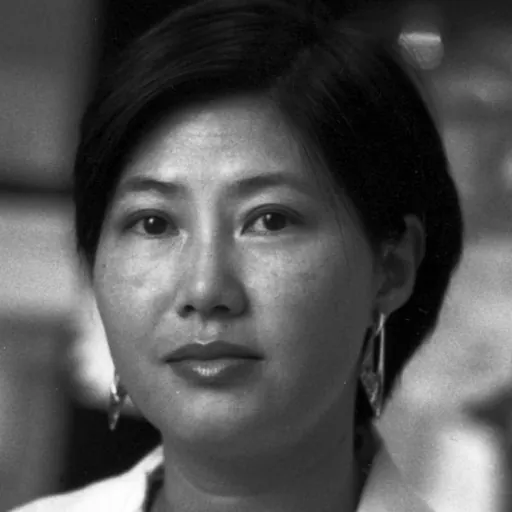
About Flossie Wong-Staal
Lived 1947 – 2020 (aged 72). Flossie Wong-Staal was an American molecular biologist and virologist, known for HIV.
Early life Wong-Staal was born as Wong Yee Ching in Guangzhou, China, in 1946. The third child in her family of four, she grew up with two brothers and a sister. In 1952, her family was among the many Chinese citizens who fled to Hong Kong after the Communist revolution in the late 1940s. During her time in Hong Kong, Wong attended Maryknoll Convent School, where she excelled in science. Although no women in her family had ever worked outside the home or studied science, her parents supported her academic pursuits. Throughout her time at the school she was encouraged by many of her teachers to further her studies in the United States. Her teachers also suggested she change her name to something in English. Her father chose the name "Flossie" for her after a massive typhoon that had struck Southeast Asia around this time. Two years later, Wong-Staal became the first researcher to clone HIV. She also completed genetic mapping of the virus which made it possible to develop HIV tests. This led to the first genetic map of the virus, which aided in the development of blood tests for HIV. .
Research In the late 1970s, Wong-Staal's team, alongside Dr. Gallo, conducted research on the human retrovirus, human T cell leukemia virus (HTLV), and determined that it was the causative agent in human adult T cell leukemia. Her team specifically studied the molecular virology of HTLV-1 by examining its transcriptional activators and posttranslational regulators. This discovery was significant in the study of human retroviruses as there was prior debate as to whether retroviruses could cause human disease.
In 1990, Wong-Staal was recruited from NCI to the University of California, San Diego (UCSD), where she started the Center for AIDS Research. Wong-Staal continued her research into HIV/AIDS at UCSD. Wong-Staal's research focused on gene therapy, using a ribozyme "molecular knife" to repress HIV in stem cells. The protocol she developed was the second to be funded by the United States government. In 1990 a team of researchers led by Wong-Staal studied the effects that the Tat protein within the viral strain HIV-1 would have on the growth of cells found within Kaposi's sarcoma lesions commonly found in AIDS patients.
The team of researchers performed tests on a variety of cells that carried the Tat protein and observed the rate of cell proliferation in cells infected by HIV-1 and the control, a culture of healthy human endothelial cells. Wong-Staal used a type of cellular analysis known as radioimmunoprecipitation in order to detect the presence of KS lesions in cells with varying amounts of the Tat protein. The results of these tests showed that the amount of Tat protein within a cell infected by HIV-1 is directly correlated to the amount of KS lesions a patient may have. These findings were essential in developing new treatments for HIV/AIDS patients who suffer from these dangerous lesions.
Over the course of her career, Wong-Staal published more than 400 papers on human retroviruses and AIDS.
Achievements In 1994, Wong-Staal was named as chairman of UCSD's newly created Center for AIDS Research. In that same year, Wong-Staal was elected to the Institute of Medicine of the U.S. National Academies, and to Taiwan's Academia Sinica. In 1995, Wong-Staal was elected to the board of directors of United Biomedical, Inc. (UBI), where she had previously served as a consultant and scientific advisor.
In 2002, Wong-Staal retired from UCSD and accepted the title of professor emerita. She then joined Immusol, a biopharmaceutical company that she co-founded with her second husband, Jeffrey McKelvy, while she was at UCSD, as chief scientific officer. Recognizing the need for improved drugs for hepatitis C (HCV), she transitioned Immusol to an HCV therapeutics focus and renamed it Pharmaceuticals.
That same year, Discover named Wong-Staal one of the fifty "most extraordinary women scientists".
In 2007, The Daily Telegraph heralded Wong-Staal as #32 of the "Top 100 Living Geniuses".
For her contributions to science, the Institute for Scientific Information named Wong-Staal "the top woman scientist of the 1980s". In 2019, she was inducted into the National Women's Hall of Fame.
Scientist magazine named her one of the "ten superstars of science" in 1990. This was due to her being part of the team that discovered HIV and her effort of successfully cloning the HIV virus which led to its genetic mapping and the ability to screen blood for HIV.
Legacy Wong-Staal's contributions to the understanding of HIV are considered foundational to modern AIDS treatment. Her cloning of the HIV genome provided the molecular basis for diagnostic blood tests, enabling the screening of donated blood for the virus and preventing transfusion-related infections. Her discovery of micro-variation in HIV directly informed the development of combination antiretroviral therapy- the 'drug cocktail' - that transformed HIV from a near-universal death sentence into a manageable chronic condition.
She published more than 400 papers on human retroviruses and AIDS and held more than four dozen patents related to HIV research, including US Patent No 9,328,391.
Wong-Staal was also recognized as a trailblazer for women in science. She was the most-cited female scientist of the 1980's, with nearly 7,800 citations. Upon her death in July 2020, tributes were published by the NIH, the NCI, UCSD and the Academia Sinica of Taiwan .
Personal life In 1971, while doing her PhD at the UCLA, she married a fellow student, oncologist Stephen P. Staal. The couple had two daughters (Stephanie and Vega Staal), before divorcing around 1990. Wong-Staal later re-married to neurologist Jeffrey McKelvy, with whom she founded Immusol. She had four grandchildren.
Wong-Staal died on July 8, 2020, at the age of 73, at Jacobs Medical Center in La Jolla, due to complications caused by pneumonia.
Don’t just read it —
keep it.
Full-length biographies made to live with: read them, listen on the way to work, watch them tonight.
- E-book
- Audio
- Video
Instant download · yours to keep · every purchase keeps this site free
Important facts
People in Flossie Wong-Staal's life
Named in this biography and alive at the same time

Related people
Same field, nearest in time




Contemporaries
People whose lives overlapped Flossie Wong-Staal's




Frequently asked questions
Who was Flossie Wong-Staal?
American virologist
When was Flossie Wong-Staal born?
Flossie Wong-Staal was born on 27 August 1947 in Zhongshan.
When did Flossie Wong-Staal die?
Flossie Wong-Staal died on 8 July 2020 in La Jolla.
What was Flossie Wong-Staal's occupation?
Flossie Wong-Staal was a molecular biologist and virologist.
What was Flossie Wong-Staal known for?
Flossie Wong-Staal was known for HIV.
What nationality was Flossie Wong-Staal?
Flossie Wong-Staal was American.
Sources & further reading
· Wikipedia: Flossie Wong-Staal
Cite this page
APA: Biography.guide. (2026). Flossie Wong-Staal. https://biography.guide/flossie-wong-staal/
MLA: "Flossie Wong-Staal." Biography.guide, https://biography.guide/flossie-wong-staal/.
Chicago: "Flossie Wong-Staal." Biography.guide. https://biography.guide/flossie-wong-staal/.
Data last updated: 2026-09-22 · Spot an error? Report a correction.
Portrait: Wikimedia Commons · author & licence
Page generated 2026-09-27 05:03 UTC