
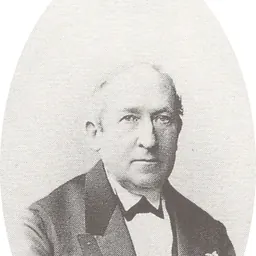
Peter Verigin
Russian-Canadian pacifist, activist and philosopher
About Peter Verigin
Lived 1859 – 1924 (aged 65). Peter Verigin was a Russian and Canadian philosopher, peace activist and doukhobor.
Peter Vasilevich Verigin often known as Peter "the Lordly" Verigin ( – 29 October 1924), was a Russian philosopher, activist, and leader of the Community Doukhobors in Canada. The perpetrators of his assassination in 1924 have never been identified.
Not to be confused with his son Peter P. Verigin.
Biography
In Transcaucasia Peter Vasilevich Verigin was born on in the village of Slavyanka in Elisabethpol Governorate of Russian Empire. The village, located in the north-west of what is today the Republic of Azerbaijan, was one of the settlements founded by the Doukhobors, a large sect of communally living peasants, exiled to the Transcaucasia from Ukraine and southern Russia in the 1840s. His father, Vasily Verigin, was an illiterate, but reportedly rich peasant, who, once elected a village headman, "showed himself a real despot".
is the Feast of Saints Peter and Paul. Although the Doukhobors do not traditionally venerate saints, this day is known as St. Peter's Day is still a traditional day of celebration. It is possible that Verigin was named after St. Peter.
Peter was one of seven brothers. Peter and two other brothers, Vasily and Grigory, were home-schooled, at least to the extent of learning to read and write. There were no formal schools in Doukhobor villages at the time, and his four older brothers did not study.
The Kalmykov family resided in the village of Gorelovka, one of Doukhobor communities in Georgia (shown on one of J.J. Kalmakoff's maps. Lukerya was respected by the provincial authorities, who cooperated with the Doukhobors on various matters. While working for her and living at her residence, Verigin received an extensive religious education, and was prepared by the childless Lukerya to become her successor as the leader of the Doukhobors. He became acquainted with the Doukhobor ideas of administration which rejects secular government. The Doukhobors also rejected the holiness of Jesus Christ and the Bible, and were naturally pacifists and conscientious objectors who refused to participate in wars and battles.
The death of Lukerya in 1886 was followed by a leadership crisis. A portion of the community known as "the Large Party" accepted Peter Verigin as her designated successor and leader. Others, known as "the Small Party" (Малая сторона), sided with Lukerya's brother, Michael Gubanov, and the village elder Aleksei Zubkov.
Northern exile Verigin was first sent to Shenkursk, in Arkhangelsk Governorate (now Arkhangelsk Oblast), in the Russia's north, arriving in October 1887. In the summer 1890, he was transferred to Kola, on the Barents Sea. At that time Kola was Russia's northernmost town, as Murmansk and Polyarny were not yet built. In November 1894, he left Kola for Obdorsk, now Salekhard, in north-western Siberia.
In November 1894, as he was being transferred from Kola to Obdorsk, Verigin wrote a message to the Doukhobors, asking them to obey God's commandment, "Thou shalt not kill", to destroy their weapons, and refuse military service. His message was taken to the Caucasus by his brothers Grigory and Vasily, who spread it throughout the Doukhobor communities. Soon, the confrontation between pro-Verigin Pacifist Doukhobors ("the Large Party") and the government drafting their youth came to head. On Easter Sunday 1895, eleven Doukhobor conscripts refused to do military training. In following days more conscripts laid down their arms and refused further service, and reservists were returning their registration papers to the draft boards. Finally, on the night of 28–29 June (10–11 July New Style) 1895, the night before St. Peter's Day (Verigin's birthday), the Large-Party Doukhobors of Transcaucasia assembled in three villages to burn the weapons they owned, commemorated since as "the Burning of the Arms".
The exodus Horrified at the plight of his followers, in August 1896 Verigin wrote to Empress Alexandra Fyodorovna, the wife of Nicholas, making a number of proposals to resolve the conflict, such as the resettlement of the Large-Party Doukhobors to some remote province of Russia (assuming that an exemption from military service could still be granted), or emigration to Britain or Canada. and joined his people in Yorkton (present-day Saskatchewan) in December 1902. The nearby village of Nadezhda was the site of annual general meetings of the Doukhobor community chaired by him.
When the new Canadian Northern Railway line crossed the Doukhobor reserve in 1904 some 10 km south of Otradnoye, a small station named after the Doukhobor leader (misspelled, initially, "Veregin Siding", and after 1908, Veregin Station) was built there around 1904 to serve the needs of the Doukhobor community of the area. A village, also named Veregin (sometimes spelled Verigin, at least on Verigin's own CCUB letterhead) was built next to the station, and Veregin's headquarters was shifted there.
In 1905, the exiled Doukhobors rejected the newly enforced requirements of the federal Dominion Lands Act, which attempted to register their communal lands under individual ownership and rebelled against the request. Following this in 1907 the communal land system was abolished and in 1908 Verigin led around 6,000 of his group (Christian Community of Universal Brotherhood, CCUB) to British Columbia. CCUB still continued to own some properties and industrial facilities in Saskatchewan, and its headquarters remained in Veregin for some years to come. Verigin had another residence built for himself near Grand Forks, British Columbia, spending the rest of his life sharing his time between the two provinces.
Peter V. Verigin's death Peter V. Verigin (age 65) was killed in a still-unsolved Canadian Pacific Railway train explosion on 29 October 1924, on the Kettle Valley Railway (now known locally as the Columbia and Western Railway) line near Farron, between Castlegar and Grand Forks, which also killed his 17-year-old secretary Marie Strelaeff, member of the provincial legislature John McKie, P.J. Campbell, Hakim Singh, Harry J. Bishop, W. J. Armstrong, and Neil E. Armstrong. The government initially (during investigation) had stated the crime was perpetrated by zealot "Sons of Freedom", while some CCUB Doukhobors suspected Canadian government involvement, or the American KKK. To date, it is still unknown who was responsible for the bombing.
Verigin's grave is located near Brilliant, a historical community Doukhobor village outside Castlegar, British Columbia.
Successors After Peter V. Verigin's death in 1924, the majority of the community Doukhobors proclaimed his son Peter P. Verigin (P.P. Verigin), who was still in the USSR, as his successor. However, several hundred Community Doukhobors recognized P. V. Verigin's widow, Anastasia F. Golubova (1885–1965; also spelt Holuboff), who had been Verigin's wife for some 20 years, as their leader.
In 1926 Anastasia's followers split from the CCUB, forming a breakaway organization called "The Lordly Christian Community of Christian Brotherhood". They left British Columbia for Shouldice, Alberta, where they set up their own village, about 50 miles east of Calgary, which existed until 1943.
In the meantime, Verigin's son, Peter Petrovich Verigin, arrived from the USSR and assumed the leadership of CCUB in 1928. After the bankruptcy of CCUB, he reorganized it as the Union of Spiritual Communities of Christ (USCC) in 1938, with headquarters in Grand Forks, British Columbia.
When Peter Petrovich Verigin died in 1939, the Community Doukhobors proclaimed his son, Peter Petrovich Verigin II as their new spiritual leader. Since he was confined to Soviet prisons at the time, his son (and Peter Vasilevich Verigin's great-grandson), John J. Verigin, who was 17 at the time, became the de facto leader of USCC. In 1960, after the confirmed death of P.P. Verigin II in Russia, J.J. Verigin, Sr., became "Honorary Chairman" of the USCC Doukhobors at age 18.
After John J. ("J.J.") Verigin, Sr., died in 2008, his son John J. Verigin, Jr., (also called "J.J.") was elected to this heredity position as "Executive Director". Among Canadian USCC Doukhobors, father and son are often distinguished as "J.J. Senior" and "J.J. Junior".
Published works by Peter V. Verigin "Pisʹma dukhoborcheskago rukovoditeli︠a︡ Petra Vasilʹevicha Verigina" (Письма духоборческаго руководителя Петра Васильевича Веригина : Letters of the Doukhobor Leader Peter Vasilievich Verigin), published by Anna Chertkov, 1901. No ISBN. Google eBook
Don’t just read it —
keep it.
Full-length biographies made to live with: read them, listen on the way to work, watch them tonight.
- E-book
- Audio
- Video
Instant download · yours to keep · every purchase keeps this site free
Important facts
People in Peter Verigin's life
Named in this biography and alive at the same time


Related people
Same field, nearest in time

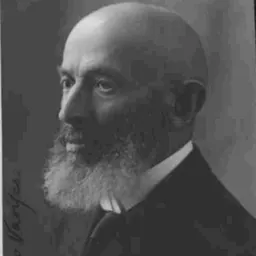

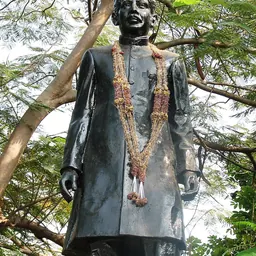


Contemporaries
People whose lives overlapped Peter Verigin's

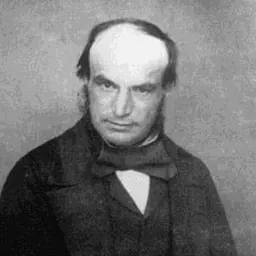
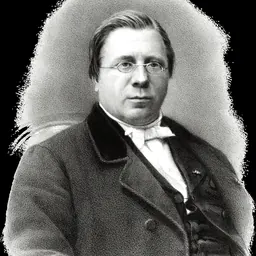

Frequently asked questions
Who was Peter Verigin?
Russian-Canadian pacifist, activist and philosopher
When was Peter Verigin born?
Peter Verigin was born on 11 July 1859 in Slavyanka.
When did Peter Verigin die?
Peter Verigin died on 29 October 1924 in Kettle Valley Railway.
What was Peter Verigin's occupation?
Peter Verigin was a philosopher, peace activist and doukhobor.
What nationality was Peter Verigin?
Peter Verigin was Russian and Canadian.
Sources & further reading
Cite this page
APA: Biography.guide. (2026). Peter Verigin. https://biography.guide/peter-verigin/
MLA: "Peter Verigin." Biography.guide, https://biography.guide/peter-verigin/.
Chicago: "Peter Verigin." Biography.guide. https://biography.guide/peter-verigin/.
Data last updated: 2026-09-22 · Spot an error? Report a correction.
Page generated 2026-09-27 05:19 UTC