
About Peter van Dievoet
Lived 1661 – 1729 (aged 67–68). Peter van Dievoet was a Belgian sculptor and architect.
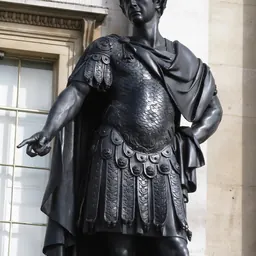
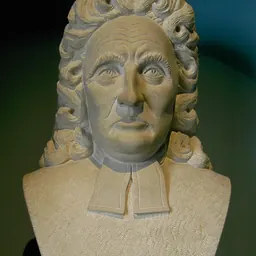
Peter van Dievoet (; Dutch: Peeter van Dievoet, French: Pierre van Dievoet, Latin: Petrus; 16611729) was a Flemish Baroque sculptor, statuary, wood carver and designer of ornamental architectural elements active in Brussels and England. He is known for his work on a number of the Baroque guild houses on the Grand-Place (Brussels's main square), which was rebuilt after the bombardment of 1695, as well as on the Statue of James II on Trafalgar Square, London, made in collaboration with fellow Flemish sculptor Laurens van der Meulen. He was the half-brother of Philippe van Dievoet, goldsmith to King Louis XIV of France and the uncle of the Parisian printer Guillaume Vandive.
Life Early years Peter van Dievoet was born in Brussels as the son of Gillis van Dievoet (? - † before 1672), a burgher of Brussels, and Gertrudis Zeevaert. He was baptised at the Church of St. Michael and St. Gudula (now Brussels' cathedral) on 29 June 1661. His father was previously married to Catarina Slachmeulder (or Catharina Slachmoelders), whose son Philippe van Dievoet later became a goldsmith to King Louis XIV of France. The young Peter became fatherless around the age of twelve or thirteen. His mother later remarried and died on 22 July 1705.
Studies for a statue of either James II or Charles II. Pen and brown wash, attributed to van Dievoet, in the collection of the British Museum.
Residence in London (1680–1688) He moved at some unknown date to England where he was a collaborator in the studio of (Rotterdam-born) English sculptor Grinling Gibbons from 1680 to 1688. Gibbons was mainly known as a sculptor for his fine carvings of floral motifs. Other experienced Flemish sculptors such as Artus Quellinus III (the son of Artus Quellinus II), John Nost, Anthony Verhuke and Laurens van der Meulen also worked in Gibbon's London workshop as "servants", i.e. collaborators. As these Flemish artists were not trainees they were never entered in the Draper's records.
Van Dievoet's English production (mainly sculptures) remains relatively unknown. In the Gibbons workshop he worked on various commissions but the contributions of the various artists active in the workshop are not always identifiable. George Vertue mentions van Dievoet only as statuary.
George Vertue found an agreement and a payment receipt for the bronze statue of James II (1686) made for the courtyard of Whitehall and currently placed on Trafalgar Square. Vertue attributed this work to a collaboration between van Dievoet and a certain Laurens of Mechelen. This attribution is repeated by Sir Lionel Henri Cust: "Dyvoet (sic) ... and Laurens ... who executed the statue of James II at Whitehall." The aforementioned Laurens was identified by Paul-Eugène Claessens as the Flemish sculptor Laurens van der Meulen from Mechelen.
Some studies for statues of probably Charles II or James II held in the British Museum are attributed to van Dievoet.
A bronze statuette of James II in the collection of the V&A, previously attributed only to Artus Quellinus III, has had its attribution changed in 2023 to possibly being by the hand of van Dievoet.
Return to Brussels (1689–1729) Detail of ornamentation of festoons and fruits attributed to van Dievoet (Royal Museums of Art and History).
He returned to Brussels as a result of the events arising from the Glorious Revolution of 1688, which had led to the deposition of the English King.
Public functions Van Dievoet occupied various public offices. From 1713 to 1723, between ages 52 and 62, he was one of The Eight and then Dean (judge) of the Drapery Court, After that, he left public life. A pious man, he had been, until the end of his life, a marguillier (churchwarden) of the Church of St. Michael and St. Gudula.
He died in Brussels on 2 March 1729, at the age of 68.
Work General
Long after van Dievoet's death, a report of the magistrates of Brussels to Prince Charles Alexander of Lorraine, Governor of the Habsburg Netherlands, dated 27 September 1771, quotes van Dievoet in a list of "very remarkable Brussels sculptors". From his Brussels work, only the pieces mentioned by Guillaume Des Marez are known. He is mainly known there for his design and execution of many of the guild houses of Brussels' Grand-Place.
The following works are described by Des Marez: He also carved wooden "keerses" - richly decorated emblems that were used for celebrations of the tailors' guild of Brussels.
Arms Gallery:
Don’t just read it —
keep it.
Full-length biographies made to live with: read them, listen on the way to work, watch them tonight.
- E-book
- Audio
- Video
Instant download · yours to keep · every purchase keeps this site free
Important facts
People in Peter van Dievoet's life
Named in this biography and alive at the same time



Related people
Same field, nearest in time

Contemporaries
People whose lives overlapped Peter van Dievoet's



Frequently asked questions
Who was Peter van Dievoet?
Flemish sculptor and ornamental designer (1661–1729)
When was Peter van Dievoet born?
Peter van Dievoet was born in 1661 in Brussels.
When did Peter van Dievoet die?
Peter van Dievoet died on 2 March 1729 in Brussels.
What was Peter van Dievoet's occupation?
Peter van Dievoet was a sculptor and architect.
What nationality was Peter van Dievoet?
Peter van Dievoet was Belgian.
Sources & further reading
· Wikipedia: Peter van Dievoet
Cite this page
APA: Biography.guide. (2026). Peter van Dievoet. https://biography.guide/peter-van-dievoet/
MLA: "Peter van Dievoet." Biography.guide, https://biography.guide/peter-van-dievoet/.
Chicago: "Peter van Dievoet." Biography.guide. https://biography.guide/peter-van-dievoet/.
Data last updated: 2026-09-26 · Spot an error? Report a correction.
Page generated 2026-09-27 05:16 UTC