
About Peter Turchin
Born 1957. Peter Turchin is an American academic, sociologist, ecologist, scientist, historian and biologist.
Peter Valentinovich Turchin ( ; born 22 May 1957) is a Russian-American scientist who specializes in an area of study he and his colleagues developed called cliodynamics—mathematical modeling and statistical analysis of the dynamics of historical societies.
Turchin is an emeritus professor at the University of Connecticut in the departments of ecology and evolutionary biology and mathematics. He is a project leader at the Complexity Science Hub Vienna and a research associate at the School of Anthropology of the University of Oxford.
He was editor-in-chief and remains a member of the editorial board at Cliodynamics: The Journal of Quantitative History and Cultural Evolution. Turchin is a founding director of the Seshat: Global History Databank. He was a director of the Evolution Institute. In 2021, he was elected a fellow of the American Association for the Advancement of Science (FAAAS).
Early life and education Peter Turchin was born in 1957 in Obninsk, Russian SFSR, and in 1964 he moved with his family to Moscow. In 1975 he enrolled at Moscow State University's Faculty of Biology and studied there until 1977, when his father, Soviet dissident Valentin Turchin, was exiled from the Soviet Union. In 1980 Turchin received a B.A. degree (cum laude) in biology from New York University, and in 1985 a Ph.D. in zoology from Duke University.
Career
Throughout his career Turchin has made contributions to various fields, such as economic history and historical dynamics. He is one of the founders of cliodynamics, the scientific discipline at the intersection of historical macrosociology, cliometrics, and mathematical modeling of social processes. Turchin developed an original theory explaining how large historical empires evolve by the mechanism of multilevel selection. His research on secular cycles has contributed to our understanding of the collapse of complex societies as has his re-interpretation of Ibn Khaldun's notion of asabiyya as "collective solidarity".
One of Turchin's most prominent fields of research is his study of the hypothesis that population pressure causes increased warfare. Turchin, in collaboration with Korotayev, has shown that negative results do not falsify the population-warfare hypothesis. He subsequently cited the success of Donald Trump's 2016 presidential campaign as evidence that "negative trends seem to be accelerating" and that there has been an "unprecedented collapse of social norms governing civilized discourse". In 2020, Turchin and Jack Goldstone predicted that political and civic unrest in the United States would continue regardless of the party in power, until a leader took action to reduce inequality and improve the social indicators that are tracked in their research. Elite overproduction Elite overproduction is a concept developed by Peter Turchin that describes the condition of a society that has an excess supply of potential elite members relative to its ability to absorb them into the power structure. This, he hypothesizes, is a cause for social instability, as those left out of power feel aggrieved by their relatively low socioeconomic status. In it he stated, "The next decade is likely to be a period of growing instability in the United States and western Europe." Turchin likened this to "a forest in which deadwood has been accumulating for many years. We don’t know what will start the fire – it could be a lightning strike during a storm, or a careless match thrown away. But sooner or later such a precipitating spark will arrive, and there will be a massive conflagration."
In Ages of Discord, Turchin offered historical examples of both violent and non-violent ends of elite overproduction. The Progressive Era, New Deal, and continuing with the decades following World War II in the United States were, according to Turchin, a notably non-violent resolution in the United States of this problem achieved by a ruling class who had learned from previous calamity that mitigating economic inequality was what was required to forestall crisis.
According to Turchin and Jack Goldstone, periods of political instability have throughout human history been due to the purely self-interested behavior of the elite. They state that when the economy faced an expansion in the workforce, exerting a downward pressure on wages, the elite generally kept much of the wealth generated to themselves, resisting taxation and income redistribution. Thus, according to Turchin and Goldstone, in the face of intensifying competition, they also sought to restrict upward mobility to preserve their power and status for their descendants.
Works Turchin has published over 200 scientific articles, including more than a dozen in Nature, Science, or PNAS, and at least eight books. He is the founder of the journal, Cliodynamics, "...dedicated to 'the search for general principles explaining the functioning and dynamics of historical societies'",
Books
.
Selected journal articles
Turchin P. (2006). Population Dynamics and Internal Warfare: A Reconsideration. Social Evolution & History 5(2): 112–147 (with Andrey Korotayev).
(Article retracted on July 7, 2021) Explaining the rise of moralizing religions: A test of competing hypotheses using the Seshat Databank. Religion, Brain & Behavior, 2023, 13(2), 167-194.
Don’t just read it —
keep it.
Full-length biographies made to live with: read them, listen on the way to work, watch them tonight.
- E-book
- Audio
- Video
Instant download · yours to keep · every purchase keeps this site free
Important facts
People in Peter Turchin's life
Named in this biography and alive at the same time

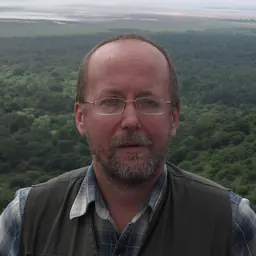


Related people
Same field, nearest in time





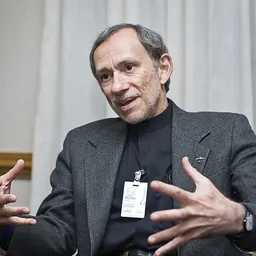
Contemporaries
People whose lives overlapped Peter Turchin's
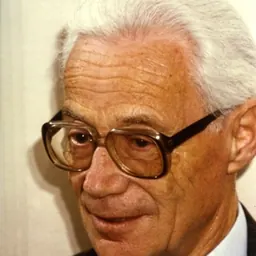

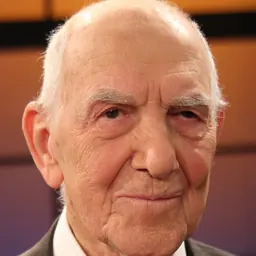
Frequently asked questions
Who is Peter Turchin?
Russian-American complexity scientist
When was Peter Turchin born?
Peter Turchin was born on 22 May 1957 in Moscow.
What is Peter Turchin's occupation?
Peter Turchin is an academic, sociologist, ecologist, scientist, historian and biologist.
What nationality is Peter Turchin?
Peter Turchin is American.
Sources & further reading
Cite this page
APA: Biography.guide. (2026). Peter Turchin. https://biography.guide/peter-turchin/
MLA: "Peter Turchin." Biography.guide, https://biography.guide/peter-turchin/.
Chicago: "Peter Turchin." Biography.guide. https://biography.guide/peter-turchin/.
Data last updated: 2026-09-26 · Spot an error? Report a correction.
Page generated 2026-09-27 05:15 UTC