
About Peter Sainsbury
Lived 1934 – 2014 (aged 80). Peter Sainsbury was a British cricketer.
Peter James Sainsbury (13 June 1934 – 12 July 2014) was an English professional cricketer who played first-class cricket for Hampshire from 1954 to 1976 and the Marylebone Cricket Club from 1955 to 1960. Born in Chandlers Ford, Hampshire in June 1934, Sainsbury was educated in Southampton, where he first played cricket and as a teenager was coached by Arthur Holt. After making his debut for Hampshire, his career was interrupted by two years of National Service, during which he played first-class cricket for the Combined Services. After completing his National Service, Sainsbury established himself in the Hampshire team as an all-rounder who bowled slow left-arm orthodox spin and batted as a right-hander in the middle order. In his first full season in 1955, he took a hundred wickets in a season. He established a spin bowling partnership with Mervyn Burden in the 1950s and into the early 1960s.
He was a member of the Hampshire team that won their first County Championship in 1961, and their second in 1973; he is the only player to have featured in both of Hampshire's County Championship winning teams. His bowling declined in the 1960s, due to him producing less flight with the ball, but he had marked success as a batsman, passing a thousand runs in a season six times in the 1960s, including five seasons in a row between 1960 and 1964. With the introduction of one-day cricket in 1963, Sainsbury was described as one of the first players to adapt to the format. With the return of his ability to flight the ball at the end of the 1960s, he found new success as a bowler and took over a hundred wickets during the 1971 season. He was named one of the five Wisden Cricketers of the Year for 1974, becoming the first Hampshire-born Cricketer of the Year. He won the John Player League in 1975, before retiring at the end of the 1976 season.
In 618 first-class matches, Sainsbury took 1,316 wickets, including 36 five wicket hauls. His career total is the seventh highest in first-class cricket, with his is 1,245 wickets for Hampshire the fifth most for the county. As a batsman, he scored 20,176 runs making seven centuries and 97 half-centuries. He scored 19,576 runs, the eighth highest aggregate for the county. He was a renowned fielder, later being considered by the cricket historian John Arlott to have been the best short-leg fielder in the world. He took 617 wickets in first-class cricket, with his 601 for Hampshire only bettered by Phil Mead. In one-day cricket, he scored over 2,000 runs and took more than 200 wickets. Despite his all-round record, Sainsbury never won a Test cap for England, finding himself overlooked for the spin bowlers spot by Tony Lock, Ray Illingworth, Fred Titmus, and Derek Underwood; his abilities as a fielder often saw him fulfill twelfth man duties for England.
Following his retirement, Sainsbury coached Hampshire following the death of Geoff Keith from 1977 to 1991, leading Hampshire to success in one-day cricket in the 1978 John Player League, 1986 John Player Special League, to their first cup final appearance at Lord's in the 1988 Benson & Hedges Cup, in which they were victorious, and to the 1991 NatWest Trophy. After the end of his coaching career, he ran a sports shop alongside his former teammate Jimmy Gray in Shirley, Southampton. He died on 12 July 2014.
Cricket career Early life and career Peter James Sainsbury was born on 13 June 1934 in Chandler's Ford, Hampshire. He was educated at Bitterne Park Secondary Modern School, playing both cricket and football for combined Southampton schools. Aged 14, he was amongst the first to play for Hampshire's newly formed colt's side in 1949, under the guidance of coach Arthur Holt. He joined the staff at Hampshire the following year, and played for the Second Eleven a week after his 16th birthday. The start of his career was interrupted by two-years compulsory National Service, Sainsbury later made his first-class debut for Hampshire against Oxford University at Oxford; following this match, he played twice for the Combined Services against the touring Pakistanis, and Yorkshire. He made his County Championship debut in the 1954 County Championship, when he played against Nottinghamshire at Southampton, scoring 63 runs in Hampshire's second innings and added 90 runs for the eighth wicket with Desmond Eagar. Sainsbury made six Championship appearances in the latter half of the 1954 season. he took his first five wicket haul (5 for 63) against Kent.
Established all-rounder Sainsbury established himself in the Hampshire team in 1955, On his 21st birthday against Yorkshire, he took 5 for 19 in their first innings and 4 for 43 in their second, dismissing Len Hutton twice in a day. With the bat, he scored 586 runs at an average of 15.42. He was awarded his county cap at the end of the season, and was chosen for the Marylebone Cricket Club (MCC) 'A' tour of Pakistan during the winter. His selection ended Chelsea manager Ted Drake's hopes of signing Sainsbury, after he had received reports of his abilities as an outside left in Southampton club football. He made nine first-class appearances on the tour, playing in two of the four representative matches against Pakistan. Prior to the 1958 season, Sainsbury received coaching from former Surrey bowler Alf Gover. His all-round form assisted Hampshire to second place in the 1958 County Championship. He took 71 wickets at 19.98, with two five wicket hauls from 34 matches. Hampshire were left without an opening partner for Roy Marshall; Sainsbury was one of five batsman to open the batting prior to Gray's return at the end of May. He took part in the season-ending Scarborough Festival, playing for the MCC against Yorkshire and earning his callup to the Gentlemen versus Players fixture; His 6 for 72 in the Gentlemen's second innings helped the Players to victory with 25 minutes left in the match.
In the early stages of England's 1958–59 tour of Australia, it was decided to add another spinner to the squad, with Sainsbury being chosen. However, by the following morning, the decision had changed and John Mortimore was called-up instead; this would not be revealed until 2004, when a letter detailing the decision was discovered. He took 60 wickets at 27.75 and scored 934 runs at 30.12. He played again in the Scarborough Festival at the end of the season, playing for a second time in the Gentlemen versus Players fixture. He took 81 wickets in the season at 25.33, claiming five or more wickets three times. making 1,459 runs in the County Championship at 31.04; he would make one century and eight half-centuries in the Championship. His century was the highest score of his career to that point, an unbeaten 125 runs against Glamorgan. The Hampshire Telegraph noted that his batting consistency often ensured Hampshire gained first innings batting points. He also took 54 wickets at 26.09, taking six wickets in an innings once. In the final Championship match of the season, he played an important role in Hampshire's victory against Derbyshire at Bournemouth, which secured them the title. On the final day, Hampshire were 129 runs ahead with six wickets remaining, and a draw looking the likely outcome. With Barnard, he put on 99 runs in 70 minutes for the fifth wicket, allowing them to declare on 263 for 8; this gave Shackleton (6 for 39) time to bowl Hampshire to victory. Sainsbury took the final wicket in Derbyshire's innings, that of Harold Rhodes. In 33 first-class matches in 1962, he scored 1,503 runs at 31.97, making eight half-centuries and one century for the second consecutive season; Although he had begun to concentrate more on batting, he still took 56 wickets at 28.57 in 1962. In May, he was a member of Hampshire's team for their inaugural List A one-day match against Derbyshire in the 1963 Gillette Cup. At the end of the season, Mervyn Burden, with whom Sainsbury had formed a bowling partnership with since his debut, retired. In 1964, he scored a thousand runs in a season for the fifth consecutive year. His 1,305 runs came at 34.34, making one century and three half-centuries. He took 57 wickets at 23.12; He played twice in the 1964 Gillette Cup, in Hampshire's victory against minor county Wiltshire in the first round and their defeat to Warwickshire in the second. He again played 30 first-class matches, scoring 917 runs at 26.20, but did not score a century. this would remain a Hampshire one-day record until it was surpassed by Liam Dawson's 7 for 15 against Warwickshire in 2023. He also scored his first one-day half-century in the match, making 76 runs. Conversely, Sainsbury's bowling workload reduced and he took only 21 wickets at 42.14. Sainsbury made 15 one-day appearances. and took 29 wickets at 14.86. He was the second highest wicket taker in the Player's County League with 28, behind Ray East (29), with Sainsbury's tally helping Hampshire to finish second in the competition.
Second County Championship Having lost much of his ability to flight the ball for a large part of the 1960s, Sainsbury had rediscovered it by the 1970 season. He took over 50 wickets for the first time since 1965, with 71 from 23 matches at 26.54, claiming five wickets in an innings twice. and scored 688 runs at 23.72, making two half centuries. He was Hampshire's leading wicket taker in the County Championship with 101, and nationally he was behind Fred Titmus (102) and Lance Gibbs (123). He also scored 959 runs, averaging 33.06, with nine half-centuries,
Sainsbury made 21 first-class appearances in 1972. At various times in the season he combined well with the slow-left arm spin of David O'Sullivan, with their bowling partnership spinning Hampshire to the verge of the Championship title by late August. He scored 758 runs at 34.45, making one century, In the Championship, he ended the season as Hampshire's third highest runscorer and headed their bowling averages. He also made twenty one-day appearances during the season, and the first born in Hampshire. In 21 first-class matches in 1974, with the attack led largely by the seam bowling of Bob Herman, Andy Roberts, and Mike Taylor. He also scored 599 runs at 33.27, Hampshire missed out on consecutive County Championship titles, finishing in second place, two points behind Worcestershire. In 21 one-day matches in 1974, Sainsbury took 30 wickets, averaging 18.46, Shortly after the season ended, he was selected in the International Wanderers team that toured Rhodesia and Transvaal; the team was promoted by the businessman Derrick Robins. Tours to South Africa were considered controversial due to the apartheid policies of its government, and were viewed as breaking the anti-apartheid stance that had seen South Africa isolated in international cricket in 1971; despite this, the tour received little political or public condemnation. The team played one first-class match each against Rhodesia and Transvaal. He also claimed 52 wickets, averaging 21.78, and twice taking five wickets in an innings. Sainsbury contributed 20 wickets from 24 matches at an average of 32.90, He made 16 first-class appearances in the season, a match in which he took overall figures of 12 for 184. Alongside his wicket tally, he also scored 492 runs at 23.42, making three half-centuries. his only one-day half-century in the season. and remarked that this contributed to him being overlooked by England at Test level and saw him behind Lock, Ray Illingworth, Titmus, and Derek Underwood for the spin bowlers spot. this view was later correlated to his bowling in one-day cricket by Arlott, who described it as "tight", and by Wisden, that remarked that he "seldom [gave] anything away". His delivery trajectory changed in limited-overs cricket, being much flatter. The cricket journalist Ryan Bailey opined that Sainsbury was one of the first spin bowlers to adapt to limited-overs cricket. Despite this, Arlott proffered that he never dominated opponents. His batting adapted to the advent of one-day cricket, where he was a "busy" batter who used his favourite shot, a hit over mid-off, effectively. his speed saved many runs, and he possessed the ability to pick the ball up at speed and throw in one movement. He took 50 wickets or more in 16 seasons. He took 1,245 wickets at an average of 24.14 for Hampshire, taking five wickets or more in an innings on 35 occasions, with all five of his ten-wicket match hauls coming for the county. His wickets aggregate is the fifth highest for Hampshire. Sainsbury had success as a bowler with other first-class teams, beside Hampshire. Sainsbury made 16 appearances for the MCC between 1955 and 1960, taking 30 wickets at 25.46, whilst his three appearances for the Players yielded him 21 wickets at 20.95. Sainsbury scored 20,176 runs at 26.86 in his first-class career, making seven centuries and 97 half-centuries. the eighth highest aggregate for the county, He took 617 catches in first-class cricket, He coached Hampshire to the 1978 John Player League and the 1986 John Player Special League titles, and to their first cup final appearance at Lord's in the 1988 Benson & Hedges Cup, where the county defeated Derbyshire by seven wickets, He coached Hampshire to the runners-up spot in the 1985 County Championship. however, he was offered a six-month summer contract to return for the 1990 season. He stood down as Hampshire coach at the end of the 1991 season, and was succeeded by Tim Tremlett.
Personal life Sainsbury took a keen interest in schools' cricket, and was president of the Rushmoor Primary Schools' Cricket Association. He was also president of the village cricket club in Eversley in the north-east of Hampshire. Following his retirement as Hampshire coach in 1991, Sainsbury joined the staff at Embley near Romsey, where he tended to the school playing fields and coached the pupils. Alongside Jimmy Gray, Sainsbury took over the Holt and Haskell shop in Shirley; the shop had been established by Arthur Holt in 1946. In retirement, he enjoyed playing golf. Sainsbury died in Southampton on 12 July 2014, nearly a month after his 80th birthday; he was survived by his wife, with whom he had a son and a daughter. Following his death, tributes were paid by Hampshire chairman Rod Bransgrove, and cricketers Ian Botham, Mark Nicholas, Shaun Udal, and former teammate Reed.
Notes and references
Don’t just read it —
keep it.
Full-length biographies made to live with: read them, listen on the way to work, watch them tonight.
- E-book
- Audio
- Video
Instant download · yours to keep · every purchase keeps this site free
Important facts
People in Peter Sainsbury's life
Named in this biography and alive at the same time


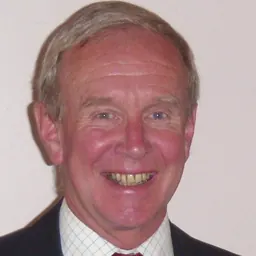
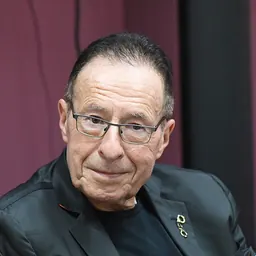




Related people
Same field, nearest in time

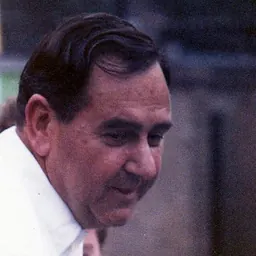


Contemporaries
People whose lives overlapped Peter Sainsbury's





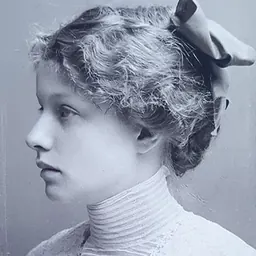
Frequently asked questions
Who was Peter Sainsbury?
English cricketer (1934-2014)
When was Peter Sainsbury born?
Peter Sainsbury was born on 13 June 1934 in Chandler's Ford.
When did Peter Sainsbury die?
Peter Sainsbury died on 13 July 2014.
What was Peter Sainsbury's occupation?
Peter Sainsbury was a cricketer.
What nationality was Peter Sainsbury?
Peter Sainsbury was British.
Sources & further reading
Cite this page
APA: Biography.guide. (2026). Peter Sainsbury. https://biography.guide/peter-sainsbury-cricketer/
MLA: "Peter Sainsbury." Biography.guide, https://biography.guide/peter-sainsbury-cricketer/.
Chicago: "Peter Sainsbury." Biography.guide. https://biography.guide/peter-sainsbury-cricketer/.
Data last updated: 2026-09-20 · Spot an error? Report a correction.
Page generated 2026-09-27 05:31 UTC