
Peter Nicol Russell
Australian philanthropist
About Peter Nicol Russell
Lived 1816 – 1905 (aged 89). Peter Nicol Russell was an Australian and Scottish founder.
Sir Peter Nicol Russell (4 July 1816 – 10 July 1905), commonly referred to as P. N. Russell, was an Australian foundry owner, manufacturing engineer, and benefactor of the University of Sydney.
Russell worked at iron foundries owned by his family in Scotland and Tasmania before starting a foundry and engineering works with his brothers on the banks of the Tank Stream in 1838 in the town of Sydney. Four years later, in 1842, Russell split from his brothers' business and founded his own operations where he remained for the next 13 years.
In 1855 he reunited with his brothers, forming P. N. Russell & Company, which became the largest steelworks in Australia at the time. Russell returned to London in 1860 to retire and remained attached to the business by acting as its London representative. Following a number of labour strikes at the business, P. N. Russell & Company closed its doors in 1875.
Russell retired with significant wealth and gifted A£100,000 to the University of Sydney, where the Peter Nicol Russell School of Engineering was named in his honour.
Early life Russell was born at Kirkcaldy, Fife, Scotland, the second son of eleven children of Robert Russell, engineer and iron founder, and his wife Janet, née Nicol. Robert Russell and his brother Alexander operated the Kirkcaldy Foundry and Engineering Works.
Russell was educated first at Abbotshall Parish School, and then at Kirkcaldy Grammar School. He worked for his father and uncle's firm, Alexander and Robert Russell, Kirkcaldy Foundry and Engineering Works, for a period, following which he joined with his father and brothers in establishing their own company, the Phoenix Foundry and Engineering Works.
Career in Australia Russell's career in Australia includes a number of engineering and metalwork businesses that he founded, namely Russell Bros, Sydney Foundry and Engineering Works, and P. N. Russell & Co.
During this same year, the youngest of Russell's brothers George established a marine engineering firm in Sussex Street, Sydney, called George Russell and Co., Engineers. It was located at 3 Barker Street, Sydney, in modern-day Darling Harbour.
The firm won contracts for a number of significant works, including "contracts for roads and railway bridges, railway rolling stock, steam dredges, gun boats, and crushing and flour milling machinery".
The 1861 strike was brought on after a proposal to reduce wages and challenge the eight-hour day working condition. In early May 1861, citing increased competition, the business announced that they would be reducing wages by 10%. Following a meeting on 16 May 1861, Russell's employees outright rejected the need to lower wages, arguing that the company had a competitive edge in the market due to its wide range of product offerings. The first strike began on 17 May 1861, and became known as "the severest strike the [New South Wales] colony had known". To fund the acquisition, P. N. Russell & Company sought to raise capital, issuing 40,000 shares each at £5 to total £200,000. John Russell would be stationed at the Fitzroy Works as managing director, with George Russell remaining to supervise the Sydney-based works. thumb Celebration for the opening of P. N. Russell & Co's new railway carriage factory, as depicted in the Illustrated Sydney News Russell returned to Sydney in 1870 for the opening of P. N. Russell & Company's railway carriage factory, which was located directly opposite the 3 Barker Street premises. In 1875 the business was closed after the company enforced a lockout, leading to roughly 600 men losing their jobs.
Career in London
Standard Bank of London Russell is listed as a director of the newly-formed Standard Bank of London, Limited on 11 December 1880, which was created as a joint-stock bank, listing in London as a privately held company for £2 million, consisting of 100,000 shares issued at £20. The Bank was located at 29 Lombard Street, London. In February 1881, the Bank was defrauded of £5,000. In April 1882, the Directors of the Bank issued a circular to shareholders recommending voluntary liquidation, due to a lack of business.
Later life In spite of the closure of P. N. Russell & Company, Russell's investments had prospered, and he retired a wealthy man. He retained an interest in Australia, making several return visits, and on 16 December 1896 made a gift of A£50,000 to the University of Sydney School of Engineering on condition that it be called the "Peter Nicol Russell School of Engineering". On 15 February 1904 he made a second gift of A£50,000 to be devoted to engineering scholarships, with the proviso that the government should provide A£25,000 for buildings.
In 1859 Russell married Charlotte Lorimer, daughter of Dr Alexander Lorimer who was a surgeon in the British Indian Army and later an Inspector General of Hospitals. Russell, who was knighted in 1904, died childless in London on 10 July 1905, aged 89. He is buried in East Finchley Cemetery. Under his will a total of £16,000 was left to various institutions and charities in Sydney.
Legacy Following Russell's endowments totalling £100,000 to the University of Sydney, the faculty known as the Peter Nicol Russell School of Engineering opened in 1909.
The Peter Nicol Russell Career Achievement Memorial Medal, established in 1919 by the Institution of Engineers to honour the memory of Russell, The medal is awarded to members of Engineers Australia who have attained the age of 45 years and "only Honorary Fellows of Engineers Australia are eligible for nomination".
List of significant works and remaining items P. N. Russell & Company was responsible for "extensive works, including contracts for road and railway bridges, railway rolling stock, steam dredges, gun boats, and crushing and flour milling machinery".
Memorials Two portraits, one of Russell by W. Q. Orchardson , and another of his wife, Lady Charlotte Russell by Gerald Kelly, were donated to the University of Sydney by Lady Russell in 1911. The portrait of Russell hangs in the Great Hall of the University of Sydney. The first is located at the East Finchley Cemetery in north London, and is Grade II listed on the National Heritage List for England.
Its duplicate, presented to the University of Sydney by Russell's wife to honour his name and inspire future generations, was positioned next to the Great Hall, later relocated by the ground floor entrance of the institution named after him.
Beside the grand granite and bronze monument, stands a single cast iron Ionian column, one of many such columns produced by the P. N. Russell and Co foundry. following the move of the Faculty of Engineering to its current location in Darlington, where the Peter Nicol Russell Building is named in honour of Russell.
Russell Place, which lies to the north of the John Woolley Building at the University of Sydney, is also named after Russell.
Gallery
Don’t just read it —
keep it.
Full-length biographies made to live with: read them, listen on the way to work, watch them tonight.
- E-book
- Audio
- Video
Instant download · yours to keep · every purchase keeps this site free
Important facts
People in Peter Nicol Russell's life
Named in this biography and alive at the same time



Related people
Same field, nearest in time
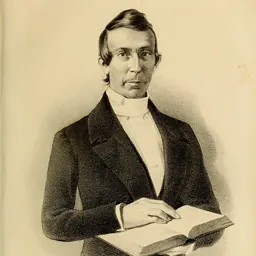
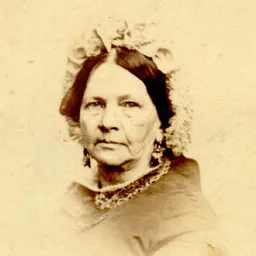
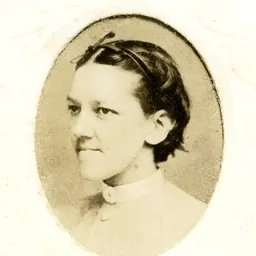

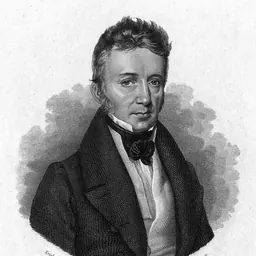
Contemporaries
People whose lives overlapped Peter Nicol Russell's




Frequently asked questions
Who was Peter Nicol Russell?
Australian philanthropist (1816-1905)
When was Peter Nicol Russell born?
Peter Nicol Russell was born on 4 July 1816 in Kirkcaldy.
When did Peter Nicol Russell die?
Peter Nicol Russell died on 10 July 1905 in London.
What was Peter Nicol Russell's occupation?
Peter Nicol Russell was a founder.
What nationality was Peter Nicol Russell?
Peter Nicol Russell was Australian and Scottish.
Sources & further reading
· Wikipedia: Peter Nicol Russell
· DBpedia: Peter Nicol Russell
Cite this page
APA: Biography.guide. (2026). Peter Nicol Russell. https://biography.guide/peter-nicol-russell/
MLA: "Peter Nicol Russell." Biography.guide, https://biography.guide/peter-nicol-russell/.
Chicago: "Peter Nicol Russell." Biography.guide. https://biography.guide/peter-nicol-russell/.
Data last updated: 2026-09-20 · Spot an error? Report a correction.
Page generated 2026-09-27 05:30 UTC