
Peter Magubane
South African photographer
About Peter Magubane
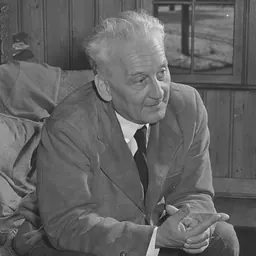
Lived 1932 – 2024 (aged 91–92). Peter Magubane was a South African photographer, journalist and anti-apartheid activist.
Peter Sexford Magubane OMSS (18 January 1932 – 1 January 2024) was a South African photographer and anti-apartheid activist. He began taking photos as a school boy and started professional photography at the Drum. Magubane became one of the first black photographers in South Africa under mentorship of chief photographer Jürgen Schadeberg at the Drum. Throughout his years as a photographer, Peter Magubane was arrested multiple times for taking photographs deemed offensive to the state. He not only fought apartheid with photography, but he shared his story and the story of numerous black South Africans through his publications. Magubane often included captions or introductory essays for his photography so the viewer could interpret his images better. He became the personal photographer of President Nelson Mandela in 1990.
Early life Peter Sexford Magubane was born on 18 January 1932 in Vrededorp (now Pageview, a suburb of Johannesburg); he grew up in Sophiatown. He began taking photographs using a Kodak Brownie box camera gifted to him by his father.
In 1954 he read a copy of Drum, a magazine known for its reporting of urban blacks and the effects of apartheid. "They were dealing with social issues that affected black people in South Africa. I wanted to be part of that magazine." Magubane joined the Drum staff in 1954.
When Magubane started his employment at Drum, he worked his way up the ladder from the positions of darkroom assistant and driver.
Magubane photographed most of South Africa's historic moments, such as Sharpeville in 1960 and also Mandela's Rivonia trial in 1964. He later recalled: "I had never seen so many dead people." His editor wanted to know why he had not taken any close-ups. Magubane then "decided I was not going to get emotionally involved, or at least not until after I have done my work."
Middle and later years Magubane left Drum to become a freelancer. In 1967, he was employed by the Rand Daily Mail. In 1969, he was sent to photograph a demonstration outside Winnie Mandela's jail cell. He was arrested, interrogated and then put in solitary confinement. The charges were dropped in 1970. However, Magubane was banned from photography for five years. In 1971 he was imprisoned again and spent 98 days in solitary confinement and then spent six months in jail. The result of the uprising was many students were arrested, beaten, or even shot by the police. This led to other opportunities. He worked on assignments for Time magazine, the United Nations and for Sports Illustrated photographing a series about the South African teenage runner Zola Budd. This book compiled much of his photography and highlighted the effect of apartheid on black children in South Africa.
Magubane became Nelson Mandela's photographer after he was released from prison in 1990. He was Nelson Mandela's photographer until he became president in 1994.
In 2006, the South African Post Office issued a miniature sheet, commemorative envelope and a special canceller postmark on National Women's Day.
Magubane ceased working in photojournalism and later concentrated on art photography. He documented the surviving tribal ways in post-apartheid South Africa in colour. These photographs have been published under the African Heritage Series banner.
Magubane was passionate about what he did but this does not mean that his job as a photographer did not take a toll on his personal life. After witnessing so much violence firsthand, he stated that he became "a feelingless beast" when it came to photography and only processed the tragedies he encountered after they happen. This does not mean that he became indifferent to the struggle of black South Africans but it means that he became desensitized to all the violence he encountered first hand. Magubane's devotion to his job as a photographer made relationships difficult. His erratic working hours and late nights cause his first two marriages to end in divorce. After he became widowed, Magubane did not remarry.
Magubane died from cancer on 1 January 2024 in South Africa. He is survived by his daughter, Fikile Magubane, and his grandchildren.
Publications Black As I Am, Zindzi Mandela and Peter Magubane; foreword by Andrew Young, Los Angeles Guild of Tutors Press, 1978, Magubane's South Africa; with a foreword by Ambassador Andrew Young, New York: Alfred A. Knopf, distributed by Random House. 1978, Soweto, photographed by Peter Magubane; text, Marshall Lee; contributing and picture editor, Dawn Lindberg, Cape Town: Don Nelson, 1978, (2nd ed. 1983) Soweto Speaks, Jill Johnson, photographs by Peter Magubane, Johannesburg: A. D. Donker, 1979, Black Child, New York: Alfred Knopf, 1982, 16 June: The Fruit of Fear, Braamfontein: Skotaville, 1986, Soweto: The Fruit of Fear, Trenton, N.J.: Africa World Press, 1986, (reissue of 16 June: The Fruit of Fear) Soweto: Portrait of a City, photography by Peter Magubane; text by David Bristow, Stan Motjuwadi; [foreword by Archbishop Desmond Tutu]. London: New Holland, 1990 Women of South Africa: their fight for freedom, photographs by Peter Magubane, text by Carol Lazar. Boston MA: Little, Brown & Co., 1993 Nelson Mandela, Man of Destiny: a pictorial biography, Cape Town: Don Nelson, 1996, Vanishing Cultures of South Africa: changing customs in a changing world, Cape Town: Struik, 1998, (The Xhosa – The Zulu – The Ndebele – The Venda – The Tsonga – The Basotho – The Tswana – The Pedi – The Ntwana – The San) African Renaissance, Cape Town: Struik, 2000, African Heritage Series: Homesteads, Peter Magubane, text by Sandra Klopper, Cape Town: Struik, 2001, Dress and Adornment, Peter Magubane, text by Sandra Klopper, 2001, Ceremonies, Peter Magubane, text by Sandra Klopper, Cape Town: Struik. 2001, Soweto, Peter Magubane and Charlene Smith, Cape Town: Struik, 2001, African Heritage Series: Arts and Crafts, Peter Magubane, text by Sandra Klopper, Cape Town: Struik, 2001, The BaNtwane: Africa's Undiscovered People, Peter Magubane, text by Sandra Klopper, Cape Town: Struik, 2001, AmaNdebele, Peter Magubane, text by Sandra Klopper, Sunbird, 2005,
Film and video Dying to Tell the Story (1998) – Magubane appeared as himself in the documentary Peter Magubane Photographer (1999) – BBC Millennium diaries. "Having recorded the turbulent events in South Africa over the past 45 years on camera he tells of the journey to his homeland of today".
Exhibitions Solo exhibitions 1985 – Photographic Gallery Hippolyte, Helsinki, Finland. 2005 – Madiba: Man of Destiny, Standard Bank Gallery, Johannesburg
Group exhibitions 2001 – Soweto – A South African Myth. photographs from the 1950s (by Alf Khumalo, Ernest Cole and Jürgen Schadeberg). The core of the exhibition is the student uprising of 1976. This includes some of Magubane's work. 2012–2013 – Rise and Fall of Apartheid: Photography and the Bureaucracy of Everyday Life
Awards
1958 – First black South African to win a photographic prize in the country – first and third prizes were awarded to him for Best Press pictures of the year. 2006 – Honorary doctorate of Technology from the Tshwane University of Technology 2006 – Doctor of Law (honoris causa) Rhodes University 2008 – Honorary Fellowship from the Royal Photographic Society, UK 2010 – Cornell Capa Infinity Award from the International Center of Photography 2010 – Honorary doctorate degree from Columbia College (Chicago) 2015 – Nat Nakasa Award for Media Integrity 2023 – Van Toeka Af Living Legends Recognition award
Don’t just read it —
keep it.
Full-length biographies made to live with: read them, listen on the way to work, watch them tonight.
- E-book
- Audio
- Video
Instant download · yours to keep · every purchase keeps this site free
Important facts
People in Peter Magubane's life
Named in this biography and alive at the same time




Related people
Same field, nearest in time


Contemporaries
People whose lives overlapped Peter Magubane's


Frequently asked questions
Who was Peter Magubane?
South African photographer (1932–2024)
When was Peter Magubane born?
Peter Magubane was born on 18 January 1932 in Johannesburg.
When did Peter Magubane die?
Peter Magubane died in 2024.
What was Peter Magubane's occupation?
Peter Magubane was a photographer, journalist and anti-apartheid activist.
What nationality was Peter Magubane?
Peter Magubane was South African.
Sources & further reading
Cite this page
APA: Biography.guide. (2026). Peter Magubane. https://biography.guide/peter-magubane/
MLA: "Peter Magubane." Biography.guide, https://biography.guide/peter-magubane/.
Chicago: "Peter Magubane." Biography.guide. https://biography.guide/peter-magubane/.
Data last updated: 2026-09-22 · Spot an error? Report a correction.
Page generated 2026-09-27 05:27 UTC