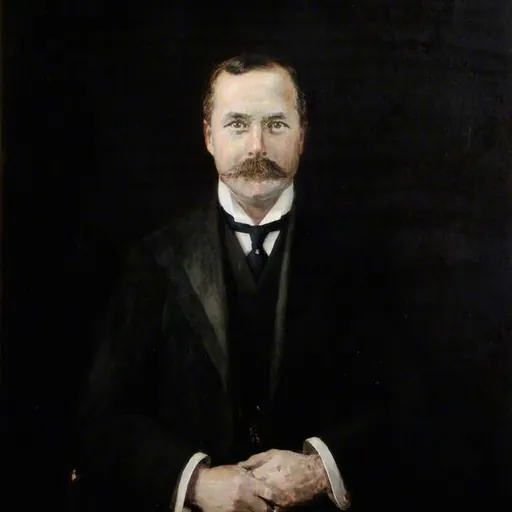
Peter Freyer
Freyer, Sir Peter Johnston (1851–1921), surgeon
About Peter Freyer
Lived 1851 – 1921 (aged 70). Peter Freyer was a British surgeon, military personnel, physician, university teacher and urologist, known for Benign prostatic hypertrophy and Urology.
Sir Peter Freyer (2 July 1851 – 9 September 1921) was an Irish surgeon with an expertise in genitourinary surgery, best known at first as an Indian Medical Service (IMS) officer, for making popular the procedure for crushing bladder stones to allow them to be evacuated through the natural passages, a procedure known as a litholapaxy. Following retirement from the IMS after 20 years of service in India, he returned to England and popularized a procedure for benign large prostates. This was known as the suprapubic prostatectomy, a transvesical prostatectomy or the Freyer operation, where the prostate is removed through an abdominal incision above the pubic bone but below the umbilicus and through the bladder, and it included using suprapubic drainage post-operatively.
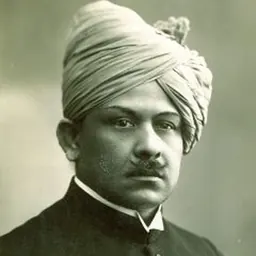
He entered the Bengal Medical Service as a surgeon in 1875 and served almost exclusively in civil employment in the North-Western Provinces and Oudh in the United Provinces of India. While based at Moradabad in 1888, he successfully operated on Muhammad Mushtaq Ali Khan, the Nawab of Rampur, crushing his bladder stone with a lithotrite. Freyer defended the remuneration he received from the Nawab, which had caused a controversy with the British establishment in India at the time. This and an eye injury caused while serving the civil surgeoncy of Benares contributed to Freyer taking early retirement and returning to England in 1896.
In England he set up a private practice in Harley Street and was appointed a consulting surgeon in the surgery of the urinary organs at St Peter's Hospital for stone, London. He first performed the procedure of suprapubic prostatectomy in 1900, on a man who then survived 12 years. Although Freyer was not the first to introduce this operation, despite his claim otherwise causing the second significant controversy in his career, he is credited with popularising it. In 1920, he was elected the first president of the section of urology of the Royal Society of Medicine and in his presidential address, claimed to have performed 1,674 of these operations with a low mortality.
The Department of Surgery, NUI Galway, hosts the annual Sir Peter Freyer Memorial Lecture and Surgical Symposium in his honour, and the James Hardiman Library at the NUI hold around 660 items of his memorabilia.
Early life and education Peter Johnson Freyer, named after his paternal grandfather who was a chief officer in the Irish Coast Guard, was born in County Galway on 2 July 1851, the eldest child of landholder Samuel Freyer and his wife Celia Burke, who was a Roman Catholic. Freyer and his siblings however, were brought up as Protestant, a likely effect of the influence of the Irish Church Missionss (ICM) on the people in the area at that time. On 26 July of that year, he was baptised in Ballinakill's parish church. In 1855, his father, who was a tenant of the ICM supporter Sir Christopher Lighton, had in possession 17 acres of land at Moorneen and property and land in Knockbrack, both of which are located in Clifden. Twenty one years later, in 1876, when a list of those owning more than one acre was compiled, he was recorded as owning 210 acres. to attend Queen's College (now NUI Galway). He graduated in 1872 with a gold medal and a first class honors degree in arts. Two years later, in 1874, he earned his MD and M.Ch. having won another gold medal. While a medical student he also spent some time as a resident pupil at Dr Steevens' Hospital in Dublin. Following a short time working in Paris, he returned to sit the competitive examination of the Indian Medical Service.
Indian Medical Service
Admission to the Bengal Medical Service Freyer came first in the competitive examination for a commission as a medical officer in the Bengal Medical Service, which later became part of the IMS. Entering the service as a surgeon on 30 September 1875, he became a civil surgeon in Azamgarh in April 1877. He started publishing his medical articles in The Indian Medical Gazette in 1878. In 1888, while based at Moradabad, Freyer operated on the Nawab of Rampur, Muhammad Mushtaq Ali Khan, crushing his bladder stone with a lithotrite.
Later years in India In 1894, Freyer represented the Indian government at the International Medical and Surgical Congress in Rome, where he presented his study on 598 cases of bladder stone removal by transurethral lithopaxy, using the same technique as Henry Jacob Bigelow. At the time, the mortality for open lithotomy was 12.5%, but Freyer demonstrated a 1.84% mortality. His troubles with his superiors in India and an eye injury from an assault by a patient at the Benares asylum contributed to Freyer taking early retirement in 1896 and he returned to England. He became an immediate success and was referred to by Lord Moynihan as a "Pee Free-er". His claims of introducing the surgery without credit to Fuller led Fuller to later state that "if he wishes to claim to be the original scratcher in connection with suprapubic prostatectomy, I certainly will not protest against that his only valid claim." However it remained unpopular. Although Freyer was not the first to introduce this procedure, he is credited with popularising it, particularly following his report in 1920, presented at the RSM, on the low mortality of 1,674 cases of suprapubic prostatectomies, utilising suprapubic drainage post-operatively. He stated;
On December 1, 1900, I performed for the first time my operation of total enucleation of the prostate, and in July, 1901, published in the British Medical Journal, for the consideration of the profession at large, a lecture delivered by me at the Medical Graduates' College, giving a full description. of the operation, with details of four successful cases. I have now completed 1,674 cases of the operation, details of 1,550 of which have been recorded in the numerous papers published in the medical journals. I believe I may say that this operation is now almost universally practised by surgeons. The number of articles and lectures Freyer gave, in addition to the publicity surrounding the controversies regarding his claims that he had introduced the operation, likely helped make the procedure widely known. However, the operation had a lower mortality in Freyer's hands compared to others, at a time before antibiotics and with only basic anaesthesia. Freyer's skill lay in his speed.
John Thomson-Walker, first honorary secretary of the section of urology at the RSM, The procedure was later superseded by the retropubic prostatectomy popularised by Terence Millin following his publication of the technique in 1945.
Other roles In 1902, he became examiner in surgery at the University of Durham and from 1904 to 1909 he was a member of the honorary medical staff of King Edward VII's Hospital for Officers. Thereafter he was appointed a consulting surgeon to the Queen Alexandra Military Hospital, Millbank, London.
His presidential address covered the achievements in urology over the previous 45 years and he hoped the section would result in a co-ordination of work in the field of urology. Freyer was succeeded the following year by Lord Horder,
A detailed account of Freyer is given in C. P. MacLoughlin's "From Sellerna to Harley Street".
In 1980, the Department of Surgery at NUI Galway acquired Freyer's personal papers and memorabilia from his grandsons. Subsequently, in 2002, the James Hardiman Library at the NUI acquired them and now hold around 660 items consisting of his letters, newspaper cuttings, official records, photographs, memorabilia and publications. Other items have also been added.
Selected publications Articles
Books Clinical Lectures on the Surgical Diseases of the Urinary Organs. William Wood & Company, New York (1909).
Don’t just read it —
keep it.
Full-length biographies made to live with: read them, listen on the way to work, watch them tonight.
- E-book
- Audio
- Video
Instant download · yours to keep · every purchase keeps this site free
Important facts
People in Peter Freyer's life
Named in this biography and alive at the same time



Related people
Same field, nearest in time

Contemporaries
People whose lives overlapped Peter Freyer's



Frequently asked questions
Who was Peter Freyer?
Freyer, Sir Peter Johnston (1851–1921), surgeon
When was Peter Freyer born?
Peter Freyer was born on 17 January 1851 in Galway.
When did Peter Freyer die?
Peter Freyer died on 17 January 1921.
What was Peter Freyer's occupation?
Peter Freyer was a surgeon, military personnel, physician, university teacher and urologist.
What was Peter Freyer known for?
Peter Freyer was known for Benign prostatic hypertrophy and Urology.
What nationality was Peter Freyer?
Peter Freyer was British.
Sources & further reading
Cite this page
APA: Biography.guide. (2026). Peter Freyer. https://biography.guide/peter-freyer/
MLA: "Peter Freyer." Biography.guide, https://biography.guide/peter-freyer/.
Chicago: "Peter Freyer." Biography.guide. https://biography.guide/peter-freyer/.
Data last updated: 2026-09-20 · Spot an error? Report a correction.
Page generated 2026-09-27 05:09 UTC