
Jacob Bigelow
American botanist, physician, and educational reformer
About Jacob Bigelow
Lived 1787 – 1879 (aged 91). Jacob Bigelow was an American botanist, poet, university teacher, physician, herpetologist and translator.
Jacob Bigelow (February 27, 1787 – January 10, 1879) was an American medical doctor, botanist and botanical illustrator. He was architect of Mount Auburn Cemetery in Cambridge, Massachusetts (in which he is interred), husband to Mary Scollay, and the father of physician Henry Jacob Bigelow.
Biography Bigelow was born in Sudbury, Massachusetts, on February 27, 1787 (other sources say 1786). He was the son of Jacob Bigelow, a Congregational minister, and Elizabeth (Wells) Bigelow. He entered Harvard College at the age of sixteen, received an A.B. in 1806, and then attended medical lectures given by John Gorham at the Boston Latin School. In 1808 he left Boston to study medicine at the University of Pennsylvania where he graduated in 1810 with a degree in medicine. While at the university, he also studied botany under Benjamin Barton.
In 1811 Bigelow returned to Boston and established a successful medical practice that would make him one of the most respected local doctors for the next 60 years. In 1812 he delivered a series of botanical lectures and made a detailed survey of flora in the vicinity of Boston. He published his findings, Florula Bostoniensis, in 1814. Later, Bigelow expanded his botanic surveys into New Hampshire and Vermont. The results of this work were included in a second, expanded edition of Florula Bostoniensis (1824) which became a standard reference of New England flora for the next 25 years.
Bigelow was appointed professor of materia medica at the Harvard Medical School in 1815 and held the post until 1855. His most important botanical work was American Medical Botany, which he authored and illustrated. Published in three volumes from 1817 to 1820, Bigelow developed an improved method of reproducing his illustrations using a new aqua-tint process. In 1818, he was elected as a member to the American Philosophical Society. He was also an important contributor to the first American pharmacopoeia in 1820. and in 1829 he published a treatise on mechanics and non-biological sciences, Elements of Technology. Bigelow was concerned about the unhealthiness of burials under churches as well as the possibility of running out of space. With help from the Massachusetts Horticultural Society, Mount Auburn Cemetery was founded on of land authorized by the Massachusetts Legislature for use as a garden or rural cemetery. It was dedicated in 1831 by Joseph Story, first president of the Mount Auburn Association.
Bigelow died on January 10, 1879, and was buried in Mount Auburn Cemetery.
Critique of Benjamin Rush and Heroic Medicine Bigelow came to prominence also by challenging the effectiveness of the therapeutics of the day. His Discourse on Self-Limited Diseases in which he attacked physicians' blind allegiance to drugs and medical intervention that were embodied in heroic medicine practice. To establish support, Bigelow wrote on how the outcomes among treated and untreated patients were similar, regarding the use of heroic therapies. Interventions had little effect. Bigelow's deprecations helped form a new conceptual nucleus around which medical orthodoxy could begin to redefine itself. (Paul Starr: Transformations in American Medicine)
Selected publications An introduction to physiological & systematical botany (1814) Florula bostoniensis (1814, 1st Edition) American medical botany (1817–20) (Vol. 1–3) Florula bostoniensis (1824, 2nd Edition)
Don’t just read it —
keep it.
Full-length biographies made to live with: read them, listen on the way to work, watch them tonight.
- E-book
- Audio
- Video
Instant download · yours to keep · every purchase keeps this site free
Important facts
People in Jacob Bigelow's life
Named in this biography and alive at the same time
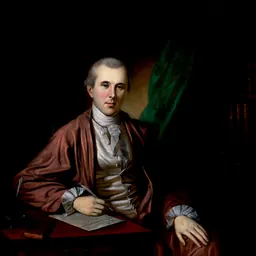

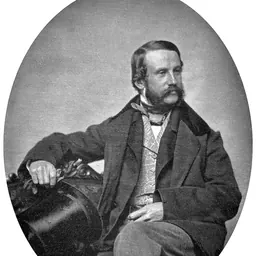
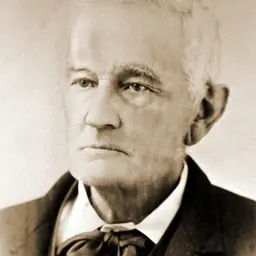
Related people
Same field, nearest in time

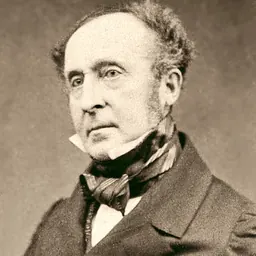


Contemporaries
People whose lives overlapped Jacob Bigelow's

Frequently asked questions
Who was Jacob Bigelow?
American botanist, physician, and educational reformer (1787-1879)
When was Jacob Bigelow born?
Jacob Bigelow was born on 27 February 1787 in Watertown.
When did Jacob Bigelow die?
Jacob Bigelow died on 10 January 1879 in Boston.
What was Jacob Bigelow's occupation?
Jacob Bigelow was a botanist, poet, university teacher, physician, herpetologist and translator.
What nationality was Jacob Bigelow?
Jacob Bigelow was American.
Sources & further reading
Cite this page
APA: Biography.guide. (2026). Jacob Bigelow. https://biography.guide/jacob-bigelow/
MLA: "Jacob Bigelow." Biography.guide, https://biography.guide/jacob-bigelow/.
Chicago: "Jacob Bigelow." Biography.guide. https://biography.guide/jacob-bigelow/.
Data last updated: 2026-09-20 · Spot an error? Report a correction.
Page generated 2026-09-27 05:31 UTC