
About Peter Fincham
Born 1956. Peter Fincham is a British television producer.
Peter Arthur Fincham (born 26 July 1956) is a British television producer and executive. From 2008 until 2016, he was the director of television for the ITV network. He was also formerly the controller of BBC One, the primary television channel of the British Broadcasting Corporation, until his resignation on 5 October 2007, following criticism over the handling of the Monarchy: The Royal Family at Work debacle.
Early life
Fincham was educated at the independent Tonbridge School, and then studied at Churchill College, Cambridge. He joined the Cambridge Footlights production team as musical director, alongside a committee which included Griff Rhys Jones, Jimmy Mulville, Rory McGrath and Clive Anderson. After leaving Footlights, Fincham composed songs, none of which were picked up for recording, and then worked on the touring version of Godspell. During a period of increasingly common unemployment, Fincham was walking on Wandsworth Common in the rain and thinking to himself: "Oh my God. What have I done? I have made the wrong decision?" Fincham applied for a job at the BBC in 1984, a position as a researcher on The Late, Late Breakfast Show after his friend Helen Fielding left to concentrate on her writing career. However, he was unsuccessful in this application.
Career
TalkBack (1985–2005) In 1985 he joined the staff of the independent production company TalkBack Productions as a producer. At the time the company, which was founded by comedians Mel Smith and Griff Rhys Jones, produced radio programming, television advertisements and corporate videos. Fincham became the company's managing director in 1986,
BBC One (2005–2007) Fincham was regarded in some quarters as a surprising choice as controller, as prior to his appointment he had never worked for either the BBC or any other broadcaster, having spent his career in the independent production sector. In 2006, The Guardian newspaper reported that he was ultimately responsible for an annual programming budget at BBC One of £873 million.
Fincham oversaw the commissioning of successful BBC One programmes such as Jane Eyre, How Do You Solve a Problem Like Maria? (both 2006) and Robin Hood (2006–09). His first full year in charge saw a year-on-year growth in the channel's audience share, with BBC One earning a 23.6% share in August 2006, compared to 22.2% in the same month in 2005.
Fincham directly initiated the creation of both the early evening current affairs and lifestyle programme The One Show (2006–present) and the prime time chat show Davina (2006), the latter designed as a vehicle for presenter Davina McCall. However, Davina was a critical and ratings disaster, which Fincham subsequently admitted was personally his fault, although he defended the strategy of experimenting with the BBC One schedule.
It was also Fincham's decision to scrap the BBC One "Rhythm and Movement" idents, which had been used to provide the channel with its on-screen identity between programmes since they were introduced by Heggessey in 2002. They were replaced by a new set of idents, known as the "Circle idents", in the autumn of 2006; however, Fincham again found himself criticised, this time by The Daily Telegraph newspaper, for the decision to spend £1.2 million on the set of eight ten-second films, some of which were shot in Mexico and Croatia. Fincham also found himself having to publicly defend the £18 million salary the BBC awarded presenter Jonathan Ross in 2006, although Ross's BBC One work – which primarily consisted of Friday Night with Jonathan Ross, Film... and various one-off events – formed only part of his BBC commitment, which also encompassed programmes for BBC Three and BBC Radio 2.
On 18 May 2007, Fincham decided to drop the Australian soap opera Neighbours from BBC One after 21 years on the channel, when its producers increased the price they wanted the BBC to pay for it in a bidding war. Fincham commented that: "We'd love to have kept it but not at any price." Fincham admitted the error, and initially rejected calls that he should resign from his position as a result. However, the publication of the Wyatt Report on 5 October led to his resignation.
ITV (2008–2016) On 28 February 2008 it was announced that the ITV network, the BBC's main rival, had hired Fincham to be its new director of television. At the Edinburgh Television Festival in August 2008, Fincham claimed that broadcasters such as ITV were under too much pressure from industry regulator Ofcom to produce programmes that were only of a minority interest, as opposed to pure entertainment programmes for a mainstream audience. In 2010 he decided to axe the long-running drama series The Bill; ATV News Network reported 97% of the public were against the drama being dropped.. In December 2011, he took the unilateral decision to remove a song from The Jonathan Ross Show that was commissioned especially for the programme by the comedian and songwriter Tim Minchin. The song, titled "Woody Allen Jesus", had already been approved by Ross's producer and ITV's legal compliance officers. Minchin, disappointed at the decision, later made the footage available on his own site where he also criticised Fincham's decision.
In January 2016, ITV announced that Fincham had decided to step down as director of television and leave the company.
Expectation (2016–) After leaving ITV, Fincham launched the independent production company Expectation with co-CEO Tim Hincks, the former president of Endemol Shine Group, producing such shows as Clarkson's Farm and Alma's Not Normal.
Since 2020, Fincham and Jon Plowman have presented four series of What’s Funny About… on BBC Radio 4 Extra. In April 2025, Fincham and Jimmy Mulville started a podcast about the TV industry. which provides respite care for the ill and disabled and their carers. Fincham's family live in London. In music, he enjoys Bob Dylan and Neil Young.
Outside of broadcasting, Fincham co-edited The Utterly Utterly Merry Comic Relief Christmas Book with author Douglas Adams in 1986.
Don’t just read it —
keep it.
Full-length biographies made to live with: read them, listen on the way to work, watch them tonight.
- E-book
- Audio
- Video
Instant download · yours to keep · every purchase keeps this site free
Important facts
People in Peter Fincham's life
Named in this biography and alive at the same time


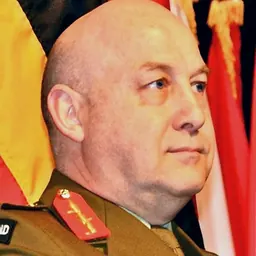
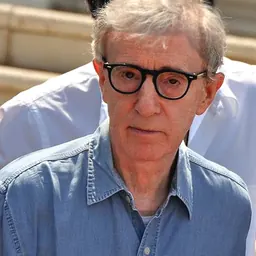


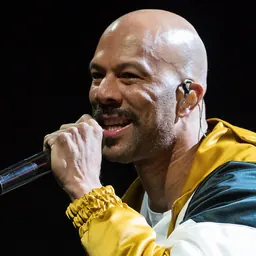
Related people
Same field, nearest in time


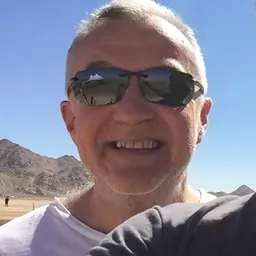
Contemporaries
People whose lives overlapped Peter Fincham's
Frequently asked questions
Who is Peter Fincham?
British television producer
When was Peter Fincham born?
Peter Fincham was born on 26 July 1956.
What is Peter Fincham's occupation?
Peter Fincham is a television producer.
What nationality is Peter Fincham?
Peter Fincham is British.
Sources & further reading
Cite this page
APA: Biography.guide. (2026). Peter Fincham. https://biography.guide/peter-fincham/
MLA: "Peter Fincham." Biography.guide, https://biography.guide/peter-fincham/.
Chicago: "Peter Fincham." Biography.guide. https://biography.guide/peter-fincham/.
Data last updated: 2026-09-20 · Spot an error? Report a correction.
Page generated 2026-09-27 05:23 UTC