
About Peter Evans
Born 1961. Peter Evans is an Australian swimmer.
Peter Maxwell Evans (born 1 August 1961) is an Australian breaststroke swimmer of the 1980s who won four Olympic medals, including a gold in the 4×100 m medley relay at the 1980 Moscow Olympics as part of the Quietly Confident Quartet. He also won consecutive bronze medals in the 100 m breaststroke at the 1980 Olympics and the 1984 Los Angeles Olympics.
The son of prominent Western Australian businessman and politician Max Evans, Evans had a late start to his swimming career, making his debut at the Australian Championships in his hometown of Perth, aged 17. Despite placing second in the 100 m breaststroke, he was not selected for Australia, and instead travelled to the United Kingdom to train under David Haller. During this period, he quickly improved his times and rose from outside the top 200 into the top 25 in the world rankings. Evans returned to Australia in 1980 and qualified for the Olympics in both the 100 m and 200 m breaststroke. A sprinter, he won the 100 m in an Australian record time and showed a preference for shorter events, which required less training mileage. Evans gained a reputation for often doing fewer training laps than his coach asked of him. Evans was less successful in the short-course format used at college level, which placed more reliance on efficient turns. Evans returned to Australia for the 1982 Commonwealth Games in Brisbane, winning silver in the 100 m breaststroke and gold in the medley relay. He competed in his second Olympics in Los Angeles in 1984, winning bronze in both the 100 m breaststroke and the medley relay. Evans retired after missing selection for the 1986 Commonwealth Games and attempted to follow his father into politics. He unsuccessfully stood as the candidate for the Liberal Party of Australia in the electoral district of Perth at the 1986 state election, before pursuing a career in business.
Early years The second of four children, Evans was born into an affluent family in Perth, Western Australia. His father Max was a chartered accountant who went on to become a politician for the Liberal Party in the state's Upper House. who was credited with modernising the state and transforming its lucrative mining industry. Max was an honorary member of the Australian Chamber of Commerce. The Evans family had a sporting pedigree. Max had been a state champion athletics sprinter at youth level and won a gold, a silver and three bronze medals as part of Western Australian relay teams at the Australian Championships. Evans' mother Barbara, a physiotherapist, was a capable swimmer and won a half-blue in netball at the University of Western Australia. Evans was confident in his own training methods and refused to bend to the coaches.
1980 Moscow Olympics
Having qualified to swim for Australia, another obstacle arose with the Soviet invasion of Afghanistan, which resulted in a boycott of the Games by a large part of the Western world, led by the United States. The Australian prime minister, Malcolm Fraser, was also the patron of the Australian Olympic Committee, and significant political pressure came to bear on the athletes to boycott the Games. Evans' relay teammate Tonelli believed that only the sportspeople would suffer from a boycott and that trade relations would continue unabated. He took a leadership role among the athletes to fight for their right to compete and publicise their cause among the Australian public. Evans was fully supportive of Tonelli's campaign, reflecting that "We were political tools, and the only ones to suffer would be us."
Having arrived in Moscow, Evans' first event was the 100 m breaststroke, which the Soviets were favoured to win. Evans' former flat-mate and training partner Goodhew was another of the favourites. Reflecting on the race, Evans felt that his lack of experience compared with Goodhew was a factor in his loss. Evans felt that Goodhew had "psyched [him] out".
Relay victory
The 4 × 100 m medley relay was the focal point of Evans' Moscow campaign. The event had always been won by the United States since its inception at Olympic level in 1960, and their boycott had opened up the field in the event. In the five times the event had been contested, Australia's best result was a silver in the inaugural race. A bronze in 1964 was the only other medal success, and the 1972 medley relay had seen Australia eliminated in the heats. This time, Australia was regarded as a medal chance, but were not seen as the main threats—Sweden, Great Britain and the Soviet Union were the most favoured teams to win. The hosts' team included the silver medallists in the 100 m backstroke and breaststroke, and their butterflyer had come fifth. Later, their freestyler placed fourth. The British had Goodhew, the breaststroke gold medallist, while Sweden's butterflyer and backstroker had won their respective events and their freestyle swimmer would come second in the 100 m. On paper, Australia's team paled in comparison. Neil Brooks, the freestyler, would come 14th overall after an asthma attack, Mark Kerry had been eliminated in the backstroke semifinals, while Tonelli was swimming as a makeshift butterflyer. Adding to the pressure was that Australia had won no gold medals at the 1976 Olympics in any sport, and were yet to win one in Moscow, so the public were still awaiting their first victory since Munich in 1972. Coming into the Olympics, Australia were ranked seventh out of the 13 competing countries.
Australia's prospects improved after the morning heats in which Sweden was disqualified. Evans took the opportunity to attempt to regain the psychological ascendancy from Goodhew, confronting him privately and stating that "we will win it". Evans felt that his posturing had shaken Goodhew. The time of 3 m 45.70 s sealed Australia's first-ever win in a medley relay at the Olympics, for men or women.
Upon returning to Australia, Evans and Brooks were raucously received in their hometown of Perth. They were denied a civic reception by the Lord Mayor of the City of Perth, who supported an Olympic boycott over Afghanistan, but the Lord Mayor of Fremantle instead hosted a reception. Evans received congratulations from Prime Minister Fraser.
US college career A few weeks before the Olympics, Evans had signed a deal with the University of Arizona, and he went there to study and swim after the Olympics. Evans was to spend five years in Arizona studying for a BA in business. He regarded his American experience as a crucial component of his development: "I got a good education, but above all I learned about myself".
Nevertheless, their opponents were able to lift and the final saw Steve Lundquist of the United States set a new world record of 1 m 1.65 s; Evans took bronze, 0.98 s behind silver medallist Davis. Evans was unable to maintain the pace that he had set in the heats, clocking a time 0.10 s slower. The final event for Evans was the 4 × 100 m medley relay. Evans was joined by Kerry, while Glenn Buchanan and Mark Stockwell swum the butterfly and freestyle respectively. The Americans were overwhelming favourites, boasting the gold medallists in three of the respective individual events. The hosts easily won the gold by almost four seconds; Evans and the Australians were third, relegated from the silver medal by just 0.02 s by the Canadian team, having been in the bronze medal position at every change. Evans recorded the second-fastest breaststroke split, slower than Lundquist, but quicker than the rest, including Davis.
Don’t just read it —
keep it.
Full-length biographies made to live with: read them, listen on the way to work, watch them tonight.
- E-book
- Audio
- Video
Instant download · yours to keep · every purchase keeps this site free
Important facts
People in Peter Evans's life
Named in this biography and alive at the same time
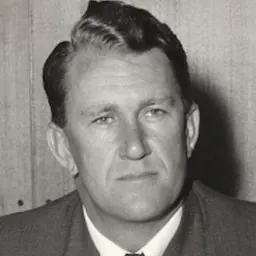
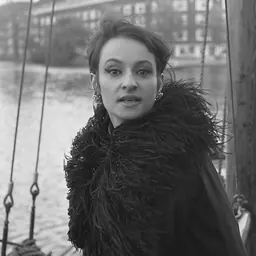
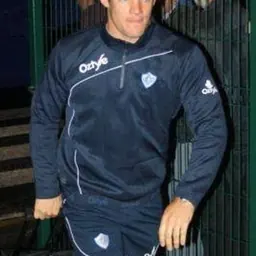



Related people
Same field, nearest in time
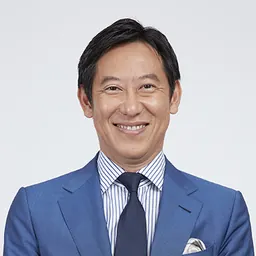

Contemporaries
People whose lives overlapped Peter Evans's


Frequently asked questions
Who is Peter Evans?
Australian swimmer, Olympic gold medallist
When was Peter Evans born?
Peter Evans was born on 1 August 1961 in Perth.
What is Peter Evans's occupation?
Peter Evans is a swimmer.
What nationality is Peter Evans?
Peter Evans is Australian.
Sources & further reading
· DBpedia: Peter Evans (swimmer)
Cite this page
APA: Biography.guide. (2026). Peter Evans. https://biography.guide/peter-evans-swimmer/
MLA: "Peter Evans." Biography.guide, https://biography.guide/peter-evans-swimmer/.
Chicago: "Peter Evans." Biography.guide. https://biography.guide/peter-evans-swimmer/.
Data last updated: 2026-09-20 · Spot an error? Report a correction.
Page generated 2026-09-27 05:19 UTC