
About Peter De Polnay
Lived 1906 – 1984 (aged 78). Peter De Polnay was a Hungarian and British novelist and writer.
Peter de Polnay (; 8 March 1906 – 21 November 1984) was a Hungarian-born English novelist and non-fiction writer who wrote over 80 books.
Personal life Peter de Polnay was born to Jenő Polnay (born Pollacsek) and Marguerite de Tiszasuly on 8 March 1906. His father was director of the Atlantica Shipping Company and the family name was nobilified to de Polnay in recognition of his service to the Hapsburg monarchy. His father later served briefly as Minister of Food Distribution in the Friedrich government in August 1919, then traveled to the United States in 1921 as a trade emissary of the Horthy regime. His father served as the president of the National Association of Hungarian Jews and during World War Two, ran the Budapest Kindergarten Association, an orphanage, and was responsible for saving the lives of nearly 400 children from the Gestapo in 1944.
Peter de Polnay and his siblings were largely raised and educated by various governesses and spent time in Switzerland and Italy. He became fluent in five languages: English, French, German, Italian, and Spanish. He never acknowledged being able to speak Hungarian. He converted to Catholicism as a young man and never acknowledged his Jewish origin. This was one of a number of facts he omitted or changed in his autobiography My Road (1978). He also claimed to have spent four years in Devonshire as a child and omitted mention of a second sister, Emily, as well as of his son Gregory.
In January 1926, he was arrested for his involvement in a conspiracy organized by Prince Ludwig Windisch-Graetz to forge 30 million in French franc notes. He was released after a few days without explanation. In 1927, he sailed from Bremen to Buenos Aires aboard the German liner Madrid. He joined his younger brother Ivan in Argentina and the two travelled and took a variety of jobs, usually ill-paid and short-lived, an experience he later wrote about in Fools of Choice (1955). He returned to Hungary in 1930 to collect an inheritance of 160,000 Hungarian pengő. He then travelled to England, bought a red Bentley, drove to the French Riviera, and quickly lost his fortune gambling at the Monte Carlo Casino as he later described in A Door Ajar (1959). He then sailed to Kenya, where he tried and failed at running a chicken farm. While in Kenya, he began what would become his first novel Angry Man's Tale, drawing on his experiences on the Riviera. He left Kenya in 1934, spent the winter on Mallorca, then traveled to Paris, where he finished the book. While living in Paris, he became acquainted with the painter Maurice Utrillo, whose biography he would later write, as well as the novelist Marcel Aymé.
De Polnay was in Paris when the German Army occupied the city in June 1940. He spent the next four months before arranging to travel to Vichy France, from which he hoped to escape to England. He was arrested in Marseille on suspicion of passing funds to supporters of the Free France. He was released for lack of evidence and was able to make his way over the Pyrenees to Spain. He was then able to reach Gibraltar and sail for England, arriving in August 1941.
Shortly before the book was published, he married Margaret Mitchell Banks, the daughter of a former King's Counsel Sir Reginald Mitchell Banks and former wife of the photographer Norman Parkinson. Their son Gregory was born in 1943. After the war, de Polnay and his wife rented Boulge Hall, formerly the home of the poet and translator Edward FitzGerald. He told his friend Cyril Connolly that his dream was "to live in Suffolk and shoot."
De Polnay then spent several years traveling in Portugal and Spain, where he became friends with the novelist John Lodwick. He married Elaine Daphne Tasker in 1952 but the marriage ended in divorce less than two years later. In 1955 he married Maria del Carmen Rubio y Caparo, daughter of a Spanish theater director and the Spanish-Catalan actress Angela Rubio y Caparo.
On the other hand, de Polnay was often criticized for writing in haste. Isabel Quigly wrote that his 1973 memoir The Moon and the Marabou Stork "gives the impression of having been written on the backs of old envelopes and posted off without correction or arrangement." In the same year, Christopher Wordsworth wrote of The Price You Pay that "Mr. de Polnay's stringent control of the tricks of his trade can't disguise the flimsyness of this novel."
He retained, however, a cadre of supporters. Anthony Burgess once wrote that "Because Mr. de Polnay is prolific, some people will not take him seriously. This is a dangerous mistake." Norman Shrapnel, who reviewed over a dozen of de Polnay's books, wrote that "Reading Peter de Polnay must for many have become a kind of habit – a good one, I'd say, since he makes professionalism in fiction a decent word.... His work is so unobtrusively crafted that it is easy to miss the extraordinary nature of a routine de Polnay achievement."
Orville Prescott may have made the most balanced assessment of de Polnay's work in his review of the 1948 novel The Moot Point:
De Polnay wrote under at least two pseudonyms. Between 1961 and 1966, W. H. Allen & Co. published three novels using the pseudonym Rodney Garland, which had been used by the Hungarian emigre writer Adam Martin de Hegedus for two novels with homosexual subject matter: The Heart in Exile (1953) and The Troubled Midnight (1956). After de Hegedus's death in October 1955, de Polnay wrote World Without Dreams (1961), Hell and High Water (1963), and Sorcerer's Broth (1966). W. H. Allen also published six novels that de Polnay wrote using the pseudonym Jessamy Morrison: The No-Road (1963); The Wind Has Two Edges (1964); The Girl from Paris (1965); Rusty (1966); The Office Party (1967); and The Widow (1972). Most of the Morrison novels dealt with lesbian and homosexual themes and de Polnay may have used the pseudonym to avoid problems with the Catholic Church.
Works Novels
Autobiography Death and To-morrow, Secker & Warburg (1942); also published as The Germans Came to Paris, Duell, Sloan & Pearce (1943) Fools of Choice, Robert Hale (1955) A Door Ajar, Robert Hale (1959) The Crack of Dawn: A Childhood Fantasy, Hollis & Carter (1960) The Moon and the Marabou Stork, Elek (1973) My Road: An Autobiography, W. H. Allen (1978)
Biography/History Into an Old Room: A Memoir of Edward FitzGerald, Creative Age Press (1949); also published in UK as Into an Old Room: The Paradox of E. FitzGerald, Secker & Warburg (1950) Death of a Legend: The True Story of Bonny Prince Charlie, Hamish Hamilton (1952) Garibaldi: The Legend and the Man, Hollis & Carter (1960); also published as Garibaldi: The Man and the Legend, Thomas Nelson (1961) A Queen of Spain: Isabel II, Hollis & Carter (1962) The World of Maurice Utrillo, Heinemann (1967); revised edition published as Enfant Terrible: The Life and World of Maurice Utrillo, Morrow (1969) Madame de Maintenon, Heron Books (1969) Napoleon's Police, W. H. Allen (1970) Sarah Bernhardt, Heron Books (1970)
Travel An Unfinished Journey to South-Western France and Auvergne, Wingate (1952) Descent from Burgos, R. Hale (1956) Peninsular Paradox: Spain, A Survey, McGibbon & Kee (1958) Travelling Light: A Guide to Foreign Parts, Hollis & Carter (1959) Aspects of Paris, W. H. Allen (1968), also published as Paris: An Urbane Guide to the City and Its People, Regnery (1970)
Translations (with Elspeth Grant) Odette Joyeux, Open Arms, Wingate (1954) Maurice David-Darnac, The True Story of the Maid of Orleans, W. H. Allen (1969) Pierre Kast, The Vampires of Alfama, W. H. Allen (1976)
Don’t just read it —
keep it.
Full-length biographies made to live with: read them, listen on the way to work, watch them tonight.
- E-book
- Audio
- Video
Instant download · yours to keep · every purchase keeps this site free
Important facts
Family & relationships
People in Peter De Polnay's life
Named in this biography and alive at the same time
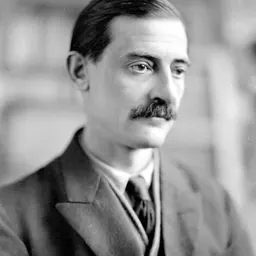







Related people
Same field, nearest in time
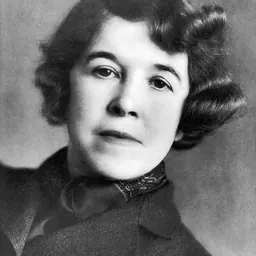
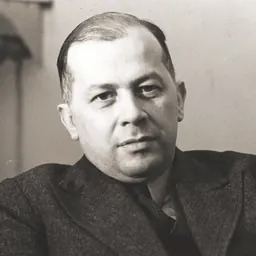


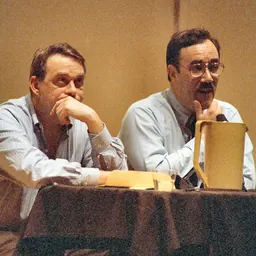
Contemporaries
People whose lives overlapped Peter De Polnay's


Frequently asked questions
Who was Peter De Polnay?
English novelist and non-fiction writer
When was Peter De Polnay born?
Peter De Polnay was born on 8 March 1906 in Budapest.
When did Peter De Polnay die?
Peter De Polnay died on 21 November 1984 in Paris.
What was Peter De Polnay's occupation?
Peter De Polnay was a novelist and writer.
What nationality was Peter De Polnay?
Peter De Polnay was Hungarian and British.
Sources & further reading
Cite this page
APA: Biography.guide. (2026). Peter De Polnay. https://biography.guide/peter-de-polnay/
MLA: "Peter De Polnay." Biography.guide, https://biography.guide/peter-de-polnay/.
Chicago: "Peter De Polnay." Biography.guide. https://biography.guide/peter-de-polnay/.
Data last updated: 2026-09-20 · Spot an error? Report a correction.
Page generated 2026-09-27 05:21 UTC