
About Peter Candid
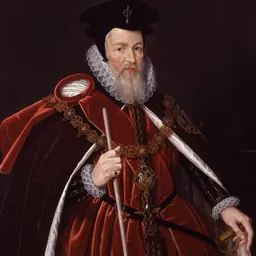
Lived 1548 – 1628 (aged 79–80). Peter Candid was a painter, graphic designer, visual artist, sculptor and artist.
Peter de Witte, known in Italy as Pietro Candido and in Bavaria as Peter Candid (c. 1548 – 1628) was a Flemish-born Mannerist painter, tapestry designer and draughtsman active in Italy and Bavaria. He was an artist at the Medici court in Florence and at the Bavarian court of Duke William V and his successor Maximilian I in Munich.
Life
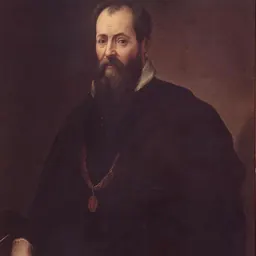
Candid was born in Bruges and moved with his parents to Florence at the age of 10. His father Elias was a tapestry weaver who had been hired by the newly opened Medici weaving workshop, the Arazzeria Medicea, which was led by the Flemish master Jan Rost. The original Flemish family name was 'de Witte'. The word 'witte' means 'white' in Flemish and that is why the family adopted the Italian family name' Candido' in Italy, an Italian word which also means 'white'. Peter would change his family name to 'Candid' after he moved to Germany. Beginning in 1578 he painted a series of three altarpieces for churches in Volterra, including an Adoration of the Shepherds (1580) and a Lamentation over the Dead Christ (1585–86, Pinacoteca Civica). The 16th century Flemish biographer Karel van Mander who knew Candid when he visited Italy, recounted that Candid worked with Giorgio Vasari on the Sala Regia in the Vatican and on the cupola of the Florence Cathedral. After working in Rome at the Sala Regia in the years 1582 and 1583, he returned to Florence. In the period 1600 to 1628 he was the leading artist in Munich. He was also active as an art dealer and had business dealings with Philipp Hainhofer, a merchant, banker, diplomat and art collector in Augsburg remembered, among other things, for his curiosity cabinets.
He married and had five children, including a son Wilhelm (fl 1613–1625), who was a painter but after 1625 became a court official. His daughter married the engraver Filips Sadeler in 1624.
Tapestry designer
Peter Candid was an important designer for the weaving workshop which had been set up by Duke Maximilian. It was managed by the Flemish master weaver Hans van der Biest. Van der Biest had been invited from Flanders by the Duke to set up a tapestry workshop with craftsmen from the Low Countries in 1604. He was given a large stipend and funds to visit the Southern Netherlands to source materials and recruit weaving professionals. The tapestries to be produced were principally intended to decorate the Munich Residenz, the royal palace of the Duke in Munich. Despite its modest size of about 20 weavers the workshop produced tapestries of an excellent quality with vibrant colours, dynamic scenes and entertaining details. The workshop stayed in operation until 1615.
Candid created cartons for this workshop. From these were woven three series of tapestries made up of about 50 hangings worked through with gold. The tapestries were a set of 12 Grotesques, 11 scenes from the Story of Otto von Wittelsbach, the founder of the House of Wittelsbach, and 18 tapestries depicting The Months, The Seasons and Day and Night. He also designed but did not make the cartons for a series of 12 tapestries depicting biblical and mythological scenes. The cartons were preserved and were used about 100 years later by the engraver Carl Gustav Amling for a series of prints. Candid personally intervened in the weaving of the tapestries and visited the workshop to give the weavers guidance. The tapestries woven in Munich from Candid's designs were among the finest and most innovative products of the early seventeenth-century European tapestry industry.
Don’t just read it —
keep it.
Full-length biographies made to live with: read them, listen on the way to work, watch them tonight.
- E-book
- Audio
- Video
Instant download · yours to keep · every purchase keeps this site free
Important facts
more
Pier Candido, Pedro Candido, Pietro Candido Fiorentino, Pietro Candido Witte, Peter Wit, Pietro d'Elia Candido, Pietro di Pietro Candido, Peter de Wit, Peter Candido, Pitro Candido, Peter Candius, Petrus Witte, Peter Candigio, Pierre Candi, Pierre Candide, Peter Dewit, Petrus Candi, Peter CauditPeople in Peter Candid's life
Named in this biography and alive at the same time

Related people
Same field, nearest in time


Contemporaries
People whose lives overlapped Peter Candid's


Frequently asked questions
Who was Peter Candid?
Flemish painter and graphic designer (1548-1628)
When was Peter Candid born?
Peter Candid was born in 1548 in Bruges.
When did Peter Candid die?
Peter Candid died in 1628 in Munich.
What was Peter Candid's occupation?
Peter Candid was a painter, graphic designer, visual artist, sculptor and artist.
What nationality was Peter Candid?
Peter Candid's recorded nationality: Habsburg Netherlands, Electorate of Bavaria.
Sources & further reading
Cite this page
APA: Biography.guide. (2026). Peter Candid. https://biography.guide/peter-candid/
MLA: "Peter Candid." Biography.guide, https://biography.guide/peter-candid/.
Chicago: "Peter Candid." Biography.guide. https://biography.guide/peter-candid/.
Data last updated: 2026-09-20 · Spot an error? Report a correction.
Page generated 2026-09-27 05:19 UTC