
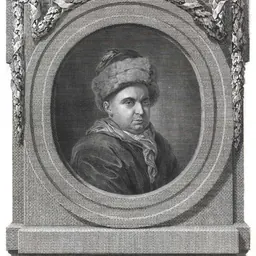
Peter Baker
English slave trader
About Peter Baker
Lived 1731 – 1796 (aged 64–65).
Peter Baker (1731–1796) was a privateer, shipbuilder, Lord Mayor of Liverpool, and notable English slave trader. In 1784 their firm, Baker and Dawson, secured a contract with the Spanish government to supply enslaved people to Spanish America. The contract was arranged by two intermediaries named Barry and Black and gave them exclusive access to disembark enslaved people in Cuba and the other Spanish West Indies islands. Barry and Black arranged the on-island functions, such as the holding pens and transportation. In 1786, Baker and Dawson signed a new contract to supply enslaved people taking over these functions themselves. The contract had a fixed price of 155 Pesos for each enslaved person. In total they supplied 11,000 enslaved people that they valued at more than £350,000.
The rulers of the Spanish Caribbean islands became dissatisfied with the sickly nature of Africans and began to return them. Records show Baker and Dawson carried more kidnapped people per ship tonnage than their contemporaries. In 1788, Dawson complained to the UK government about the regulation of the number of the enslaved allowed per ship tonnage. Records do not indicate what happened to those people, most likely they were sold in nearby Jamaica. Even after the Spanish colonies were opened to other slave merchants, Baker and Dawson remained the largest slave trading company in the Spanish Caribbean.
Personal life
Baker and Co. shipbuilding company Baker was Born in 1732 in Garston, Liverpool. At 13 years old, he was apprenticed to a Joiner for 6 years as was custom at the time, before Baker joined the shipyard of John O'Kill where he worked as a carpenter for 10 years. Having become an experienced shipwright and master craftsman, Baker founded his own shipbuilding company "Baker and Co" in 1761 in the vicinity of the Salthouse Dock. By 1773, Baker and Co. was given the contract to build the Kent, a 1100-ton burthen ship that, at the time, was the largest to be built in a Liverpool northern dockyard. This success drew the British Navy's attention to Baker, who went on to build four naval vessels between 1774 and 1779 (Penelope, Adamant, Assistance, and Ariel). During this time, Baker's business had also expanded into mercantile trade with West Africa using his own boats.
Privateering, the Mentor, and the Carnatic A newspaper print of a former oil painting depicting the meeting of Mentor and Carnatic. The painting was lost in WWII. In 1777 Baker and Co. was in a low period, having had few shipbuilding contracts that year and having suffered mercantile losses. A firm had ordered the Privateersman the Mentor of 400-tons. Completed in 1778, the Mentor was refused by the firm who ordered it, dubbing it "cranky and ramshackle," This refusal would have left Baker insolvent, and so a desperate Baker became a privateer using the Mentor himself.
Baker hired John Dawson to captain Mentor, given his privateering success at the time. The Mentor, unaltered and as built, set sail in 1778 bearing 28 guns and 102 men, most of which were the 'scum of the dockland'.
Later life, Carnatic Hall, and shipbuilding legacy
In 1779, Baker used his fortune to build the country house Carnatic Hall in Mossley Hill, Liverpool, named after the Carnatic. with Dawson being the primary shipbuilder and Pearson taking care of mercantile matters. In 1802, Dawson and Pearson dissolved with Pearson taking any remaining aspects of the slave trading business and Dawson focusing on the shipbuilding aspect as J. Dawson and Co. J. Dawson and Co. continued on from 1802 to 1849, passing to Dawson's grandson (also "John Dawson") in 1819, before closing down permanently with the rise of iron-built steam ships.The original Carnatic Hall burned down 8 December 1889, but was later rebuilt in 1890 with features including two of the original cannons from Mentor'' on the grounds. This second building was demolished in 1964. The University of Liverpool later purchased the site for a student hall of residence that they named Carnatic Hall, which operated until 2018 when it was closed. Baker himself became Mayor of Liverpool in 1795, a year before he died.
List of vessels owned by Baker and Dawson Baker and Dawson were the largest firm of slave traders in England. Vessels they owned included:
Brothers
Don’t just read it —
keep it.
Full-length biographies made to live with: read them, listen on the way to work, watch them tonight.
- E-book
- Audio
- Video
Instant download · yours to keep · every purchase keeps this site free
Important facts
People in Peter Baker's life
Named in this biography and alive at the same time

Contemporaries
People whose lives overlapped Peter Baker's





Frequently asked questions
Who was Peter Baker?
English slave trader
When was Peter Baker born?
Peter Baker was born in 1731.
When did Peter Baker die?
Peter Baker died in 1796.
Sources & further reading
· DBpedia: Peter Baker (slave trader)
Cite this page
APA: Biography.guide. (2026). Peter Baker. https://biography.guide/peter-baker-1731/
MLA: "Peter Baker." Biography.guide, https://biography.guide/peter-baker-1731/.
Chicago: "Peter Baker." Biography.guide. https://biography.guide/peter-baker-1731/.
Data last updated: 2026-09-20 · Spot an error? Report a correction.
Page generated 2026-09-27 05:05 UTC