
About Peter Andreas Munch
Lived 1810 – 1863 (aged 52). Peter Andreas Munch was a Norwegian regional historian, historian, literary historian, university teacher, writer and philologist.
Peter Andreas Munch (15 December 1810 – 25 May 1863), usually known as P. A. Munch, was a Norwegian historian, known for his work on the medieval history of Norway. Munch's scholarship included Norwegian archaeology, geography, ethnography, linguistics, and jurisprudence. He was also noted for his Norse legendary saga translations.
Background
Munch was born in Christiania (now Oslo). He was the son of Edvard Storm Munch and Johanne Sophie Hofgaard. Munch was the uncle of the famous painter Edvard Munch.
He grew up at Gjerpen parsonage, where his father was parish priest of the Church of Norway. He was schooled in the city of Skien. He attended the Royal Frederick University. Munch first studied law and took his state examination in 1834, but then turned to historical and philological studies.
Career Munch's first great achievement, with Rudolph Keyser, was their three volumes of Norges Gamle Love (Norway's old laws), edited after a two-year research visit to Copenhagen. In 1837, he became lecturer in history at the University of Oslo and in 1841 became a professor of history. In 1857, after producing numerous publications, he received a large grant for archives research in Rome and lived there from 1859 to 1861. Munch served as Norway's national archivist from 1861 to 1863. He was one of the first non-Catholics to be allowed into the archives of the Vatican. He took extensive notes from the volumes of papal letters, and sometimes drew accurate facsimiles of the texts. His research there was useful in his main work, Det norske Folks Historie (History of the Norwegian People), in eight volumes, and he sent his notes home to the Royal Archives in Christiania. Among the theories he is remembered for is the theory on immigration to Norway, in which he developed work done by Rudolf Keyser. On a trip back to Rome to fetch his family, who had remained there for a while, he died from a stroke, and was buried in the Protestant Cemetery, Rome.
The Chronicles of Mann and the Sudreys
In this work, Munch translated the 3rd Chronicle of the Chronicles of Mann from a Codex transferred to the British Museum (formerly owned in 1620 by one Sir Robert Cotton). The manuscript is the only known copy of this Codex (and thought to be the only one). In any event, Munch translated runic characters and added historical notes to lend light upon the writings, and using previous works on the history of Scottish and Icelandic Isles to aid in the presentation of the translated material. He also edited Chronica regvm Manniae et insvlarvm: The chronicle of Man and the Sudreys (1874) with Alexander Goss.
Controversial views about the Finno-Ugric peoples Munch claimed in his article on Finnish nationality (Om Finlands Nationalitet og dens Forhold til den svenske) in 1855, that Finns and Hungarians must have a human race of their own.
Selected works Norges, Sveriges og Danmarks Historie til Skolebrug (1838) Norges Historie i kort Udtog for de første Begyndere (1839) Nordens gamle Gude- og Helte-Sagn i kortfattet Fremstilling (1840) Verdenshistoriens vigtigste Begivenheder (1840) De nyeste Tiders Historie (1842) Fortegnelse over de mest befarede Landeveie og Reiserouter saavel mellem Stæderne, som Landdistricterne i Norge (1846) Det oldnorske Sprogs eller Norrønasprogets Grammatik (with C. R. Unger, 1847) Underholdende Tildragelser af Norges Historie (1847) Nordmændenes Gudelære i Hedenold (1847) Det gotiske Sprogs Formlære (1848) Kortfattet Fremstilling af den ældste norske Runeskrift (1848) Om Skandinavismen (1849) Historisk-geographisk Beskrivelse over Kongeriget Norge (Noregsveldi) i Middelalderen (1849) Det norske Folks Historie (1852–1863) Om den saakaldte nyere historiske Skole i Norge (1853) Nordmændenes ældste Gude- og Helte-Sagn (1854) The Chronicle of Man and the Sudreys (1860)
Don’t just read it —
keep it.
Full-length biographies made to live with: read them, listen on the way to work, watch them tonight.
- E-book
- Audio
- Video
Instant download · yours to keep · every purchase keeps this site free
Important facts
People in Peter Andreas Munch's life
Named in this biography and alive at the same time

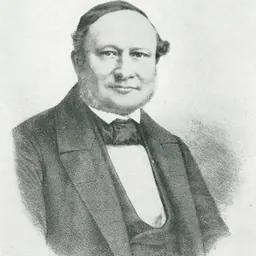
Related people
Same field, nearest in time
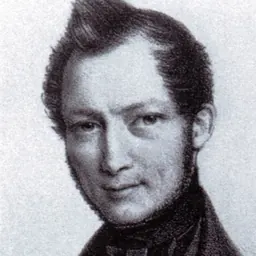

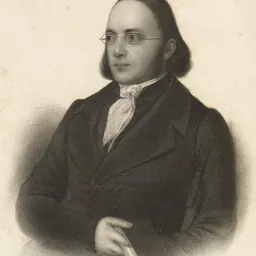


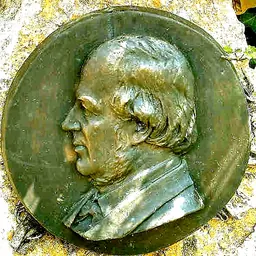
Contemporaries
People whose lives overlapped Peter Andreas Munch's




Frequently asked questions
Who was Peter Andreas Munch?
Norwegian historian (1810-1863)
When was Peter Andreas Munch born?
Peter Andreas Munch was born on 15 December 1810 in Christiania.
When did Peter Andreas Munch die?
Peter Andreas Munch died on 25 May 1863 in Rome.
What was Peter Andreas Munch's occupation?
Peter Andreas Munch was a regional historian, historian, literary historian, university teacher, writer and philologist.
What nationality was Peter Andreas Munch?
Peter Andreas Munch was Norwegian.
Sources & further reading
· Wikipedia: Peter Andreas Munch
· DBpedia: Peter Andreas Munch
Cite this page
APA: Biography.guide. (2026). Peter Andreas Munch. https://biography.guide/peter-andreas-munch/
MLA: "Peter Andreas Munch." Biography.guide, https://biography.guide/peter-andreas-munch/.
Chicago: "Peter Andreas Munch." Biography.guide. https://biography.guide/peter-andreas-munch/.
Data last updated: 2026-09-20 · Spot an error? Report a correction.
Page generated 2026-09-27 05:20 UTC