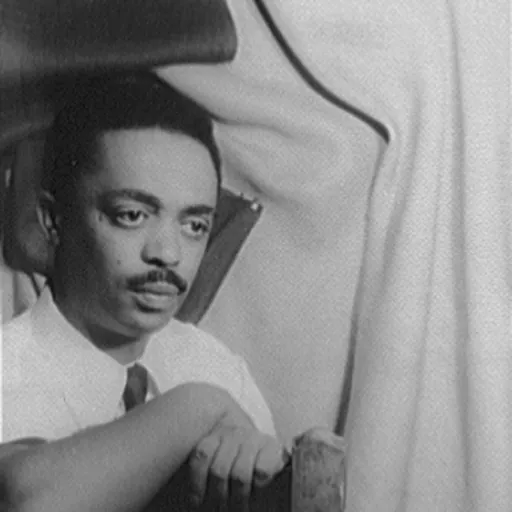
Peter Abrahams
South African novelist, journalist and political commentator
About Peter Abrahams
Lived 1919 – 2017 (aged 97). Peter Abrahams was a South African writer, journalist, editor-in-chief, poet, opinion journalist and editing staff.
Peter Henry Abrahams Deras (3 March 1919 – 18 January 2017), commonly known as Peter Abrahams, was a South African-born novelist, journalist and political commentator who in 1956 settled in Jamaica, where he lived for the rest of his life. His death at the age of 97 is considered to have been murder.
Biography
Early years and education
Abrahams was born in 1919 in Vrededorp, a suburb of Johannesburg, South Africa; his father was from Ethiopia and his mother was Coloured, with French and African roots. Abrahams was five years old when his father died, and with his family thereafter struggling financially his mother sent him to live with relatives until the age of 11, when he became a boarding student at the Anglican Church's Grace Dieu School in Pietersburg. On graduation from there, he went to St Peter's Secondary School in Rosettenville, paying his tuition fees by working at the Bantu Men's Social Centre. More books followed with publication in Britain and the United States: two novels —The Path of Thunder (1948) and Wild Conquest (1950); a journalistic account of a return journey to Africa, Return to Goli (1953); and a memoir, Tell Freedom (1954).
In 1945, Abrahams helped to organised the fifth Pan-African Congress which took place in Manchester and is today regarded as a turning point within the independence struggle. In attendance at the event were names like Kwame Nkrumah, Hastings Banda, Jomo Kenyatta and W. E. B. Du Bois. In 1956, Abrahams published a roman à clef about the political community of which he had been a part in London: A Wreath for Udomo. His main character, Michael Udomo, who returns from London to his African country to preside over its transformation into an independent, industrial nation, appeared to be modelled chiefly on Nkrumah with a hint of Kenyatta. Other identifiable fictionalized figures included George Padmore. The novel concluded with Udomo's murder. Published the year before Nkrumah took the reins of independent Ghana, A Wreath for Udomo was not an optimistic forecast of Africa's future.
Abrahams is commemorated by a blue plaque on his former council house in Jessel Drive in Loughton, London installed in 2020.
In 1956, Abrahams settled in Jamaica, where he continued novels and memoirs, also working as a journalist and radio commentator.
Death Abrahams was found dead at his home in Saint Andrew Parish, Jamaica, on 18 January 2017, aged 97. A forensic examination showed that Abrahams was a victim of foul play. A local 61-year-old man, Norman Tomlinson, was later charged with murder. Court proceedings began in March 2017 after a delay due to a lengthy power outage in the court house; and on 7 October 2018, having pleaded guilty to manslaughter, Tomlinson was jailed for seven years.
Writing
Peter Abrahams was one of South Africa's most prominent writers, his works dealing with political and social issues, especially with racism. His novel Mine Boy (1946), one of the first works to bring him to critical attention, and his memoir Tell Freedom (1954) deal in part with apartheid. His other works include the story collection Dark Testament (1942) and the novels The Path of Thunder (1948, which inspired both a ballet of the same name and the opera Reiter der Nacht by Ernst Hermann Meyer), A Wreath for Udomo (1956), A Night of Their Own (1965), the Jamaica-set This Island Now (1966, the only one of his novels not set in Africa) and The View from Coyaba (1985). His memoir The Coyaba Chronicles was published in 2000.
Works
Dark Testament (1942) Song of the City (1943), novel, published by Dorothy Crisp & Co Ltd London Mine Boy (1946), published by Dorothy Crisp & Co. The first author to bring South Africa's apartheid system to international attention. The Path of Thunder (1948), Wild Conquest (1950), Return to Goli (1953) Tell Freedom (1954; new edn 1970) A Wreath for Udomo (1956), Jamaica: an Island Mosaic (1957), Her Majesty's Stationery Office, the Corona Library A Night of Their Own (1965), This Island Now (1966), The View from Coyaba (1985), The Coyaba Chronicles: Reflections on the Black Experience in the 20th Century (2000)
Music inspired by his works
The ballet İldırımlı yollarla ("The Path of Thunder") (1958) by the Azerbaijani composer Gara Garayev the opera Reiter der Nacht (1973) by the East German composer Ernst Hermann Meyer is also based on The Path of Thunder
Don’t just read it —
keep it.
Full-length biographies made to live with: read them, listen on the way to work, watch them tonight.
- E-book
- Audio
- Video
Instant download · yours to keep · every purchase keeps this site free
Important facts
People in Peter Abrahams's life
Named in this biography and alive at the same time


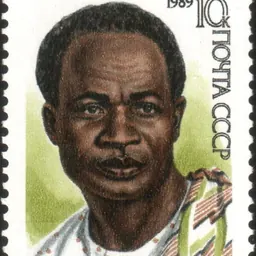
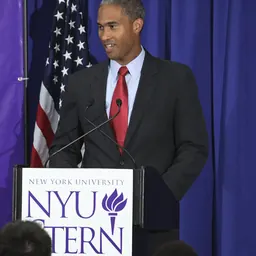

Related people
Same field, nearest in time
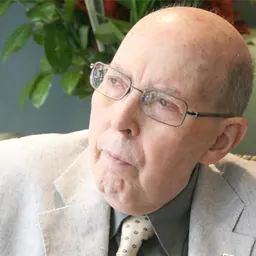

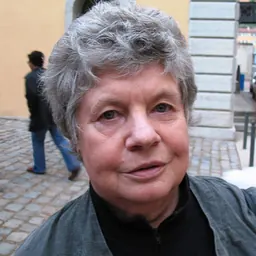
Contemporaries
People whose lives overlapped Peter Abrahams's




Frequently asked questions
Who was Peter Abrahams?
South African novelist, journalist and political commentator (1919–2017)
When was Peter Abrahams born?
Peter Abrahams was born on 19 March 1919 in Vrededorp.
When did Peter Abrahams die?
Peter Abrahams died on 18 January 2017 in Saint Andrew Parish.
What was Peter Abrahams's occupation?
Peter Abrahams was a writer, journalist, editor-in-chief, poet, opinion journalist and editing staff.
What nationality was Peter Abrahams?
Peter Abrahams was South African.
Sources & further reading
Cite this page
APA: Biography.guide. (2026). Peter Abrahams. https://biography.guide/peter-abrahams/
MLA: "Peter Abrahams." Biography.guide, https://biography.guide/peter-abrahams/.
Chicago: "Peter Abrahams." Biography.guide. https://biography.guide/peter-abrahams/.
Data last updated: 2026-09-20 · Spot an error? Report a correction.
Page generated 2026-09-27 05:10 UTC