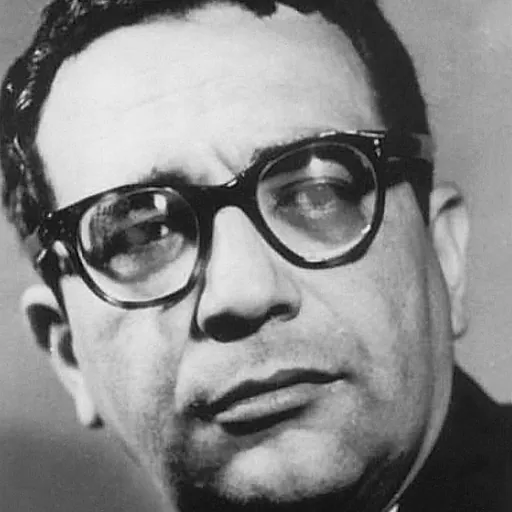
About Gara Garayev
Lived 1918 – 1982 (aged 64). Gara Garayev was a Russian composer, pianist, film score composer, music educator, university teacher and politician.
Gara Abulfaz oghlu Garayev (February 5, 1918 – May 13, 1982) was a prominent Soviet Azerbaijani composer. Garayev wrote nearly 110 musical pieces, including ballets, operas, symphonic and chamber pieces, solos for piano, cantatas, songs, and marches, and rose to prominence not only in the Azerbaijan SSR, but also in the rest of the Soviet Union and worldwide.
Early life Garayev was born into a family of pediatricians, which was famous in Baku. His mother, Sona, was among the first graduates of the Baku-based school of the Russian Music Society. Garayev's younger brother, Mursal, became a surgeon and Doctor of Medicine.
In 1926, at the age of eight, Gara Garayev first entered the junior music school at the Azerbaijan State Conservatoire, currently known as the Baku Music Academy. Due to his musical talents, Garayev was allowed to enroll simultaneously in two faculties at the Azerbaijan State Conservatoire in 1933. Among his teachers were , , and Uzeyir Hajibeyov. In 1937, Garayev joined the Union of Composers of Azerbaijan SSR.
Career In 1938, at the age of twenty, Garayev composed his first musical piece, a cantata "The Song of the Heart" to the poem by Rasul Rza. It was performed in Moscow's Bolshoi Theater in the presence of Joseph Stalin in the same year. Garayev conducted his cantata during the Decade of Azerbaijani Art festival in the Bolshoi Theater, an event also attended by Stalin. In the same year, Garayev moved to the Moscow State Conservatoire, where he became a student and a good friend of Dmitri Shostakovich.
In 1941 Garayev returned to Baku to teach at Azerbaijan State Philharmonic Society. In 1945, both he and Jovdat Hajiyev wrote the Motherland ("Vətən") opera, for which they were awarded a prestigious Stalin Prize. In 1948, at the age of 30, Garayev was again awarded this prize for his symphonic poem Leyli and Majnun, based on the same-titled famous work of Nizami Ganjavi. Upon the death of Uzeyir Hajibeyov in 1948, Garayev became the Chair of the Union of Composers of Azerbaijan SSR and the rector of the Azerbaijan State Conservatoire. In this latter position, Garayev retained Uzeyir Hajibeyov's traditional emphasis on Azerbaijani folk music in teaching, and also promoted contemporary genres, such as jazz in Azerbaijani music. In 1948 Garayev also became the delegate to the First National USSR Congress of Soviet Composers. In the same year Garayev also headed the Music Department at the Azerbaijan Architecture and Art Institute.
In 1952, under the direction of the choreographer P. A. Gusev, Garayev's Seven Beauties ballet was staged at the Azerbaijani Theater of Opera and Ballet. Based on Nizami Ganjavi's famous poem, Seven Beauties ("Yeddi gözəl") opened a new chapter in the history of classical music of Azerbaijan. The ballet’s confections contained influence from Soviet-Armenian composer Aram Khachaturian. Garayev's only other ballet, Path of Thunder ("İldırımlı yollarla"), staged in 1958, was dedicated to racial conflicts in South Africa. In the same year, Garayev also wrote the score for the documentary film A Story About the Oil Workers of the Caspian Sea, directed by Roman Karmen and set at the Oil Rocks.
During his teaching career at the Azerbaijan State Conservatoire, Garayev tutored a number of prominent Azerbaijani musicians and composers, including Galib Mammadov, Arif Malikov, Khayyam Mirzazade and among others. Garayev's son, Faraj (born 1943), also became his student and went on to compose single-act ballets such as Shadows of Qobustan ("Qobustanın kölgələri") and Kaleidoscope, and later led the musical avant-garde movement in Azerbaijan.
During the Cold War in June 1961, Garayev and Tikhon Khrennikov were the only two Soviet composers who attended the first International Los Angeles Music Festival held at UCLA. The festival programmed works by fifteen composers from around the world, including Arnold Schoenberg and Igor Stravinsky. On June 11, Franz Waxman conducted the Festival Symphony Orchestra with a suite from Garayev's Path of Thunder.
In 1962 Garayev became a member of the Supreme Soviet of the USSR and visited the United States, Ethiopia, and Lebanon. In 1972 he visited Poland.
Later life
Garayev suffered from heart disease, which prevented him from attending his own 60th jubilee celebration held in Baku, where he was awarded the title of the Hero of Socialist Labor. Garayev spent the last five years of his life in Moscow, away from the public, although his love for Baku remained strong and was reflected in his writing:
Garayev died on May 13, 1982, in Moscow at the age of 64. His body was flown to Baku and buried at the Alley of Honor.
Appraisals
Dmitri Shostakovich, Russian composer and Garayev's mentor:
Niyazi, Azerbaijani conductor and composer:
Tahir Salahov, Azerbaijani painter:
Tikhon Khrennikov, Russian composer:
Rodion Shchedrin, Russian composer:
Fikret Amirov, Azerbaijani composer:
Khayyam Mirzazade, Azerbaijani composer and Garayev's student:
, Azerbaijani writer:
Arif Malikov, Azerbaijani composer and Garayev's student:
Tribute to his memory The International Festival of Contemporary Music has been held since 1986 with the support of the Ministry of Culture of Azerbaijan. In memory of Gara Garayev: metro station in Baku an avenue in Baku a street in Imishli (city) Children's Music School No.75 in Moscow a ship A memorial plaque installed on the wall of Gara Garayev's house in Baku. In The 30th of February, the monument to Gara Garayev opened by President Ilham Aliyev in 28 May Street of Baku. A memorial board installed at Gara Garayev's house in Moscow. Where he lived between 1973 and 1982.
Major works
1942 – Film score for A Story About the Oil Workers of the Caspian Sea 1943 – Symphony No. 1 1943 – Opera Motherland, with Jovdat Hajiyev, premiered in Baku in 1945 1947 – Symphonic poem Leyli and Majnun. Edited Muslim Magomayev's opera Shah Ismayil 1948 – Seven Beauties, ballet 1949 – Seven Beauties, a suite for symphonic orchestra 1950 – Six children's pieces for piano 1952 – Albanian Rhapsody, children's pieces for piano 1957 – Path of Thunder ballet 1958 – Film score for Her Great Heart, three nocturnes for jazz orchestra 1960 – Don Quixote, symphonic sketches 1960 – Sonata for violin and piano 1951-63 – 24 Preludes for piano 1964 – Symphony No. 3 1967 – Violin Concerto
Honours and awards Hero of Socialist Labour (1978) Two Orders of Lenin (1967, 1978) Order of the October Revolution (1971) Order of the Red Banner of Labour (1961) Stalin Prize, twice (1946, 1948) Lenin Prize (1967) Azerbaijan SSR State Prize (1965) Honoured Artist of the Azerbaijani SSR (1955) People's Artiste of the Azerbaijan SSR (1958) People's Artist of the USSR (1959)
Don’t just read it —
keep it.
Full-length biographies made to live with: read them, listen on the way to work, watch them tonight.
- E-book
- Audio
- Video
Instant download · yours to keep · every purchase keeps this site free
Important facts
People in Gara Garayev's life
Named in this biography and alive at the same time

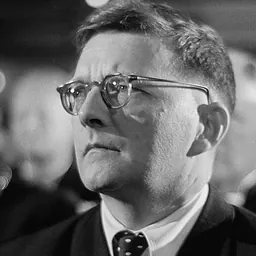
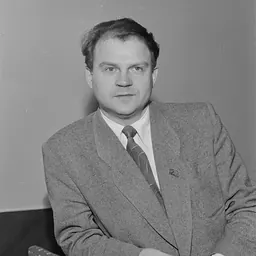
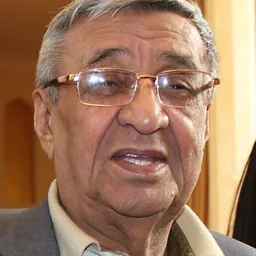



Related people
Same field, nearest in time



Contemporaries
People whose lives overlapped Gara Garayev's


Frequently asked questions
Who was Gara Garayev?
Azerbaijani composer (1918–1982)
When was Gara Garayev born?
Gara Garayev was born on 5 February 1918 in Baku.
When did Gara Garayev die?
Gara Garayev died on 13 May 1982 in Moscow.
What was Gara Garayev's occupation?
Gara Garayev was a composer, pianist, film score composer, music educator, university teacher and politician.
What nationality was Gara Garayev?
Gara Garayev was Russian.
Sources & further reading
Cite this page
APA: Biography.guide. (2026). Gara Garayev. https://biography.guide/gara-garayev/
MLA: "Gara Garayev." Biography.guide, https://biography.guide/gara-garayev/.
Chicago: "Gara Garayev." Biography.guide. https://biography.guide/gara-garayev/.
Data last updated: 2026-09-20 · Spot an error? Report a correction.
Page generated 2026-09-27 05:09 UTC