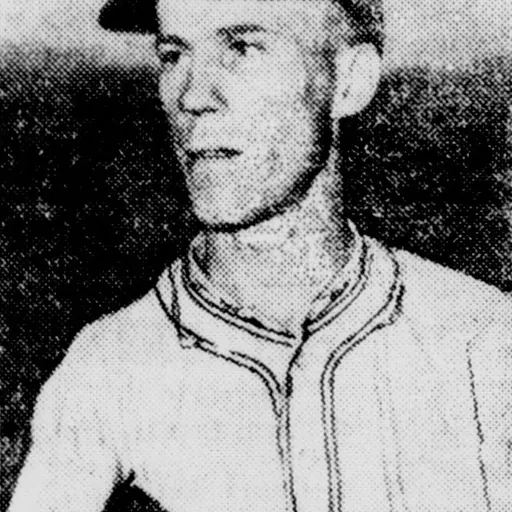
About Pete Gray
Lived 1915 – 2002 (aged 87). Pete Gray was an American baseball player.
Peter James Gray (né Wyshner; March 6, 1915 – June 30, 2002) was an American professional baseball outfielder who played for the St. Louis Browns of Major League Baseball for one season in 1945. He was notable for playing despite having lost his right arm in a childhood accident.
Biography
Early life
Peter Gray (sometimes spelled as Peter Grey) was born as Peter J. Wyshner in the mining town of Nanticoke, Pennsylvania, on March 6, 1915. He was one of five children born to Lithuanian immigrants Antoinette and Peter Wyshner. His father worked in the coal mines of northeastern Pennsylvania to support his family.
His older brother became a boxer in the middleweight division and went under the name Whitey Gray (boxed 1921–1928). During his time as a boxer, Whitey Gray won six matches by KO, lost five (three of which were KO's), had three newspaper decision wins, and two newspaper decision draws. In total, Whitey had 16 bouts with a 37.5% KO rate and boxed a total of 45 rounds.
Wyshner was right-handed, but lost his right arm at age seven or eight, as a result of a wagon accident in 1923. His arm had to be amputated above the elbow. But Wyshner was so enthusiastic about baseball that he learned to bat and field one-handed, catching the ball in his glove and then quickly removing his glove and transferring the ball to his hand in one motion.
Seven years after his accident, Wyshner completed his formal education at age 13 and began working as a water boy at the Truesdale Colliery.
Minor league career
Gray's speed and placehitting ability made him a successful minor league outfielder. He attained a batting average of .333 and a stolen-base record of 63; as a result, he was named the 1944 Southern Association's Most Valuable Player.
During his career, Gray played for teams including the Trois-Rivières Renards of the Canadian–American League, the Memphis Chicks of the Southern Association and the Brooklyn Bushwicks.
In 1942, Gray signed with the minor league team called the Three Rivers Club of the Canadian–American League. At his first game, the crowd poured out to see him. Gray's chance to shine came in the bottom of the ninth with bases loaded and two outs. As he approached the plate, the crowd went crazy. Gray hit a line drive to right field which drove in the tying and winning runs. The fans were so happy and excited that they threw money onto the field, roughly $700 total. While with the team that season, Gray hit .381. After breaking his collarbone and tearing a ligament, he was only able to play in 42 games.
Gray's success and ability to draw a crowd helped attract the notice of the Memphis Chicks, another minor league team, and they signed him. While Gray was climbing the ladder of the minors, sportswriters nicknamed him the "One-Armed Wonder." Gray had about six successful seasons in the minors before joining the majors for one season. He returned to the minors for about another four seasons as a journeyman. In 1944, while still with the Chicks, he batted .333 and had a league leading 68 stolen bases. That same year, he was awarded the Most Valuable Player of the Southern Association and that year the Philadelphia Sports Writers recognized Pete Gray as the "Most Courageous Athlete." Gray quickly responded with, "Boys, I can't fight, and so there is no courage about me. Courage belongs on the battlefield, not on the baseball diamond."
Major league career
The St. Louis Browns of the American League purchased his contract in 1945 from the Chicks for $20,000 (equivalent to $ in ), and Gray signed for $4,000 (equivalent to $ in ). Wearing uniform number 14, Gray played left and center field for the Browns. He appeared in 77 games, batting .218 with a .958 fielding percentage in center field. He played competently in the outfield, transferring the ball from glove to hand with remarkable speed.
He collected his first major league hit (a single) against the Detroit Tigers on April 17, 1945. On May 20, he fulfilled his lifelong dream and played a double header in Yankee Stadium, collecting five hits and two RBI as the Browns swept the Yankees. The first game ended 10–1 and the second ended 5–1. Gray also proved himself an accomplished bunter. In order to bunt, he planted the knob of the bat against his side, and then slid his hand about one-third of the way up the shaft of the bat.
As the season progressed, it became apparent that Gray could not hit breaking pitches. Once he started his swing, he could not change his timing because he had no second hand to check the swing. Pitchers discovered that fact and threw curve balls. His last big league appearance was on September 30, 1945.
Gray said in 1945, "I've been turned down by more big-league managers than any other man in history. I've spent more money trying to get into baseball than I've earned on the game." The players also felt, and knew, he was really only there for ticket sales and to boost fan attendance. The previous year they had won the pennant but only had about 508,644 fans attend Sportsman's Park all season. Infielder Don Gutteridge later said in 1994, "Some of the guys thought Pete was being used to draw fans late in the season when the club was still in the pennant race and he wasn't hitting well." That season they finished third and the next season without Gray they fell to seventh. That year with Gray was the Browns' last winning season before moving to Baltimore in 1954.
Gray's on-field exploits set an inspirational example for disabled servicemen returning from World War II, as was portrayed in newsreels of the period. He visited army hospitals and rehabilitation centers, speaking with amputees and reassuring them that they too could lead productive lives.
Major League stats:
Techniques used Gray (far right) demonstrates his technique for catching a baseball with one arm for United States armed forces amputees at Walter Reed Army Medical Center in Washington, D.C. While playing the field, Pete Gray wore a glove without padding. When the ball was hit in his direction he would place the glove directly in front of himself; roughly about shoulder height. When the ball hit the glove he would roll the ball across his chest from left to right. During this motion he learned to rest the glove under his right stump and the ball would roll into his left hand.
When ground balls were hit his way he would let it bounce off his glove at knee height and drop the glove completely to grab the ball while it was still in the air. He was faster in these motions and techniques than some players who had the use of both hands. When backing up another outfielder during a play, he would drop the glove completely and was ready to take the ball with his bare hand.
While at bat he used a full weight bat. His position and stance at the plate was just like any other player. He placed his hand about six inches up on the handle. In order to bunt, he planted the knob of the bat against his side, and then slid his hand about one-third of the way up the shaft of the bat. He was described by sports writers and players as a pure pull hitter.
Later years and death Gray's major league career ended that same year when many of baseball's stars returned from the battlefront and assumed their previous positions on the diamond. From 1946 to 1949, he played on as a journeyman minor leaguer with the Toledo Mud Hens, Elmira Pioneers and Dallas Stars. Gray returned home to Nanticoke where, although a local hero/celebrity, he struggled with gambling and alcohol, and lived in near poverty. Having only accomplished one year in the majors, he spent the rest of his life wondering if he was ever really good enough to have been there or if he was just an entertainment attraction for the owners to make money. This personal struggle was one of the possible reasons for his struggle with gambling and alcohol after he left baseball. Before his death, however, he regained a sense of integrity about his accomplishments with the success of both the TV movie and the biography about his life.
The 1986 television-movie A Winner Never Quits, starring Keith Carradine and Mare Winningham, and the publication of Gray's biography, One-Armed Wonder: Pete Gray, Wartime Baseball, and the American Dream written by William C. Kashatus, published in 1995 by McFarland & Company, renewed public interest in Gray.
Gray shunned public attention for most of his life after baseball. He died on June 30, 2002, at the age of 87 and is buried at St. Mary's Cemetery in Hanover Township, Pennsylvania. On Sunday, August 24, 2003, Gray was recognized by the Historical and Museum Commission in Pennsylvania when they placed a roadside marker in his hometown. The location of the marker is Front St., Hanover section, Nanticoke, Luzerne County in the Poconos/Endless Mountains Region.
Don’t just read it —
keep it.
Full-length biographies made to live with: read them, listen on the way to work, watch them tonight.
- E-book
- Audio
- Video
Instant download · yours to keep · every purchase keeps this site free
Important facts
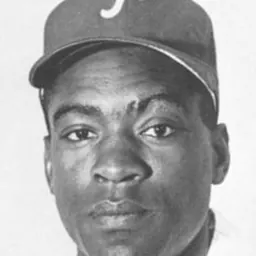
People in Pete Gray's life
Named in this biography and alive at the same time




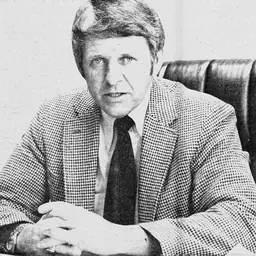
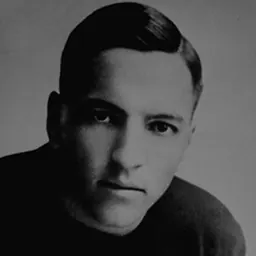
Related people
Same field, nearest in time

Contemporaries
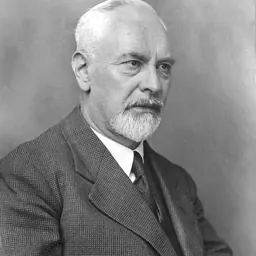
People whose lives overlapped Pete Gray's




Frequently asked questions
Who was Pete Gray?
American baseball player (1915–2002)
When was Pete Gray born?
Pete Gray was born on 6 March 1915 in Nanticoke.
When did Pete Gray die?
Pete Gray died on 30 June 2002 in Nanticoke.
What was Pete Gray's occupation?
Pete Gray was a baseball player.
What nationality was Pete Gray?
Pete Gray was American.
Sources & further reading
Cite this page
APA: Biography.guide. (2026). Pete Gray. https://biography.guide/pete-gray-baseball-player/
MLA: "Pete Gray." Biography.guide, https://biography.guide/pete-gray-baseball-player/.
Chicago: "Pete Gray." Biography.guide. https://biography.guide/pete-gray-baseball-player/.
Data last updated: 2026-09-22 · Spot an error? Report a correction.
Portrait: Wikimedia Commons · author & licence
Page generated 2026-09-27 05:03 UTC