
About Pericle Papahagi
Lived 1872 – 1943 (aged 70). Pericle Papahagi was a Romanian philologist, literary historian, ethnologist and linguist.
Pericle Papahagi (1872 – January 20, 1943) was an Aromanian literary historian and folklorist.
He was born into an Aromanian family in Avdella , a village that formed part of the Ottoman Empire's Manastir Vilayet and is now in Greece. After attending school in his native village and in Bucharest in Romania, he graduated from the literature faculty of the University of Bucharest. He then went to Leipzig University, where he studied under Gustav Weigand and earned a doctorate in philosophy. Papahagi taught high school in Ottoman Thessaloniki and Bitola, in Bulgarian Silistra, and in Giurgiu, Romania. His first published work, which appeared in Analele Academiei Române in 1893, was a collection of children's folklore, Jocuri copilărești. Culese de la românii din Macedonia. His contributions also appeared in Analele Dobrogei, Arhiva, Convorbiri Literare, Frățil’ia, Grai bun, Grai și suflet, Jahresbericht des Instituts für rumänische Sprache zu Leipzig, Peninsula Balcanică, Revue historique de sud-est européen, Viața nouă, and Viața Românească. He headed Dunărea magazine, which appeared in two volumes in 1923. In the 1919 1919 Romanian general election, he was elected to the Senate of Romania, representing the Durostor County.
An acknowledged authority on the life and languages of the Romance-speaking peoples from south of the Danube, the Aromanians and Megleno-Romanians, he wrote several foundational texts on the subject that are classic models of sociological and folkloristic monographs. These include: Din literatura poporană a aromânilor, 1900; Românii din Meglenia. Texte și glosar, 1900; Meglenoromânii. Studiu etnografic, vol. I-II, 1902; Basme aromâne și glosar, 1905; Scriitori aromâni în secolul al XVIII-[lea], 1909; and Poezia înstrăinării la aromâni, 1912. Together, by taking a combined approach to linguistics and folklore, they prefigure the methodology of Ovid Densusianu's philological school. He died in Bucharest and was buried in Silistra.
Don’t just read it —
keep it.
Full-length biographies made to live with: read them, listen on the way to work, watch them tonight.
- E-book
- Audio
- Video
Instant download · yours to keep · every purchase keeps this site free
Important facts
People in Pericle Papahagi's life
Named in this biography and alive at the same time


Related people
Same field, nearest in time
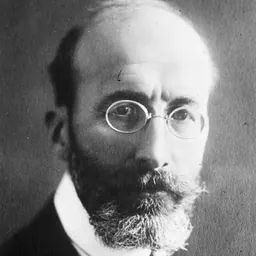
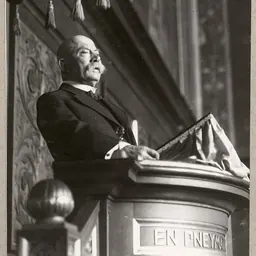


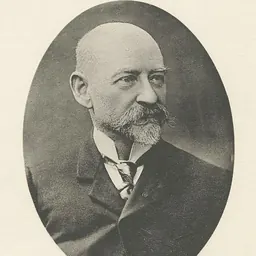

Contemporaries
People whose lives overlapped Pericle Papahagi's
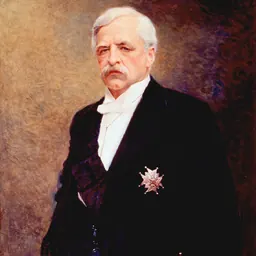

Frequently asked questions
Who was Pericle Papahagi?
Aromanian philologist (1872–1943)
When was Pericle Papahagi born?
Pericle Papahagi was born on 20 October 1872 in Avdella.
When did Pericle Papahagi die?
Pericle Papahagi died on 20 January 1943 in Bucharest.
What was Pericle Papahagi's occupation?
Pericle Papahagi was a philologist, literary historian, ethnologist and linguist.
What nationality was Pericle Papahagi?
Pericle Papahagi was Romanian.
Sources & further reading
Cite this page
APA: Biography.guide. (2026). Pericle Papahagi. https://biography.guide/pericle-papahagi/
MLA: "Pericle Papahagi." Biography.guide, https://biography.guide/pericle-papahagi/.
Chicago: "Pericle Papahagi." Biography.guide. https://biography.guide/pericle-papahagi/.
Data last updated: 2026-09-20 · Spot an error? Report a correction.
Page generated 2026-09-27 05:12 UTC