
About Percy Anderson
Lived 1851 – 1928 (aged 76–77). Percy Anderson was a painter and theatre designer.
Percy Anderson (22 March 185130 October 1928) was an English stage designer and painter, best known for his work for the D'Oyly Carte Opera Company, Sir Herbert Beerbohm Tree's company at His Majesty's Theatre and Edwardian musical comedies.
Life and career
Anderson was born on 22 March 1851 at Willesden, North West London. His first significant production was the comic opera Lady of the Locket, composed by William Fullerton Jr. with a libretto by Henry Hamilton. Beginning with The Yeomen of the Guard (1888), Anderson designed the costumes for all the original productions of the Savoy Operas. He continued to design costumes for D'Oyly Carte revivals in the early twentieth century, including for Trial by Jury, H.M.S. Pinafore, The Pirates of Penzance, Patience, Iolanthe, Princess Ida, Ruddigore, The Yeomen of the Guard, and The Gondoliers. For Herbert Beerbohm Tree at His Majesty's Theatre, Anderson designed Twelfth Night, The Merry Wives of Windsor, Richard II, King John, A Midsummer Night's Dream, The Tempest, and two plays by Stephen Phillips, Herod and Ulysses. He designed the costumes for Henry James's ill-fated theatrical effort, Guy Domville; The Times was not impressed by either the play or the costumes.
Among Anderson's other successes were Trelawny of the "Wells" (1898), Merrie England (1902), Véronique (1904), the hit British premiere of The Merry Widow in 1907, Fallen Fairies (1909), Kismet (1911) and Chu Chin Chow (1916). He designed the costumes for various productions of Edwardian musical comedies for George Edwardes, such as the hit musicals The Geisha (1896), A Greek Slave (1898) and San Toy (1899), and The Duchess of Dantzic (1903). The Royal Opera House commissioned Anderson to design costumes in 1900. Anderson's designs were also used in a number of Broadway productions.
Anderson had private means, and for a time roomed with Morton Fullerton. He was part of a circle of rich, artistic homosexual men, who included Lord Ronald Gower, the courtier Alec Yorke and Hamilton Aïdé. In the 1910s, Anderson was closely associated with the young novelist Hugh Walpole.
The Times, in its obituary notice, said that Anderson "escaped from the pedantry of his predecessors and paved the way in the most interesting manner" for a new generation of designers such as Bakst, Claud Lovat Fraser and Edward Gordon Craig. He illustrated the 1907 book, Costume: Fanciful, Historical and Theatrical.
Anderson died in King's College Hospital, London, in 1928, aged 77.
Don’t just read it —
keep it.
Full-length biographies made to live with: read them, listen on the way to work, watch them tonight.
- E-book
- Audio
- Video
Instant download · yours to keep · every purchase keeps this site free
Important facts
People in Percy Anderson's life
Named in this biography and alive at the same time



Related people
Same field, nearest in time
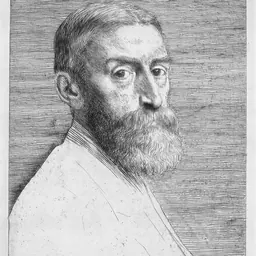
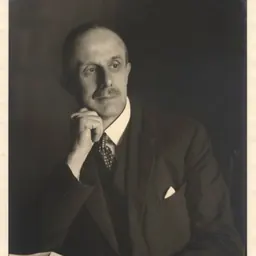
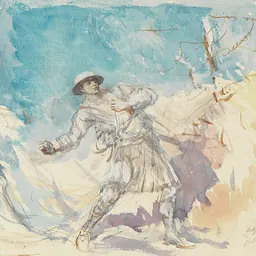
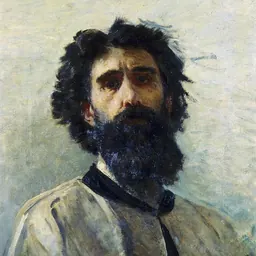

Contemporaries
People whose lives overlapped Percy Anderson's



Frequently asked questions
Who was Percy Anderson?
English artist (1851-1928)
When was Percy Anderson born?
Percy Anderson was born in 1851.
When did Percy Anderson die?
Percy Anderson died on 30 October 1928.
What was Percy Anderson's occupation?
Percy Anderson was a painter and theatre designer.
Sources & further reading
· DBpedia: Percy Anderson (designer)
Cite this page
APA: Biography.guide. (2026). Percy Anderson. https://biography.guide/percy-anderson/
MLA: "Percy Anderson." Biography.guide, https://biography.guide/percy-anderson/.
Chicago: "Percy Anderson." Biography.guide. https://biography.guide/percy-anderson/.
Data last updated: 2026-09-20 · Spot an error? Report a correction.
Page generated 2026-09-27 05:27 UTC