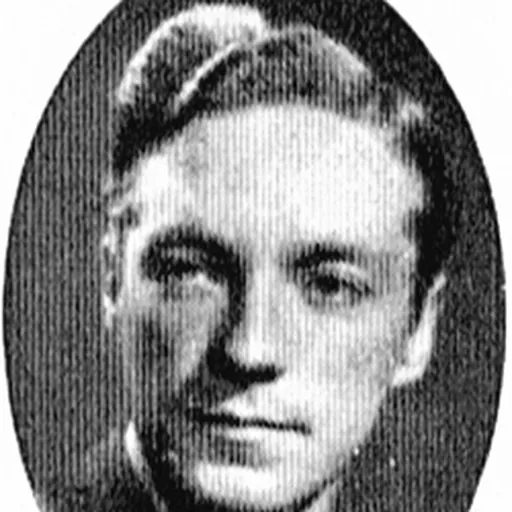
About Per Anger
Lived 1913 – 2002 (aged 88). Per Anger was a Swedish diplomat and lawyer, known for World War II.
Per Johan Valentin Anger (7 December 1913 – 25 August 2002) was a Swedish diplomat who played a significant role in humanitarian efforts during World War II and had a long career in international diplomacy. Born in Gothenburg, Sweden, he studied law at Uppsala University before beginning his diplomatic career at the Swedish legation in Berlin in 1940. While stationed in Budapest during the German occupation of Hungary, Anger helped organize the issuance of Swedish provisional passports and protective documents to Hungarian Jews, measures that contributed to the rescue efforts later expanded by Raoul Wallenberg.
Following the war, Anger held various diplomatic positions, including postings in Cairo, Addis Ababa, Vienna, Paris, San Francisco, Canberra, and Ottawa, as well as leadership roles within the Swedish Ministry for Foreign Affairs. Throughout his career, he was involved in international aid and humanitarian initiatives and dedicated substantial effort to uncovering the fate of Raoul Wallenberg, meeting with Soviet officials in pursuit of information.
Anger received multiple honors for his work, both in Sweden and internationally. He was recognized as Righteous Among the Nations by Yad Vashem, received the Wallenberg Medal from the University of Michigan, was granted honorary Israeli citizenship, and was awarded Sweden's Illis quorum. His career reflects both his diplomatic service and his commitment to humanitarian principles during and after the war.
Early life Anger was born on 7 December 1913 in Gothenburg, Sweden, the son of the Director of Public Works (1886–1963) and his wife Elsa Berglund (1885–1974), and nephew of the actuary . Anger completed his reserve officer examination in 1936 and received a Candidate of Law degree from Uppsala University in 1939.
After Germany invaded Hungary on 19 March 1944, Anger became involved in efforts to aid Hungarian Jews. Anger originated the idea of issuing Swedish provisional passports and special certificates to protect Jews from internment and deportation. Seven hundred of these documents were issued initially. Although the legality of the documents was doubtful, the Hungarian government agreed to recognize their bearers as Swedish citizens. On 9 July, Raoul Wallenberg arrived in Budapest. He immediately extended Anger's initiative, introducing colorful protective passes (Schutzpasse) and creating "safe houses" throughout the city. Anger and Wallenberg worked together, often literally snatching people from transports and death marches. After the Soviets invaded in January 1945, both Anger and Wallenberg were taken into custody. Anger was released three months later, but Wallenberg never emerged again, becoming one of the 20th century's most famous missing persons.
After the war, Anger served as acting second secretary at the Ministry for Foreign Affairs in 1945, second legation secretary in Cairo in 1946, and chargé d'affaires ad interim in Addis Ababa in 1946. He returned as second legation secretary in Cairo in 1948 and also served as second secretary at the Ministry for Foreign Affairs the same year, before becoming first secretary there in 1949. He was first legation secretary in Paris in 1953, in Vienna in 1955, and legation counsellor there in 1957. He then served as Head of Department at the Ministry for Foreign Affairs in 1957 and was appointed consul general in San Francisco in 1961. He chaired the board of the Swedish Raoul Wallenberg Association from 1979 and served as its president from 1988 to 1995. after suffering a stroke. The funeral service took place on 27 September 2002 in Saint James's Church in Stockholm. He was interred on 7 October 2002 at Norra begravningsplatsen in Stockholm.
Awards and honours Plaque on the site of the former Swedish embassy in Budapest, in honour of Ivan Danielsson, Raoul Wallenberg and Per Anger.
Awards
Swedish
Foreign
Honors
He was a member of the .
In 1995, Anger was awarded the Wallenberg Medal by the University of Michigan in recognition of his extraordinary courage and humanitarian commitment.
In 2000, he was awarded honorary Israeli citizenship.
In April 2002, Swedish Prime Minister Göran Persson awarded Anger the Illis quorum Meruere Labores (For Those Whose Labors Have Deserved It) for his actions during and after the war. This is the highest award that can be conferred upon an individual Swedish citizen by the Government of Sweden.
Per Anger Prize The Per Anger Prize was instituted by the Swedish Government to honor the memory of ambassador Per Anger and is awarded for humanitarian work and initiatives in the name of democracy. The prize is awarded to individuals or groups who have distinguished themselves either in the past or in more recent times. The prize is administered and awarded by the Living History Forum.
Prize winners Name Year Awarded Reason Gennaro Verolino 2004 Saved over 30,000 Jews from the Holocaust Arsen Sakalov 2005 The teacher who became a human rights activist in the Russian autonomous republic Ingushia Ales Bialiatski 2006 The human rights fighter acting against the Belarusian regime Yolanda Becerra 2007 Chairperson for the women's rights organisation Organización Femenina Popular Sebastian Bakare 2008 Fighting the rights of the vulnerable in Zimbabwe Brahim Dahane 2009 Founder of the human rights organisation ASVDH working in Western Sahara Elena Urlaeva 2010 Fighting for the freedom of expression and the freedom of assembly in Uzbekistan Narges Mohammadi 2011 Working for human rights in Iran Sapiyat Magomedova 2012 Defending human rights in Dagestan Justine Ijeomah 2013 Fighting against violation of human rights in Nigeria Rita Mahato 2014 Fighting against sexual violence aimed towards women and girls in Nepal Islena Rey Rodríguez 2015 Fighting against violence and human rights violations in Colombia Abdullah al-Khateeb 2016 Fighting for human rights in Syria Gégé Katana Bukuru 2017 Fighting for women's rights in the Democratic Republic of Congo Teodora del Carmen Vásquez 2018 Fighting for women's rights in El Salvador Najwa Alimi 2019 Fighting for freedom of speech and women's rights in Afghanistan Intisar Al-Amyal 2020 Fighting for women's rights in Iraq S'bu Zikode 2021 Working for the rights of poor people in South Africa Anabela Lemos 2022 Fighting for climate justice in Mozambique Malú García Andrade 2023 Demanding justice for disappeared and murdered girls and women in Mexico Chhim Sithar 2024 Tireless and dedicated work to promote democracy and respect for human rights in Cambodia Ana Ruth García 2025 Advocate for women and girls in Honduras Brito Fernando 2026 Seeking truth and justice for people who have disappeared involuntarily in Sri Lanka
Don’t just read it —
keep it.
Full-length biographies made to live with: read them, listen on the way to work, watch them tonight.
- E-book
- Audio
- Video
Instant download · yours to keep · every purchase keeps this site free
Important facts
People in Per Anger's life
Named in this biography and alive at the same time



Related people
Same field, nearest in time

Contemporaries
People whose lives overlapped Per Anger's




Frequently asked questions
Who was Per Anger?
Righteous Among the Nations (1913–2002)
When was Per Anger born?
Per Anger was born on 7 December 1913 in Gothenburg.
When did Per Anger die?
Per Anger died on 1 November 2002 in Stockholm.
What was Per Anger's occupation?
Per Anger was a diplomat and lawyer.
What was Per Anger known for?
Per Anger was known for World War II.
What nationality was Per Anger?
Per Anger was Swedish.
Sources & further reading
Cite this page
APA: Biography.guide. (2026). Per Anger. https://biography.guide/per-anger/
MLA: "Per Anger." Biography.guide, https://biography.guide/per-anger/.
Chicago: "Per Anger." Biography.guide. https://biography.guide/per-anger/.
Data last updated: 2026-09-22 · Spot an error? Report a correction.
Portrait: Wikimedia Commons · author & licence
Page generated 2026-09-27 04:59 UTC