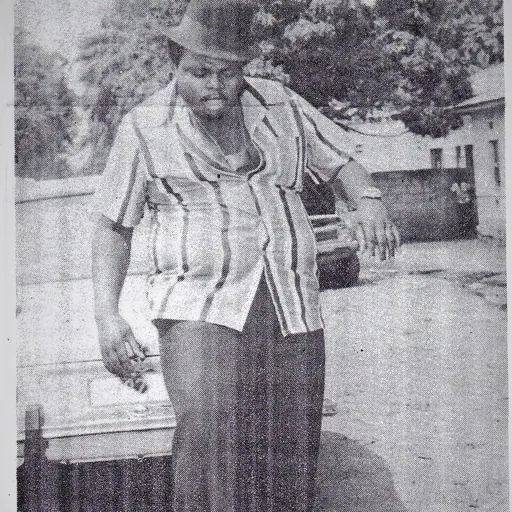
About Pépé Kallé
Lived 1955 – 1998 (aged 43). Pépé Kallé was a Congolese singer.
Jean-Baptiste Kabasele Yampanya wa ba Mulanga (30 November 1951 – 29 November 1998), known professionally as Pépé Kallé, was a Congolese singer-songwriter, bandleader, and performer. Noted for his robust, throaty baritone voice, and "the elephant of African music". Before entering the music industry professionally, he composed songs that he sold to various bands to finance his education while also participating in the group African Choc, alongside Papy Tex. His early recordings also brought him into contact with influential veterans such as Le Grand Kallé, whose work played an important role in shaping Congolese rumba and influenced Pépé Kallé's musical direction.
Pépé Kallé's first breakthrough came in the late 1960s, when he joined Orchestre Bamboula under guitarist Papa Noël Nedule. He later performed with several groups in the early 1970s, including Orchestre Myosotis, Bella Bella, and Orchestre Vévé, where he provided lead vocals to Verckys Kiamuangana Mateta's socially conscious hit "Nakomitunaka". The band's popularity in Zaire rose sharply after the release of the hits "Dadou" in 1978 and "Zabolo" in 1982. Music critic Martin Enyimo noted that the contrast between Pépé Kallé's stature and the energetic performances of Empire Bakuba's dwarf dancers made the group especially visually distinctive on stage.
Early life and career 1951–1971: Childhood, education, and music debut Jean-Baptiste Kabasele Yampanya wa ba Mulanga was born in Léopoldville (present-day Kinshasa) in the Belgian Congo (now the Democratic Republic of the Congo) on 30 November 1951, to "Papa" Angbando and "Maman" Mbula. He was the eldest of 15 children, eight of whom were boys. The city became the capital of the First Congolese Republic after independence on 30 June 1960 and was where Congolese rumba emerged.
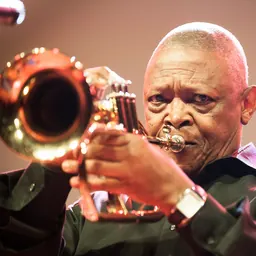
Kabasele Yampanya showed his vocal abilities from an early age. His parents, however, were hesitant about his passion for music, as his father hoped he would join the military, while his mother preferred that he pursue a career in public administration. He began singing in his church choir and completed his primary education at Saint Charles Catholic School and Saint Paul School in Barumbu. He later attended Institut Saint Raphaël de Limete and Institut Technique et Social de Ngiri-Ngiri for secondary studies. Kabasele Yampanya wrote songs and sold them to local bands to finance his schooling. He later gave up his studies in order to pursue music professionally. There, he worked alongside Madilu System and Bozi Boziana. That same year, Orchestre Bamboula represented Congo-Kinshasa at the Pan-African Festival of Algiers, where they shared the stage with Miriam Makeba, Stokely Carmichael, and Hugh Masekela. The event also included collaborative jam sessions among the invited performers.
1972–1985: Empire Bakuba's formation, early success, and releases In late 1972, Pépé Kallé and Papy Tex participated in the recording of "Nazoki" and "Libaku Mabe" (Lingala for "bad luck"), which were released as singles by the group Les Bakuba, founded by Seskain Molenga after leaving Afrisa International. Molenga chose the name "Bakuba" as a tribute to the Kuba Kingdom after developing an interest in Zaire's pre-colonial history, In 1978, he released "Dadou", which later appeared in multiple versions during the 1980s and 1990s. The song explored domestic struggles caused by an absent father and reminisced about the hardships and instability of urban life. In 1982, after joining the Trio Madjesi's Editions Sosoliso and shortly before celebrating their tenth anniversary, Empire Bakuba had established their prominence on the Zairean music scene. "Verre Cassé" and "Maya" became hits throughout Africa and were recognized as classics of Congolese rumba. The music critic Simba Ndaye remarked that Simaro excelled in "melancholic poetry" in "Verre Cassé", enhanced by Carlyto's "intentionally cracked voice" and Pépé Kallé's "thunderous baritone timbre". In the song, Pépé Kallé referenced the social hardships faced by ordinary people in Kinshasa. Later in 1985, the KaDiMa trio also issued the collaborative four-track album Chérie Ondi with Empire Bakuba. This visual and theatrical style was especially accentuated in Bombe Atomique, which also earned Pépé Kallé the nickname "La Bombe Atomique" among fans and in the media. The music critic Gary Stewart remarked that the song "rollicked at the pace of Paris soukous and Caribbean zouk", while noting that Pépé Kallé's embrace of the fast-paced Paris soukous sound eventually helped the album gain acceptance in Zaire, where reactions had initially been lukewarm. quickly gained popularity throughout Africa. Many Congolese bands adopted the style, including Empire Bakuba, which released the four-track album Kwasa Kwasa in 1987.
In 1987, the film La Vie est Belle, directed by Mweze Ngangura and Benoît Lamy and starring Papa Wemba, premiered in cinemas. Pépé Kallé made his first major international film appearance in the production. The movie was later screened at the Taormina International Film Festival and received an award at the Ghent International Film Festival. In 1988, Pépé Kallé contributed to the soundtrack of the film Black Mic Mac 2, in which he performed "Article 15 Beta Libanga" and appeared onstage with Empire Bakuba. He then reunited with Nyboma for their second collaborative six-track album, Moyibi, which surpassed the success of their previous project and further boosted their popularity in Africa and the Caribbean. The soukous-oriented album was arranged by Manu Lima and Lokassa Ya Mbongo, who also played rhythm guitar alongside lead guitarists Dally Kimoko and Vieux Faye. Moyibi also featured bassist Miguel Yamba; atalaku performers Kanda Bongo Man, Monzali, René Cabral, and Wuta Mayi; saxophonist Sulaiman Hakim; trombonist Pierre Chabrèle; trumpeter Ron Meza; and percussionists Michel Lorentz and Sammy Maracas, while Francis Perréard handled the mixing.
1989–1991: Releases, tours, and collaborations Pépé Kallé released two solo albums in 1989: Pon Moun Paka Bougé and Cé Chalè Carnaval. He co-produced, arranged, and mixed the four-track Pon Moun Paka Bougé with Jacky Reggan and producer David Ouattara. It included tumba drummer Komba Bellow Mafwala, lead guitarist Dally Kimoko, rhythm guitarist Diblo Dibala, bassist Ngouma Lokito, and synthesizer player Charles Maurinier. Pépé Kallé also served as an atalaku, alongside Luciana Demingongo and Solo Sita. as well as "Djarabi Adjatou", "Marché Commun", and "Bilala – Lala".
Cé Chalè Carnaval, also a four-track release performed with Empire Bakuba, included "Cé Chalè Carnaval", "Djoni Bitoto", "Tiembe Raid Pa Moli", and "Ndako Ya Zeke". While traditional rumba generally followed a two-part structure with slower passages followed by fast sebene instrumentals, Pépé Kallé and Empire Bakuba instead "start out fast and then, for the second section, overlay the same beat with double-time cross-rhythms". Emoro participated in the band's choreographed dances, swaying his hips and even performing a headstand routine while kicking his legs in the air to the rhythm. Pareles described the concert as a "revue" that featured instrumental showcases, solos from two backup singers with "distinctive high, sweet tenor" voices, elaborate dance routines, and Pépé Kallé's stage presence. At one point, three women from the audience were invited onstage to dance provocatively with Pépé Kallé and Emoro. That same year, he appeared on Empire Bakuba's six-track album Show Times, which was produced by Mayala and distributed through the Paris-based company Mélodie Distribution. Pépé Kallé's 1991 eight-track album, Gérant, became one of the most successful of his career. The music journalist François Bensignor noted that the record assembled an "unparalleled Parisian studio team" that reflected the "extraordinary melting pot that the French capital constituted for African music". The title track, along with "Mama Leki Ndaya" and "Retroviseur", later became staples of Empire Bakuba's live performances. The next year, B. Mas Production of Paris released Empire Bakuba's eight-track album Merci Maman, which was distributed by Debs Music. During the same year, Pépé Kallé also appeared on the Babi Production International collaborative album Full Option with Papy Tex and Empire Bakuba, an 11-track record that included his songs "Full Option", "Pesa Wax", and "Chou". His death shocked the nation and was treated as a national tragedy. Tabu Ley Rochereau, one of his mentors, described him as the "only musician who never had a problem with anybody" and praised his role in uniting different generations of musicians.
Personal life Pépé Kallé's first love was Pauline Ndekani Lundokisi, with whom he regularly attended church in his youth. Lundokisi died on 23 February 2019.
Legacy Pépé Kallé was one of the co-founding bandleaders of Empire Bakuba in 1973, which emerged as one of the influential bands of Congolese popular music by bridging older Congolese rumba with the younger, upbeat sounds that dominated Kinshasa's music scene during the 1970s and 1980s. Influenced by Le Grand Kallé, he blended rumba-style singing with fiery showmanship, while Empire Bakuba continued using brass instruments at a time when many younger bands, such as Zaïko Langa Langa, had abandoned horn arrangements. His collaboration with Nyboma on the 1986 hit "Zouke Zouke" helped introduce and popularize Paris-inspired soukous in Congo through a fusion of rapid soukous rhythms and zouk influences. The 1989 solo albums Pon Moun Paka Bougé and Cé Chalè Carnaval also popularized the "générique", a fast-paced opening section centered almost entirely around rapid sebene guitar patterns and choreographed dance performances. Rather than following the traditional rumba format of slow vocal passages leading into sebene sections, Pépé Kallé and Empire Bakuba frequently intensified the same rhythm through accelerated cross-rhythms and layered instrumentation. The music critic Jon Pareles noted that Congolese musicians of the era extended melodies with "gentler vocals" and "an inexhaustible stream of rippling, arpeggiated guitar lines", innovations that became associated with Empire Bakuba's sound. Toward the end of his career, however, Pépé Kallé increasingly called for stylistic renewal within soukous. During his last interview, with C.C. Smith, he argued that "soukous has reached an impasse" and insisted that Congolese artists needed to pursue new musical directions instead of relying solely on repetitive dance formulas. Although he reaffirmed his attachment to rumba and African folk, he promoted a synthesis of folk music, rap, Afrobeat, and world music influences. In 1998, he explained that "I'm looking for a new path" and promised listeners "the new sound of Pepe Kallé". His final album, Cocktail, is often viewed as his determination to modernize soukous while remaining rooted in its traditional foundations.
Standing over tall and weighing more than , Pépé Kallé often built his stage performances around the contrast between his imposing physique and the playful presence of the dwarf dancers Emoro Penga, Dokolos, and Jolie Bébé. In a 1998 interview with C.C. Smith, Pépé Kallé described the symbolism behind this contrast: "We are two extremes. On one side, you have Pépé Kallé, six feet—on the other side, opposite side, you have a little guy, short, a dwarf... without even starting to play, it is a big spectacle". Combined with Empire Bakuba's embrace of the flamboyant La Sape fashion subculture, these performances propped up the band's increasingly theatrical stage reputation with the dance style known as masasi calculé and influenced the visual culture of Congolese dance music throughout the 1980s and 1990s.
Although many leading Congolese musicians relocated to Europe during the political and economic turmoil of the Mobutu Sese Seko and Laurent-Désiré Kabila periods, Pépé Kallé chose to remain in Kinshasa, explaining in 1998: "I don't want to cut myself off from my roots". The veteran journalist Achille Ngoye likewise remembered Pépé Kallé as "a man of the people" with "an elephantine memory", capable of spontaneously greeting audience members through his songs during performances.
Selected discography Albums
Singles
Filmography La Vie est Belle (1987) Black Mic Mac 2 (1988) — cameo appearance with Empire Bakuba and soundtrack contribution ("Article 15 Beta Libanga") Tango Ya Ba Wendo (1992) – documentary film appearance
Don’t just read it —
keep it.
Full-length biographies made to live with: read them, listen on the way to work, watch them tonight.
- E-book
- Audio
- Video
Instant download · yours to keep · every purchase keeps this site free
Important facts
People in Pépé Kallé's life
Named in this biography and alive at the same time





Related people
Same field, nearest in time




Contemporaries
People whose lives overlapped Pépé Kallé's


Frequently asked questions
Who was Pépé Kallé?
Prominent Congolese soukous singer (1951–1998)
When was Pépé Kallé born?
Pépé Kallé was born on 23 November 1955 in Kinshasa.
When did Pépé Kallé die?
Pépé Kallé died on 29 November 1998 in Paris.
What was Pépé Kallé's occupation?
Pépé Kallé was a singer.
What nationality was Pépé Kallé?
Pépé Kallé was Congolese.
Sources & further reading
Cite this page
APA: Biography.guide. (2026). Pépé Kallé. https://biography.guide/pepe-kalle/
MLA: "Pépé Kallé." Biography.guide, https://biography.guide/pepe-kalle/.
Chicago: "Pépé Kallé." Biography.guide. https://biography.guide/pepe-kalle/.
Data last updated: 2026-09-23 · Spot an error? Report a correction.
Portrait: Wikimedia Commons · author & licence
Page generated 2026-09-27 05:07 UTC